12 Mind-Blowing Fun Facts About Strange Sea Animals

Introduction
The ocean is not merely a single body of water; it is a collection of biological marvels that challenge our understanding of anatomy, survival, and even time. While many people are familiar with the basics of marine life, the deep sea and the complex ecosystems of our oceans hold secrets that seem more like science fiction than reality. From creatures that possess blue blood to organisms that may technically bypass the aging process, the diversity of sea animals reveals a world of specialized evolution.
Understanding these animals requires looking past their outward appearance to the incredible biological “machinery” that allows them to thrive in extreme environments. This article explores twelve remarkable biological traits and behaviors that define some of the most unusual residents of the sea.
Biological Marvels and Evolutionary Oddities
Many marine species have developed specialized traits to survive pressures, temperatures, and predatory threats that would be fatal to most other life forms. These adaptations often result in anatomy that looks alien to those of us living on land.
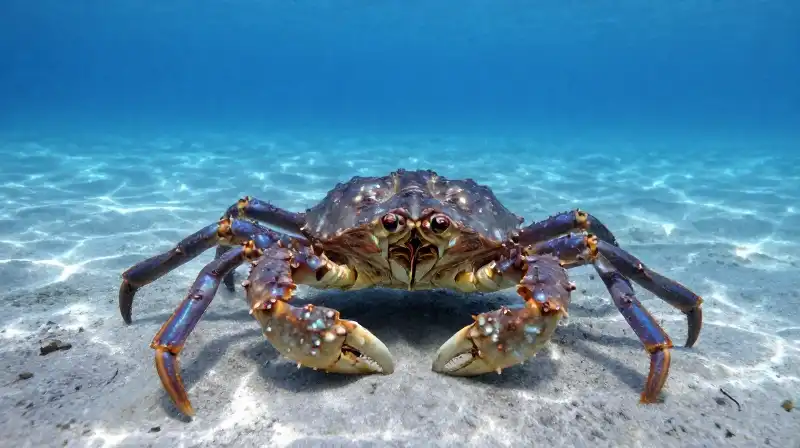
The Medically Vital Horseshoe Crab
Despite their name, horseshoe crabs are not true crabs; according to they are actually more closely related to spiders. One of their most striking features is their blue blood. While human blood relies on iron to transport oxygen, horseshoe crabs use copper, a trait shared with various mollusks and crustaceans.
This blue blood is more than just a biological curiosity; it is a cornerstone of modern medicine. The blood contains a unique clotting agent that reacts to specific bacterial toxins. Because of this, it is used to test the safety of human drugs and medical products, ensuring they are free from contamination.
The Siphonophore: A Colony, Not a Single Creature
The Portuguese man o’ war is frequently mistaken for a jellyfish, but it does not belong to that class of animals. It is actually a siphonophore—a massive colony of specialized individual organisms known as zooids. Instead of one single animal working together, these zooids are genetically linked individuals that perform specific tasks, such as feeding, defense, or reproduction, to support the entire colony.
The Unusual Anatomy of Squid
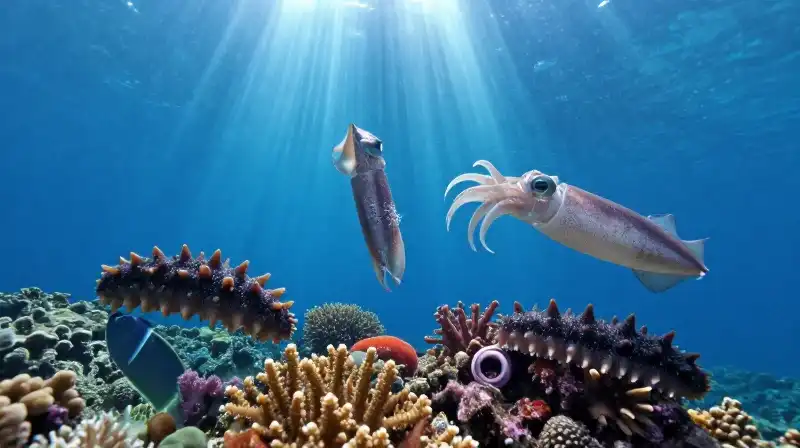
Squid possess one of the most peculiar anatomical setups in the animal kingdom. Their central nervous system is structured such that their brains actually wrap around their esophagus. This means that every time a squid eats, food passes directly through the center of its brain—a biological design that is quite different from the centralized brain structures found in mammals.
Specialized Hunting and Defense Mechanisms
In the high-stakes environment of the ocean, predators and prey have evolved extreme physical tools to gain an advantage. These tools often involve radical changes to mouth structure or even the ability to sacrifice body parts to survive.
- The Goblin Shark: This deep-sea predator possesses a highly specialized jaw mechanism that allows it to “shoot” its mouth forward to snap up prey with surprising speed.
- The Gulper Eel: Living in the deep ocean, the gulper eel features a massive, highly specialized mouth. Its jaws can balloon and fold back, allowing the eel to expand its capacity to swallow prey that may be much larger than itself.
- Sea Cucumber Ejection: Some species of sea cucumber utilize a startling defense mechanism. When threatened, they can eject their own sticky digestive organs at a predator. While this may seem counterintuitive, they are capable of regenerating these organs.
Temperature Regulation and Longevity
Survival in the ocean also involves managing internal energy and the very passage of time. Some animals have mastered the art of heat management, while others have seemingly mastered the art of staying young.
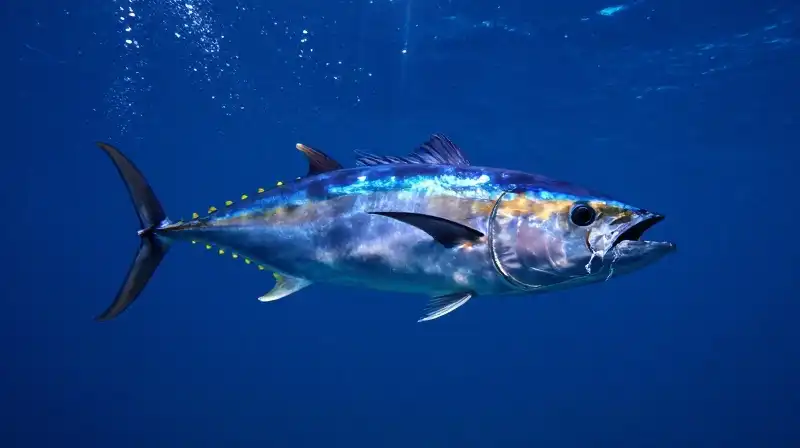
Tuna and Thermal Optimization
Tuna are built for high-speed pursuit, a lifestyle that requires immense metabolic energy. To optimize their muscle performance in cooler waters, they generate significant internal body heat. This specialized thermoregulation is so intense that if a tuna is caught and removed from the water without being killed, it can actually overheat due to its own metabolic heat.
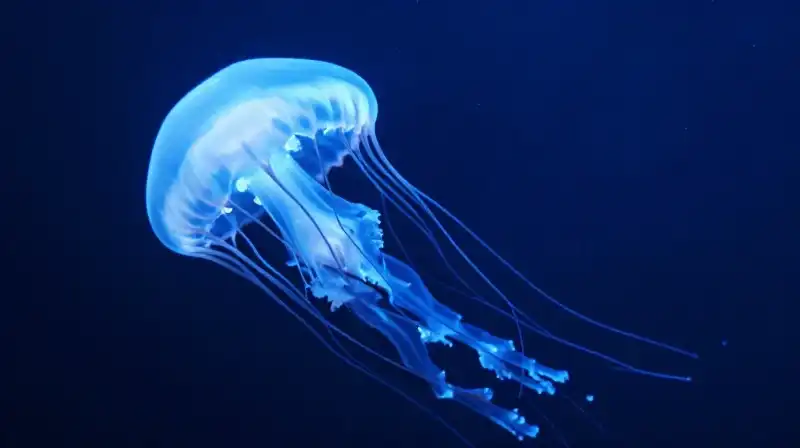
The Biological Loop of the Immortal Jellyfish
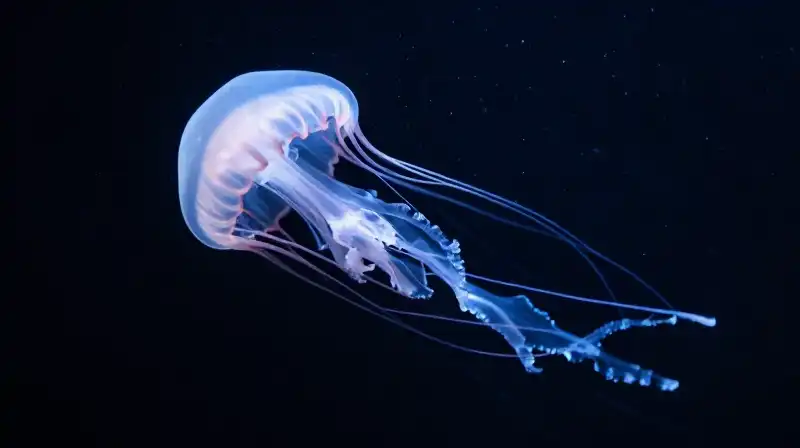
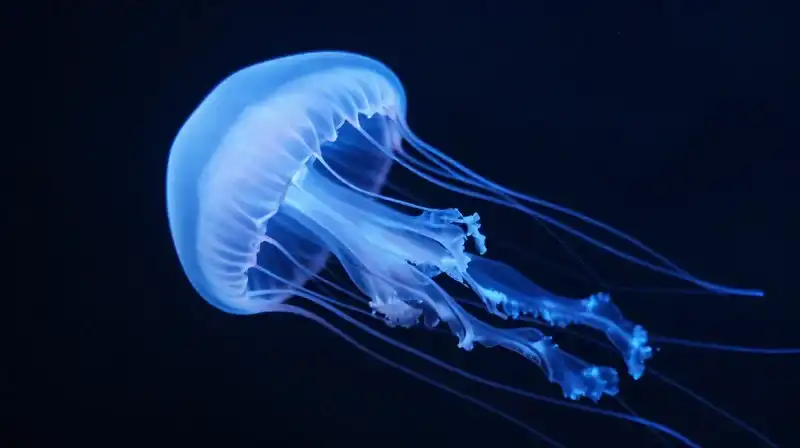
While most life follows a linear path from birth to death, the “immortal jellyfish” has a different biological strategy. It is capable of living indefinitely through a process that allows it to revert its cells to an earlier stage of life, effectively resetting its biological clock.
Deep Time and Evolutionary Lineages
The creatures we see today are often the remnants of much older, more dominant biological eras. Looking at modern sea life can provide a window into the history of the seafloor.
| Group | Historical Status | Modern Descendants/Forms |
|---|---|---|
| Crinoids | Dominant seafloor organisms before the evolution of jaws. | Some lineages evolved into “tank-like” forms such as starfish and sea urchins. |
Why Marine Diversity Matters
The strange behaviors and specialized bodies of these sea animals—from the blue-blooded horseshoe crab to the heat-generating tuna—are not just “fun facts.” They are the results of millions of years of precise evolutionary tuning. Each trait, whether it is a squid’s brain wrapping around its throat or a sea cucumber’s ability to regrow its organs, represents a successful solution to the challenges of living in the ocean. Studying these creatures allows us to understand the limits of biological possibility and the incredible resilience of life on Earth.
Facts sourced from peer-reviewed marine biology research, NOAA, and the Smithsonian Ocean Portal. Our editorial team fact-checks all content against current scientific literature.
Related Articles