Crazy Facts About the Ocean: From Immortal Jellyfish to Blue Blood

The Scale and Mystery of the Deep
The ocean is not merely a body of water; it is a massive, dynamic system that shapes the very chemistry and geography of our planet. From the world’s longest mountain range hidden beneath the waves to organisms that can theoretically cheat death, the marine world operates on a scale that often defies human intuition. Understanding the ocean requires looking past the surface to the biological marvels and geological forces that define it.
While many view the sea as a static backdrop, it is actually in a constant state of flux. For example, during the last ice age, sea levels were approximately 400 feet lower than they are today. As global temperatures rise, these levels continue to shift due to both the melting of polar ice and the thermal expansion of warming water. Within this changing environment, life has evolved extraordinary strategies to survive, ranging from the massive to the microscopic.
Biological Marvels: Giants and Survivors
Marine life contains some of the most extreme biological examples on Earth. Whether it is the sheer mass of a mammal or the strange longevity of a shark, the ocean hosts creatures that push the limits of biology.
The Scale of Giants
The blue whale represents the absolute ceiling of biological size. It is the largest animal to have ever lived, reaching weights of up to 247,000 pounds. To put that scale into perspective, a blue whale’s tongue alone can weigh as much as an entire elephant.
Mastering Time and Longevity
While blue whales dominate in size, other species dominate in duration. The Greenland shark is among the longest-lived vertebrates known to science. Researchers have used radiocarbon dating on the protein layers within their eyes to estimate that these sharks can live for hundreds of years.
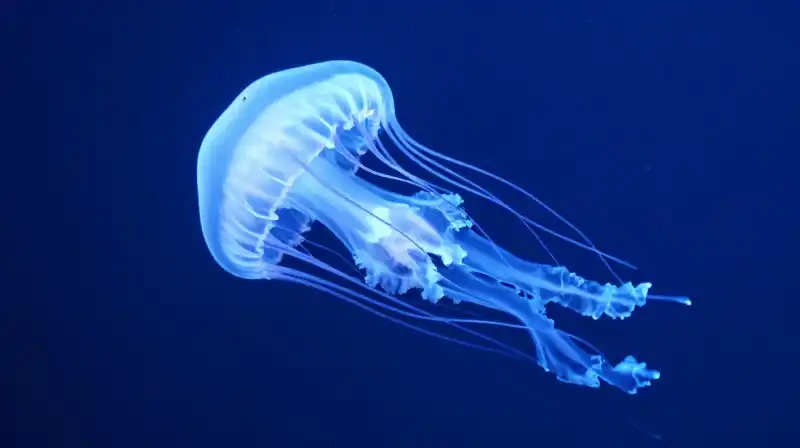
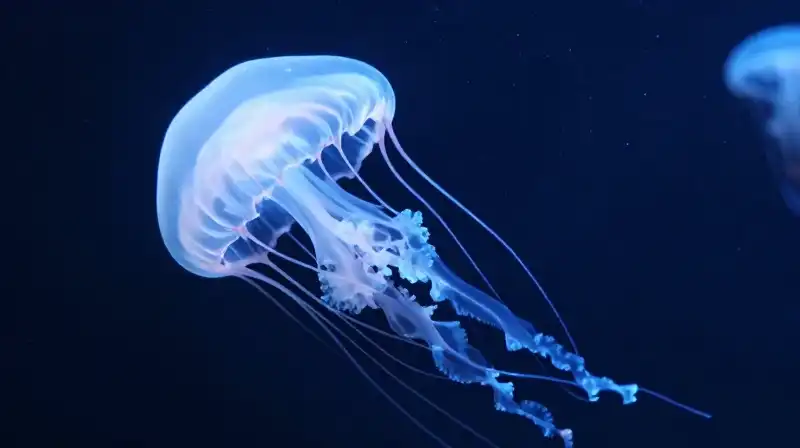
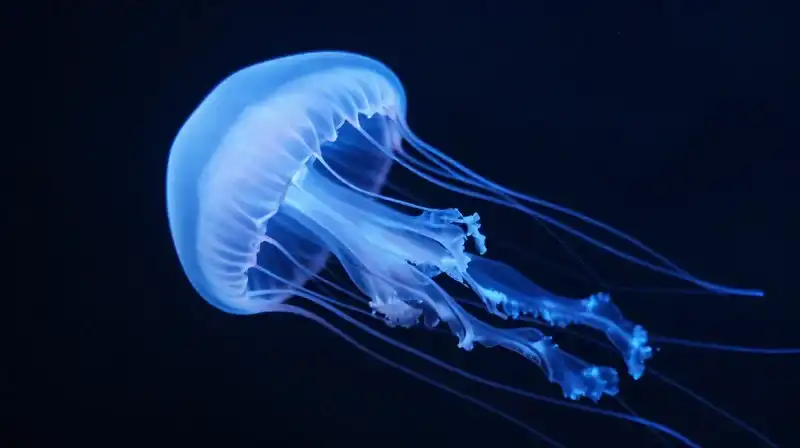
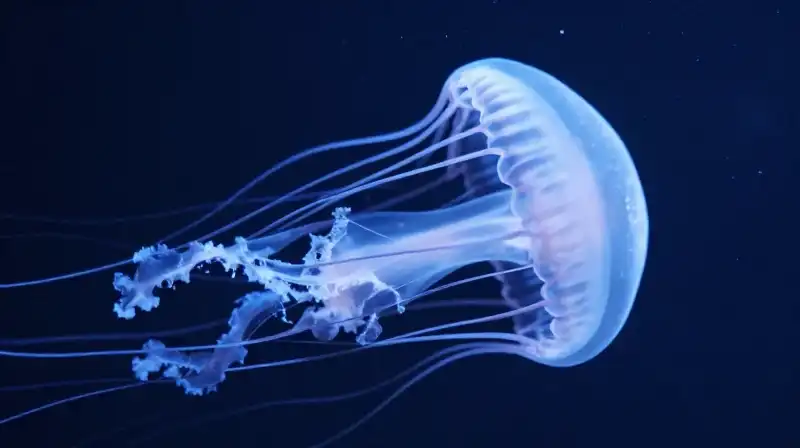
Even more radical is the “immortal jellyfish” (*Turritopsis dohrnii*). This tiny creature possesses a unique biological ability to revert from its adult state back to its youthful polyp form after reaching maturity, effectively resetting its life cycle.
Specialized Adaptations and Myth-Busters

Many common beliefs about sea creatures are actually misconceptions. Marine biology often reveals that what we perceive as “monsters” or “strange” are actually highly efficient, specialized evolutionary designs.
| Creature | Common Misconception | Scientific Reality |
|---|---|---|
| Orca | Often called “Killer Whales” | They are actually members of the dolphin family. |
| Narwhal | The “horn” is a specialized tool | It is actually a single, highly sensitive, elongated tooth. |
| Octopus | They have tentacles | They have eight arms with suckers running their entire length; “tentacles” are defined as arms with suckers only at the tips. |
The Sophistication of the Octopus
Octopuses are masters of physical manipulation. Because their only rigid body part is their beak, they can squeeze their entire soft bodies through any opening large enough to accommodate that beak. Furthermore, cephalopods like octopuses and cuttlefish can instantly alter their skin color and texture by tensing and relaxing specific muscle groups to manipulate pigments.
Predatory Precision
While orcas are apex predators known to hunt great white sharks—specifically targeting their livers—there are no recorded instances of wild orcas attacking humans. Instead, they exhibit highly specialized hunting behaviors. Similarly, the mantis shrimp uses specialized vision and weaponry: they possess 12–16 types of photoreceptors, far more than the three found in humans. Their strikes are equally impressive, reaching speeds of 50 mph with an acceleration of approximately 10,000 Gs.
Extraordinary Traits: From Blue Blood to Walking Sharks
Evolution has produced a variety of “crazy facts” regarding how marine animals move, breathe, and even reproduce.
- Walking Sharks: Certain species, specifically nine types of epaulette sharks, have evolved the ability to “walk” on land using their fins.
- Blue Blood: Horseshoe crabs possess blue blood due to the presence of copper rather than iron. This unique blood is in extremely high demand within the medical industry for its specialized properties.
- Sonic Bursts: The pistol shrimp uses its claw to create bubbles that fly at 60 mph. When these bubbles pop, they can reach a volume of 210 decibels, which is significantly louder than an average gunshot.
- Sexual Flexibility: Some species can change their sex based on social structures or the loss of a dominant individual, such as clownfish and triggerfish.
The Ocean’s Hidden Geography

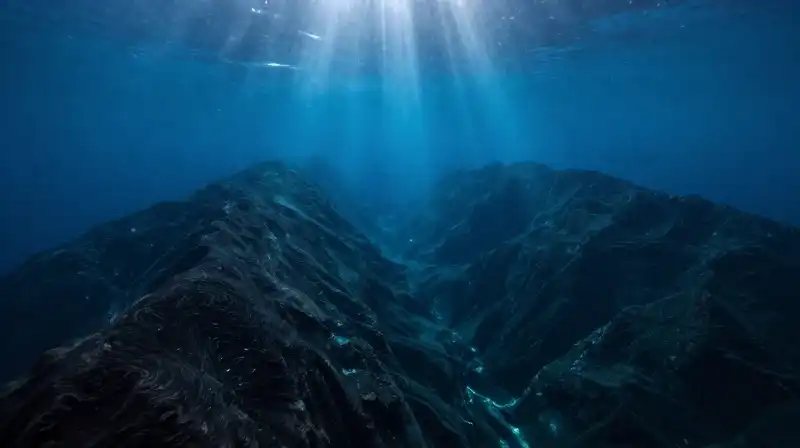
The ocean’s wonders are not limited to its inhabitants. The very structure of the seafloor is as monumental as the creatures living upon it. The Mid-Oceanic Ridge, located in the Atlantic Ocean, is the longest mountain range on Earth. It stretches for 35,000 miles and covers more than 20% of the planet’s crust.
Why the Ocean Matters
The diversity of the ocean—from the immortal jellyfish to the massive blue whale—highlights a complex web of survival strategies. These facts are more than just trivia; they illustrate how life adapts to extreme pressures, changing chemistry, and vast scales of time. As sea levels continue to change and global temperatures rise, understanding these biological and geological realities becomes essential to our understanding of the planet’s health and its future.
Facts sourced from peer-reviewed marine biology research, NOAA, and the Smithsonian Ocean Portal. Our editorial team fact-checks all content against current scientific literature.
Related Articles