11 Mind-Blowing Fun Facts About Sea Creatures and Their Secrets

Introduction
The ocean is often perceived as a vast, uniform expanse of blue, but beneath the surface lies a collection of biological oddities that challenge our understanding of anatomy and survival. From creatures that can regenerate their own organs to animals that possess “immortal” life cycles, the marine world operates by a different set of rules. Understanding these sea creatures requires looking past the surface to the specialized evolutionary adaptations that allow them to thrive in environments ranging from sunlit coral reefs to the crushing pressures of the deep sea. These are not just curiosities; they are masterclasses in biological engineering.
Biological Marvels: Anatomy and Defense
Many marine species have developed physiological traits that seem like science fiction. These adaptations are often driven by the need to capture food in sparse environments or to survive predatory encounters.
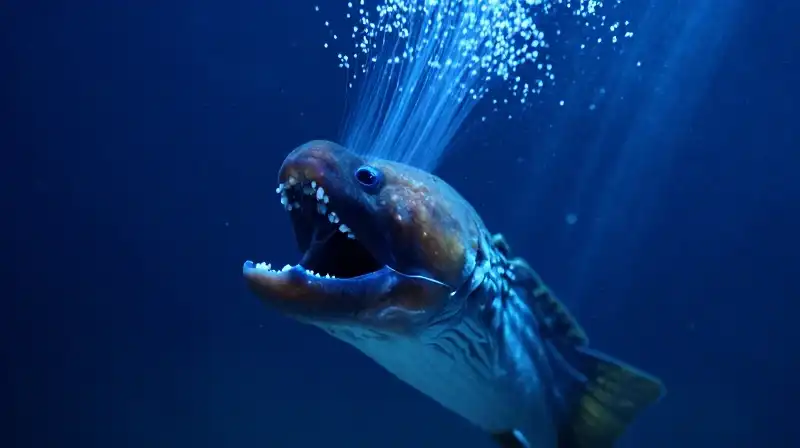
- The Gulper Eel’s Expanding Mouth: Living in the deep sea where meals are infrequent, the gulper eel has evolved a highly specialized mouth. It can balloon outward and fold back, allowing the eel to drastically change its shape to accommodate prey that might be much larger than itself.
- Squid Brain Placement: In a unique anatomical arrangement, certain species of squid possess brains that actually wrap around their esophagus. This structural choice is a striking example of how different evolutionary paths can lead to vastly different body plans.
- The Goblin Shark’s Strike: The goblin shark utilizes a predatory mechanism that looks almost mechanical. When it senses prey, it can rapidly shoot its mouth forward to snatch its target, a specialized movement that allows it to hunt effectively in the dark depths.
- Sea Cucumber Defense: To escape predators, some sea cucumbers employ a startling defense mechanism: they expel their own sticky digestive organs. While it sounds gruesome, it serves as a distraction for the predator, and the sea cucumber is capable of regenerating these organs later.
Evolutionary Strategies: Speed, Heat, and Form
Survival in the ocean isn’t just about defense; it’s about the energy required to move, hunt, and stay alive in varying temperatures.
The High-Performance Tuna
Tunas are built for speed and endurance. Unlike many fish that rely on the ambient temperature of the water, tunas are highly specialized to generate significant body heat. This helps them maintain optimal muscle temperatures even when swimming in much cooler waters. However, this specialization comes with a risk: if removed from the water but kept alive, they can potentially overheat and “cook” themselves due to this internal heat generation.
From Flowers to Tanks
Evolutionary history shows a dramatic shift in how animals protect themselves. Some former “flower-like” crinoids (sea lilies) survived the rise of jawed predators by evolving into armored, “tank-like” forms. Modern descendants of these lineages include sea urchins and starfish, which traded delicate structures for protective shells and spines.
Clarifying Marine Mysteries
Many sea creatures are frequently misunderstood due to their appearance or how they are classified. Distinguishing between biological reality and common misconceptions is essential for understanding marine life.
| Common Misconception | The Biological Reality |
|---|---|
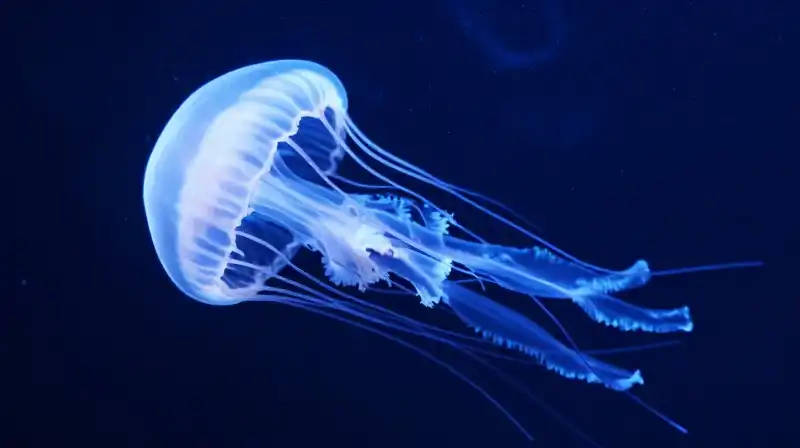
| The Portuguese man o’ war is a jellyfish. | It is actually a siphonophore—a colony of individual organisms known as zooids working together. |
| Horseshoe crabs are a type of crab. | While they share a name, they are actually more closely related to spiders. |
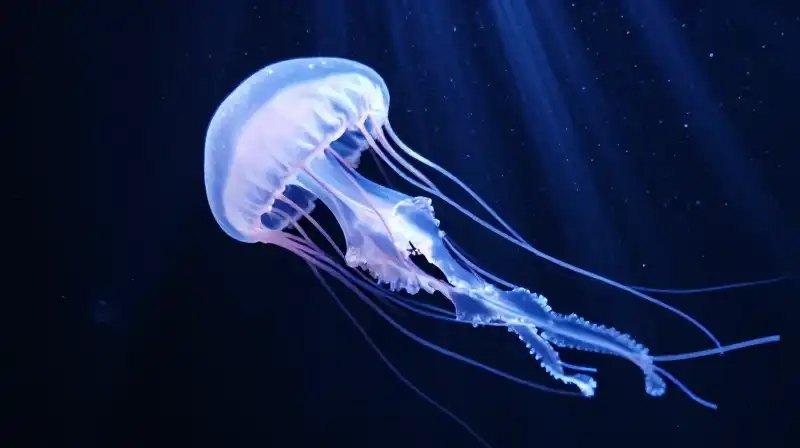
| The “Immortal Jellyfish” is a myth. | The Turritopsis dohrnii is a real species capable of reversing its life cycle, effectively achieving a form of biological immortality. |
The Blue Blood of the Horseshoe Crab
The horseshoe crab is more than just an evolutionary relic; it is a cornerstone of modern human medicine. Unlike humans, who use iron-based hemoglobin to transport oxygen, horseshoe crabs (along with many other crustaceans and mollusks) use copper, which gives their blood a distinct blue color.
This blue blood possesses a unique property: it coagulates instantly when it encounters certain bacterial toxins. Because of this highly sensitive reaction, horseshoe crab blood is used globally to ensure the safety of human drugs, vaccines, and medical products by testing for endotoxins.
Why These Secrets Matter
Exploring these fun facts about sea creatures reveals a fundamental truth about our planet: the ocean is a laboratory of extreme adaptation. Whether it is the specialized metabolic heat of a tuna or the medically vital blood of a horseshoe crab, these biological “secrets” are the result of millions of years of fine-tuning. By studying these creatures, we don’t just learn about strange animals; we gain insights into the limits of biology, the complexity of evolution, and the intricate ways in which marine life supports human health and global ecosystems.
Facts sourced from peer-reviewed marine biology research, NOAA, and the Smithsonian Ocean Portal. Our editorial team fact-checks all content against current scientific literature.
Related Articles