12 Mind-Blowing Octopus Facts About Their Intelligence and Biology

Introduction
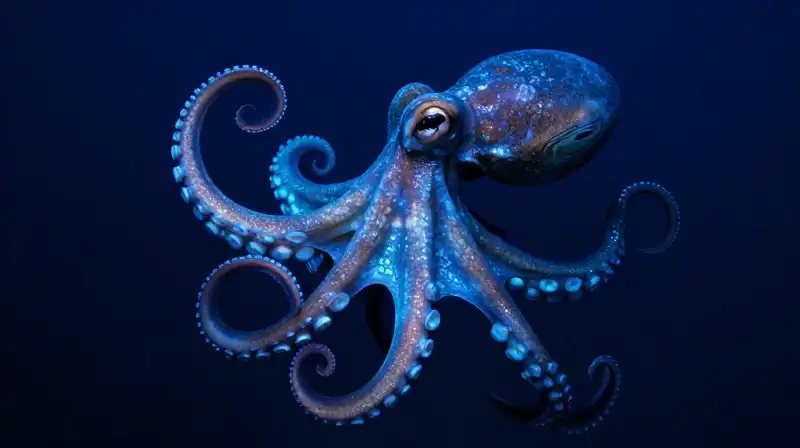
Imagine an animal that possesses a brain in its arms, blood the color of a sapphire, and the ability to change not just its color, but its entire physical texture in a heartbeat. Octopuses are not merely inhabitants of the ocean; they are among the most sophisticated biological enigmas on the planet. While many marine creatures rely on brute strength or simple instinct, the octopus operates through a complex blend of high-level intelligence and anatomical specialized traits that challenge our traditional understanding of what it means to be “smart.”
The Distributed Intelligence of an Octopus
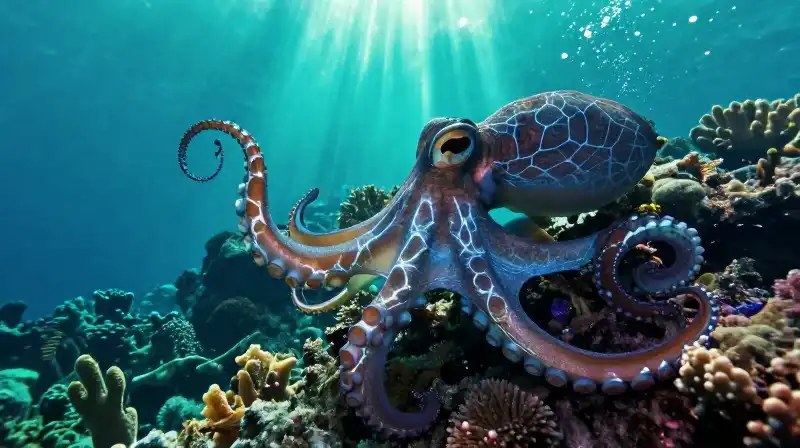
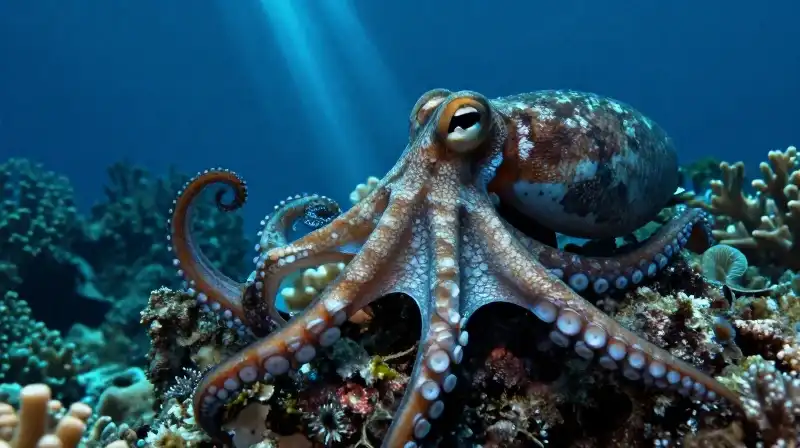
When we think of a brain, we usually picture a single central command center. The octopus, however, operates on a decentralized model. While they possess a central “doughnut-shaped” brain, they also feature large nerve clusters at the base of each of their eight arms. This means that each limb functions almost like a mini-brain, capable of tasting, touching, and moving independently of the central brain’s immediate oversight.
This neural complexity allows for remarkable problem-solving abilities. Scientists have observed octopuses navigating intricate mazes, escaping from tightly secured containers, and even using tools to manipulate their environment. A standout example of this ingenuity is the veined octopus, which has been documented collecting and carrying discarded coconut shells to serve as portable, mobile shelters.
Their cognitive capacity is significant even when compared to vertebrates. For instance, the species Octopus vulgaris possesses approximately 500 million neurons—a count that places their neural density in a similar realm to that of a dog. This intelligence extends to social recognition; some octopuses can identify individual human faces and have demonstrated the ability to distinguish between “nice” keepers and “mean” ones.
12 Mind-Blowing Octopus Facts About Their Biology
To understand why these creatures are so successful in the wild, one must look past their intelligence and into their extraordinary physical makeup. Here are the core biological traits that set them apart:
- Blue Blood: Unlike humans, who use iron-based hemoglobin to transport oxygen (making our blood red), octopuses use a copper-based protein called hemocyanin. This makes their blood blue and provides a distinct advantage: hemocyanin is much more efficient at transporting oxygen in low-temperature and low-oxygen environments.
- Three Hearts: An octopus manages its circulation with three separate hearts. One central heart circulates blood to the vital organs, while two peripheral hearts are dedicated specifically to pumping blood through the gills.
- Energy-Efficient Movement: Because those peripheral hearts actually stop beating when the octopus swims, the animal often prefers crawling along the seafloor to conserve energy.
- Master of Camouflage: Using specialized skin cells called chromatophores, octopuses can change color instantly. They also utilize papillae—tiny protrusions on their skin—to alter their physical texture to match the surrounding rocks or coral.
- The Ultimate Shape-Shifter: While most species use camouflage to hide, the mimic octopus (Thaumoctopus mimicus) takes deception to a new level. It can impersonate specific venomous animals, such as sea snakes or lionfish, to scare off potential predators.
- No Bones, No Limits: An octopus is incredibly soft-bodied. As long as an opening is no wider than their beak, they can squeeze their entire bodies through the gap.
- Sensory Arms: The suckers on an octopus’s arms are not just for gripping; they are packed with chemical sensors that allow the animal to “taste” and smell its environment through touch.
- Venomous Defense: While almost all octopuses are venomous and use it to paralyze prey, most pose no threat to humans. The notable exception is the blue-ringed octopus, which carries potent venom.
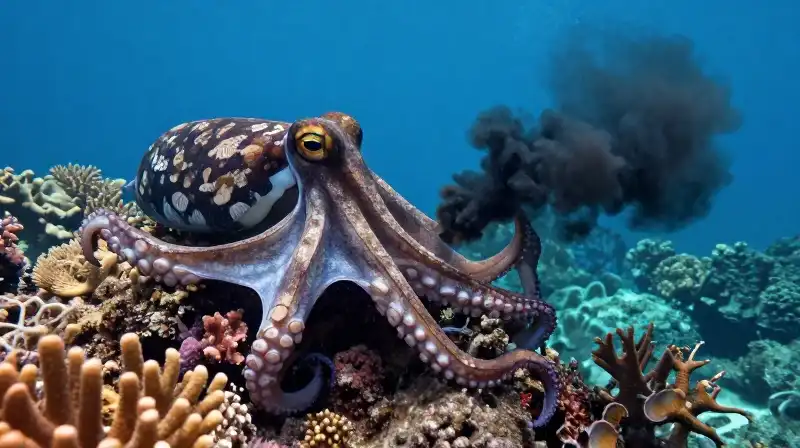
- Ink as a Distraction: When threatened, they release an ink containing melanin and tyrosinase. This isn’t just a visual cloud; the chemical compounds can temporarily impair a predator’s ability to smell and taste, giving the octopus time to escape.
- Underwater “Cities”: Although generally solitary, some species like the gloomy octopus (Octopus tetricus) have been found living in high-density areas. These “communes,” known as Octopolis or Octlantis, are built using rock outcrops and shells.
- Extreme Maternal Sacrifice: The life cycle of some deep-sea species, such as Graneledone boreopacifica, involves incredible dedication. These females have been observed brooding their eggs for nearly four and a half years without eating, eventually dying once the offspring finally hatch.
- Invertebrate Intelligence: They hold the record for the highest brain-to-body ratio of any invertebrate on Earth.
Comparing Octopus Defense Strategies
Not all octopuses rely on the same methods to stay alive. Their survival strategies can be categorized by how they interact with their environment and predators.
| Strategy | Mechanism | Example Species |
|---|---|---|
| Passive Camouflage | Matching color and texture to the background using chromatophores. | Common Reef Octopuses |
| Active Mimicry | Impersonating the shape and movement of dangerous animals. | Mimic Octopus (Thaumoctopus mimicus) |
| Chemical Defense | Using ink to confuse a predator’s senses (smell and sight). | Most octopus species |
Common Questions About Octopus Behavior
Can octopuses see 360 degrees?
While they have highly advanced eyes that allow them to see a wide field of view, their vision is not a true 360-degree panoramic view like some specialized fish. However, their ability to move their highly flexible bodies and their wide-set eyes provide them with an exceptional ability to monitor their surroundings for danger.
The Remarkable Complexity of Cephalopod Life
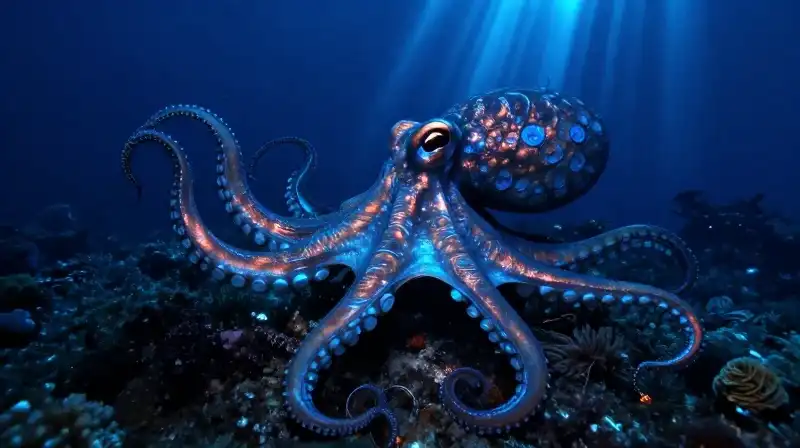
From their blue, copper-based blood to the “mini-brains” driving their limbs, octopuses represent a completely different evolutionary path to intelligence. They prove that complex cognition doesn’t require a vertebrate skeletal structure or a single central nervous system. Whether they are building “cities” on the seafloor or mimicking a venomous sea snake, octopuses remain one of the most compelling examples of biological ingenuity in the deep sea.
Facts sourced from peer-reviewed marine biology research, NOAA, and the Smithsonian Ocean Portal. Our editorial team fact-checks all content against current scientific literature.
Frequently Asked Questions
Can octopuses see 360?
No, octopuses do not have a true 360-degree panoramic view. However, their wide-set eyes and flexible bodies allow them to monitor their surroundings exceptionally well.
Related Articles