
4 Fascinating Fun Facts About Ocean Life and Marine Species

Introduction
The ocean is far more than a vast expanse of saltwater; it is a complex, living system where survival depends on specialized sensory tools and evolutionary adaptations. From the microscopic structures in a fish’s ear to the way a massive whale was historically hunted, marine life has developed incredible ways to navigate, feed, and exist in an environment that is often dark and high-pressure. Understanding these biological nuances offers a window into how life persists in the deep sea and coastal waters alike.
4 Fascinating Fun Facts About Ocean Life and Marine Species
To understand the diversity of our oceans, we must look closely at the specific biological traits that define different species. Here are four distinct insights into the lives of fish, mammals, and reptiles.
1. The Biological Clock in Fish Anatomy
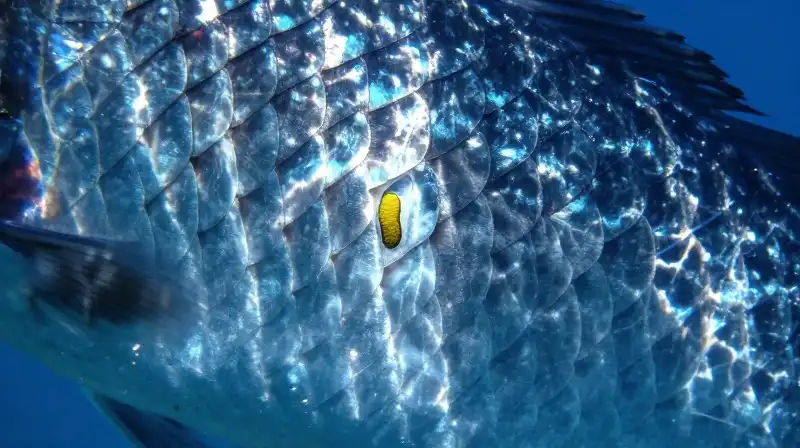
Determining how long a fish has lived is not always as simple as looking at its size, as growth rates can fluctuate based on food availability and water temperature. Instead, scientists use more reliable biological markers. According to researchers can determine the age of a fish by examining growth rings found on their scales or within their ear bones (otoliths). Much like the rings of a tree, these markings provide a chronological record of the animal’s life, allowing marine biologists to better understand population age structures and the health of various fisheries.
2. Sensory Whiskers and Underwater Navigation
For many marine mammals, sight is not the only—or even the primary—way to interact with the world. Seals, for instance, possess highly specialized whiskers that serve as advanced sensory tools. seals may use these whiskers to detect subtle vibrations in the water caused by swimming prey. This tactile sensitivity is so refined that it allows even blind seals in the wild to hunt and feed effectively, proving that survival in the ocean often relies on feeling the movement of the water rather than just seeing it.
3. The Tragic History of the Right Whale
The names we give marine animals often reflect their historical relationship with humans. The right whale earned its name for reasons that are quite somber: it moves slowly and has a natural tendency to float after being killed, which historically made it an easy target for hunters. While the name might sound simple, the legacy of this ease of capture has had lasting consequences. Today, the right whale is recognized as the most endangered whale species found off the U.S. coasts.
4. Protected Sea Turtles of U.S. Waters
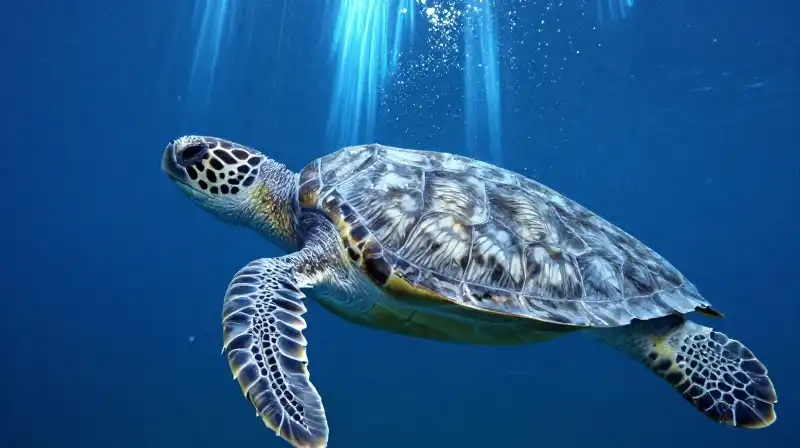
Sea turtles are among the most recognizable marine animals, but they also face significant conservation challenges. In the United States, several species are under strict legal protection to prevent their extinction. According to all six species of sea turtles found in U.S. waters are currently protected under the Endangered Species Act. These species include:
- Green sea turtle: Known for their herbivorous diet as adults.
- Hawksbill sea turtle: Characterized by their narrow, pointed beaks.
- Kemp’s ridley: One of the rarest and most critically endangered sea turtles.
- Leatherback: The largest of all living turtles, lacking a hard bony shell.
- Loggerhead: Named for their large heads and powerful jaws.
- Olive ridley: Known for their large-scale nesting aggregations.
Common Questions About Ocean Life
As people explore 10 amazing facts about sea animals or look for fun facts about ocean life for kids, certain questions frequently arise regarding the hierarchy and rarity of marine life.
What is the #1 smartest animal in the ocean?
While “intelligence” can be difficult to measure across different species, cephalopods like octopuses and marine mammals like dolphins and whales are widely considered the most cognitively advanced. Octopuses demonstrate remarkable problem-solving skills and camouflage abilities, while dolphins show complex social structures and communication.
What is the rarest sea life?
Rarity is often defined by population numbers and habitat specificity. Some species, such as certain deep-sea corals or the Kemp’s ridley sea turtle, are considered extremely rare due to their low numbers and the threats they face from environmental changes and human activity.
Understanding Marine Complexity
These facts illustrate that ocean life is governed by intricate biological systems—whether it is the way a seal “feels” its next meal through vibrations or the way a scientist reads the history of a fish through its bones. Protecting these species, from the endangered right whale to the various sea turtles protected by law, is essential for maintaining the balance of the marine ecosystems that support life on Earth.
Facts sourced from peer-reviewed marine biology research, NOAA, and the Smithsonian Ocean Portal. Our editorial team fact-checks all content against current scientific literature.
Frequently Asked Questions
What are 5 fun facts about the ocean?
The provided article only contains four distinct fun facts: fish age can be determined by growth rings in their scales or ear bones, seals use whiskers to detect vibrations from prey, right whales were historically easy to hunt because they float after being killed, and all six sea turtle species in U.S. waters are protected under the Endangered Species Act.
What are 20 facts about the ocean for kids?
The provided article does not contain 20 facts about the ocean for kids. It instead offers four specific insights into marine life, such as how fish age and how seals use whiskers to detect vibrations.
What is the #1 smartest animal in the ocean?
While intelligence is difficult to measure, cephalopods like octopuses and marine mammals like dolphins and whales are widely considered the most cognitively advanced.
What is the rarest sea life?
Some species, such as certain deep-sea corals or the Kemps ridley sea turtle, are considered extremely rare.
Related Articles