Ocean Unknown Facts: Surprising Wonders of the Deep Sea

Introduction
While we often view the ocean as a single, blue expanse, it is actually a complex world of distinct ecosystems, staggering depths, and biological marvels that challenge our understanding of life. Covering 71% of the Earth’s surface and holding 97% of the planet’s water, the ocean is a massive reservoir containing roughly 320 million cubic miles of liquid. From the sunlit surface to the crushing pressures of the abyss, the marine environment holds secrets that range from the colossal scale of blue whales to the microscopic precision of a shrimp’s eye. Exploring these ocean unknown facts reveals a planet that is as much about the deep sea as it is about the land we walk upon.
The Scale and Structure of the Deep

The ocean is not a uniform basin; it is divided into five major bodies: the Pacific, Atlantic, Indian, Arctic, and Southern Oceans. The Pacific stands out as both the largest and the deepest, containing topographical features that dwarf terrestrial landmarks.
- Extreme Depths: While the average ocean depth is approximately 3.7km (2.3 miles), the Challenger Deep in the Mariana Trench reaches depths of about 11km. To put that in perspective, if you placed Mount Everest at the bottom of the trench, its peak would still be over a kilometer underwater.
- Underwater Mountain Ranges: The world’s longest mountain range is actually hidden beneath the waves. The Mid-Ocean Ridge stretches for 40,389 miles, and roughly 90% of its structure is located underwater.
- Fluctuating Sea Levels: The ocean’s boundaries are not static. During the last ice age, sea levels were 400 feet lower than they are today. Conversely, during a warm period 125,000 years ago, the seas were approximately 18 feet higher.
Extraordinary Marine Biology
Marine life has evolved incredible specializations to survive in diverse environments, leading to some of the most unique physiological traits on Earth.
Giants and Apex Predators
The ocean hosts the most extreme examples of size and social intelligence found in the animal kingdom.
- The Blue Whale: As the largest animal to ever live, a blue whale can weigh up to 247,000 pounds. Their scale is difficult to grasp, but their tongue alone can weigh as much as an entire elephant.
- Orcas (Killer Whales): Despite their common name, orcas are technically members of the dolphin family. They are highly intelligent apex predators that utilize matrilineal social systems to pass survival knowledge down through generations. Notably, there have never been any recorded instances of wild orcas hunting or attacking humans.
Cephalopods and Complex Organisms
Invertebrates often display “alien” characteristics that allow them to thrive in niches where vertebrates might struggle.
- Octopus Anatomy: An octopus is incredibly flexible due to its unique skeletal structure. Because their only rigid body part is a beak, they can squeeze their entire body through any opening large enough to accommodate the diameter of that beak.
- The Blue Ring Octopus: This small cephalopod is extremely dangerous. It carries enough venom to kill 26 adult humans, and because its bite is often initially painless, a victim might not realize they have been envenomated until it is too late.
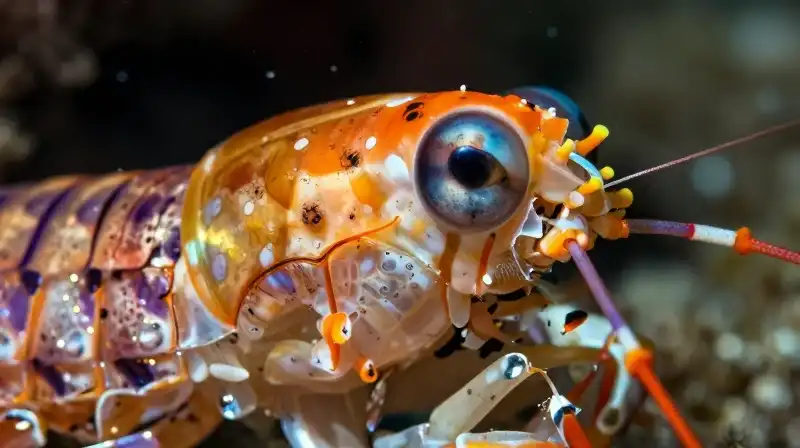
- Mantis Shrimp Vision: The mantis shrimp possesses the most complex eyes in the animal kingdom. While humans rely on only three types of photoreceptors, mantis shrimp have between 12 and 16, allowing them to see a much broader spectrum of light.
Survivors and Shape-shifters
From ancient lineages to long-lived vertebrates, some species have mastered the art of longevity and adaptation.
- Greenland Sharks: These are among the longest-lived vertebrates on the planet. By using radiocarbon dating on their eyes, scientists have discovered they can live for hundreds of years.
- Sex-Changing Fish: Some species, including clownfish and triggerfish, possess the ability to change their sex based on environmental changes or social circumstances.
- Horseshoe Crabs: These creatures are living evolutionary successes, having remained largely unchanged for approximately 450 million years. They are also notable for having blue blood, a result of copper being used in their blood rather than iron.
Biological Comparison Table
| Feature | Human | Mantis Shrimp |
|---|---|---|
| Photoreceptor Types | 3 | 12–16 |
| Primary Blood Metal | Iron (Red) | Copper (Blue - in Horseshoe Crabs) |
Environmental Shifts and the Future
As we look toward the future, specifically asking “What will happen in 2050 to the ocean?”, scientists point to the critical relationship between temperature and water volume. Rising global temperatures affect sea levels in two primary ways: the melting of land-based ice and thermal expansion. Thermal expansion occurs because as ocean water heats up, the molecules move more vigorously and take up more space, causing the sea level to rise. These shifts represent significant challenges for coastal ecosystems and human habitats alike.
The Importance of Ocean Literacy
Understanding these ocean unknown facts is more than just a pursuit of trivia; it is an acknowledgment of the sheer scale and complexity of our planet’s life-support system. Whether it is the ancient resilience of the Greenland shark or the delicate balance of sea levels influenced by global temperature, the ocean remains a frontier of constant discovery. Respecting these creatures and the science behind them is the first step in ensuring these wonders endure for centuries to come.
Facts sourced from peer-reviewed marine biology research, NOAA, and the Smithsonian Ocean Portal. Our editorial team fact-checks all content against current scientific literature.
Frequently Asked Questions
What will happen in 2050 to the ocean?
The article does not state exactly what will happen in 2050, but it notes that rising global temperatures cause sea levels to rise through thermal expansion and the melting of land-based ice.
Related Articles