
10 Fascinating Facts About Oceans and Our Deep Blue World

Introduction
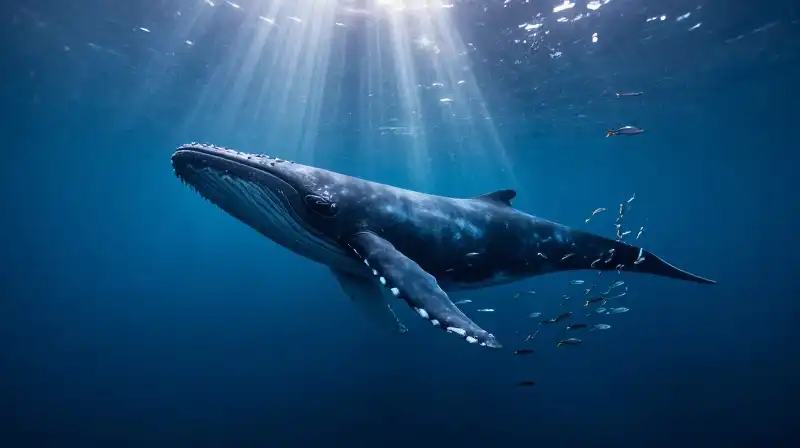
While we often look to the stars to find the great unknown, the most mysterious frontier on Earth lies right here at our feet. The oceans cover approximately 70% to 71% of our planet’s surface, yet they remain one of the least understood environments in existence. Despite the satellite imagery and advanced sonar we possess, humans have explored only about 5% of the world’s oceans. This means the vast majority of our blue planet—from its sunlit coral reefs to its crushing, midnight depths—remains a mystery waiting to be mapped.
10 Interesting Facts About Oceans
To understand the scale and importance of the marine world, we have to look beyond the shoreline. Here are ten fascinating facts that reveal the true scope of our deep blue world.
- The Ocean is Our Primary Oxygen Source: We often think of rainforests as the “lungs of the planet,” but the ocean plays an even larger role in our survival. The ocean produces approximately 70% of the oxygen we breathe, thanks to microscopic marine plants like phytoplankton.
- The Pacific is a Giant: The Pacific Ocean is the largest and deepest of Earth’s five major oceans. It covers about 30% of the entire planet’s surface. Its name, derived from the Latin “Mare Pacificum,” translates to “peaceful sea”.
- A Hidden Mountain Range: Most people imagine mountain ranges like the Andes or the Himalayas, but the longest mountain range on Earth is actually underwater. The Mid-Oceanic Ridge is a massive chain that stretches over 56,000km or roughly 40,389 miles around the globe.
- The Deepest Point on Earth: While the average ocean depth is roughly 3.7km (2.3 miles), the terrain drops sharply in certain areas. The deepest known point is the Challenger Deep within the Mariana Trench, which plunges approximately 11km down.
- The World’s Largest Living Structure: The Great Barrier Reef is not just a collection of fish; it is a massive biological feat. Measuring around 2,600km, it is the world’s largest living structure and is so immense it can even be seen from the Moon.
- A “Mega Museum” of History: The ocean floor acts as a massive repository for human history. It contains more historical artifacts and remnants of history than all the world’s museums combined.
- A Massive Reservoir of Water: The oceans are the primary holders of Earth’s freshwater, containing between 96.5% and 97% of all the water on our planet.
- Dynamic Sea Levels: Sea levels are not permanent; they shift with climatic periods. During the last ice age, sea levels were roughly 400 feet lower than they are today, whereas about 125,000 years ago, during a warm spell, they were roughly 18 feet higher.
- The Physics of Rising Seas: Global sea-level rise is driven by more than just melting ice. As the ocean absorbs heat from the atmosphere, the water physically expands, increasing its overall volume.
- Environmental Vulnerability: Rising sea levels do more than just fill up basins; they trigger significant environmental risks, including increased coastal erosion and more frequent flooding.
Comparing Ocean Scale and Depth
To help visualize the staggering proportions of the marine environment, consider the following comparisons:
| Feature | Approximate Measurement | Significance |
|---|---|---|
| Average Ocean Depth | 3.7 km (2.3 miles) | The standard baseline for the ocean floor. |
| Challenger Deep | 11 km | The absolute deepest known point. |
| Mid-Oceanic Ridge | 56,000 km | The longest mountain range on Earth. |
| Great Barrier Reef | 2,600 km | The largest living structure on Earth. |
Why Ocean Exploration and Conservation Matter
Understanding these facts helps clarify why the health of the ocean is inextricably linked to our own. The ocean isn’t just a setting for marine life; it is a life-support system that regulates our climate, provides the oxygen we breathe, and acts as a massive heat sink for the planet. Because we have only explored 5% of this realm, there is still much to learn about how deep-sea ecosystems function and how they might respond to changing global temperatures.
As we look at the challenges of sea-level rise and coastal erosion, it becomes clear that the ocean is a dynamic, changing force. Protecting our seas is not just about saving individual species; it is about preserving the fundamental processes that allow life on Earth to thrive. From the smallest phytoplankton to the vastness of the Pacific, every part of the ocean plays a role in the balance of our world.
Facts sourced from peer-reviewed marine biology research, NOAA, and the Smithsonian Ocean Portal. Our editorial team fact-checks all content against current scientific literature.
Related Articles