
100 Fascinating Facts About Sea Turtles and Their Secrets

Introduction
Long before the first dinosaur stepped onto land, sea turtles were already patrolling the world’s oceans. Having evolved approximately 110 million years ago, these resilient reptiles have survived massive extinction events and planetary shifts, remaining a vital part of marine ecosystems today. While they may appear slow and methodical to the casual observer, sea turtles are actually masters of long-distance navigation, complex biological processes, and incredible endurance.
The Diverse World of Sea Turtles
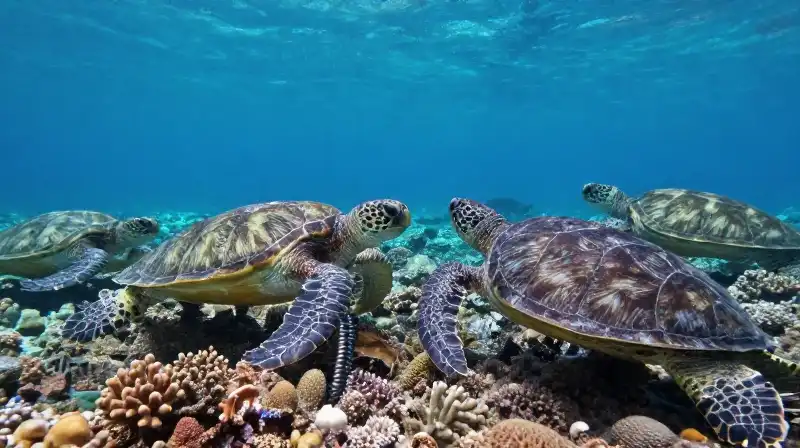
Not all sea turtles are built the same. While they share many characteristics, they are divided into two distinct biological families based on their physical structures.
| Feature | Cheloniidae Family | Dermochelyidae Family |
|---|---|---|
| Shell Type | Hard, bony shells composed of scutes | Soft, leathery skin |
| Species Count | Six recognized species | One species (Leatherback) |
| Common Examples | Green, Loggerhead, Hawksbill | Leatherback |
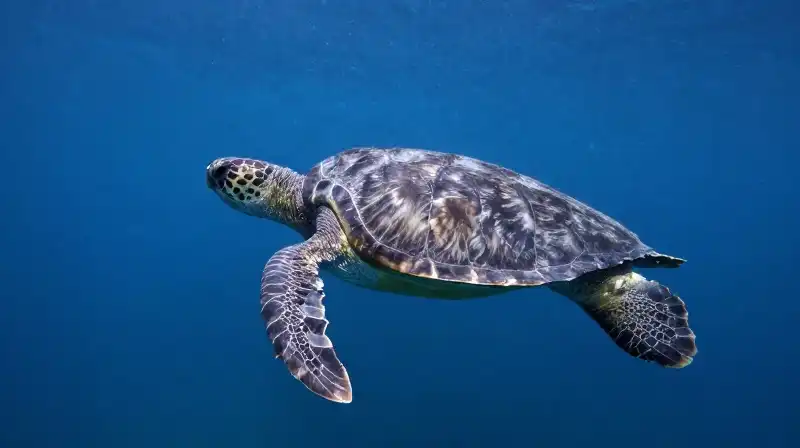
A fascinating way to identify these animals is through their “fingerprints.” Much like a human, individual sea turtles can be distinguished by the unique color, shape, and pattern of their shell scutes, as well as the specific scale patterns on their faces.
Fascinating Facts About Sea Turtles
To understand the complexity of these ancient survivors, we have to look at how they live, travel, and grow. Here are some of the most remarkable truths about their biology and behavior:
Navigation and Migration
- Geomagnetic Imprinting: Sea turtles use Earth’s magnetic field and the position of the sun to navigate across vast distances.
- Natal Homing: Adult turtles exhibit a remarkable phenomenon called “natal homing,” where they return to the exact same beach or general area where they were hatched to lay their own eggs.
- Record-Breaking Journeys: The leatherback turtle is a champion of marine migration; one individual was recorded traveling 12,774 miles (20,558 km) from Indonesia all the way to Oregon, USA.
Biological Quirks and Life Cycles
- Temperature-Dependent Sex Determination: The sex of a hatchling is often decided by the sand temperature during the middle of its 45–65 day incubation period. Warmer temperatures (above 31ºC/87.8ºF) tend to produce females, while cooler temperatures (below 27.5ºF/81.5ºF) produce males.
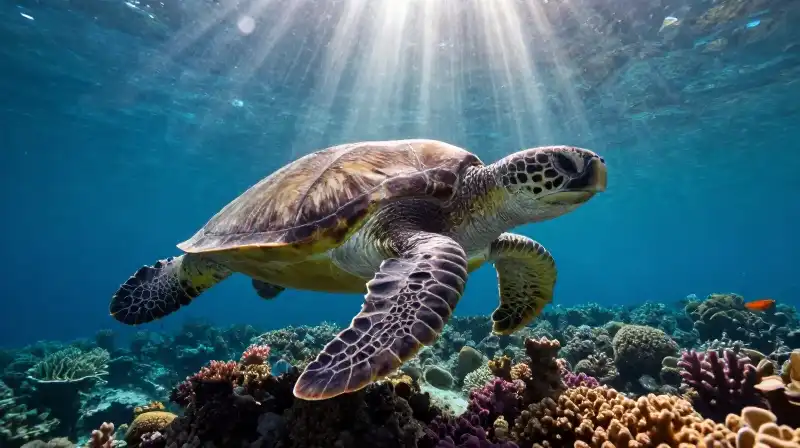
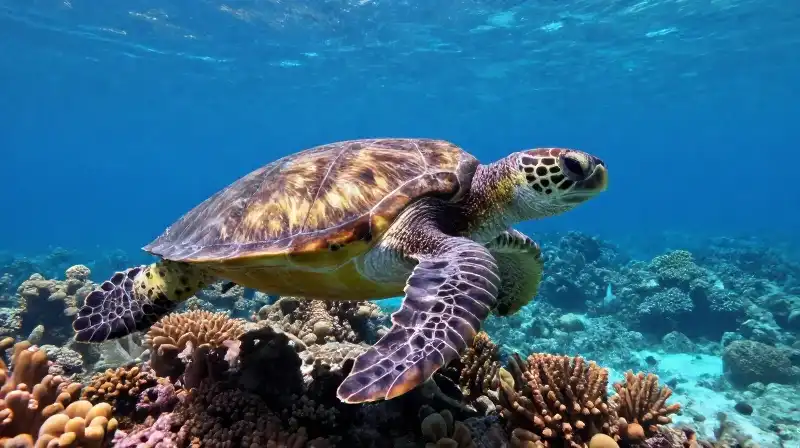
- The Green Turtle’s Diet: Unlike most of their relatives who are carnivores or omnivores, the Green sea turtle (*Chelonia mydas*) is a herbivore. They eat marine plants like seaweed and seagrass, which results in a layer of green fat beneath their shells.
- Underwater Resting: Green sea turtles are highly efficient; they can rest underwater for up to five hours at a time, though they must surface to breathe when actively feeding or traveling.
- Low Survival Rates: The early life of a sea turtle is incredibly perilous. It is estimated that only 1 in 1,000 eggs will actually survive to reach adulthood due to heavy predation by fish, crabs, and birds.
- Lifespan: While it is difficult for scientists to determine an exact maximum age, many live between 50 and 70 years in the wild. Some, like a green turtle named Myrtle, have lived to approximately 90 years.
Common Questions and Misconceptions
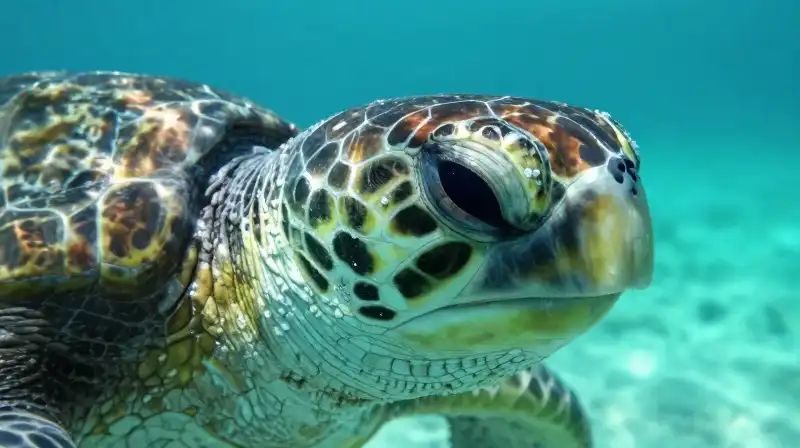
Are turtles able to cry?
This is a common question often asked by those observing turtles in captivity or during nesting. While it may look like a turtle is weeping, they are not expressing human-like emotions. The fluid seen around their eyes is typically a physiological process to help clear salt from their bodies or to lubricate their eyes.
Why are they called “Green” sea turtles?
Many people assume the name refers to the color of their shell, but it is actually due to their unique diet. Because they consume so much vegetation, they develop a layer of green fat beneath their shells.
Conservation and the Future
Despite their ancient lineage, sea turtles face modern challenges that threaten their continued existence. Major threats include plastic pollution, fisheries bycatch, climate change (which affects sand temperatures and nesting sites), coastal development, and the direct harvesting of eggs and meat.
However, there is reason for optimism. Conservation efforts are making a tangible difference. For instance, as of 2025, green sea turtles have recently been noted as no longer being classified as endangered, showcasing how dedicated protection efforts can help stabilize vulnerable populations.
Why Sea Turtles Matter
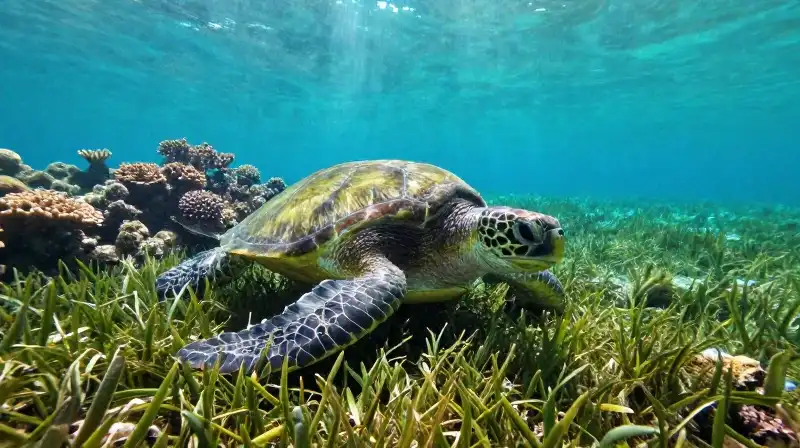
Sea turtles are much more than just interesting marine animals; they are ecological keystones. From the herbivorous green turtles that maintain healthy seagrass beds to the leatherbacks that traverse entire oceans, their movements and biological needs link different parts of the marine environment together. Understanding their complex lives—from the temperature of a sand nest to the magnetic pull of the Earth—is essential if we are to ensure these survivors continue to inhabit our oceans for another 110 million years.
Facts sourced from peer-reviewed marine biology research, NOAA, and the Smithsonian Ocean Portal. Our editorial team fact-checks all content against current scientific literature.
Frequently Asked Questions
Are turtles able to cry?
Turtles do not cry to express human-like emotions; instead, the fluid seen around their eyes is a physiological process used to lubricate their eyes or clear salt from their bodies.
Related Articles