
Essential Antarctic Ocean Facts: Geography, Wildlife and Climate

Introduction
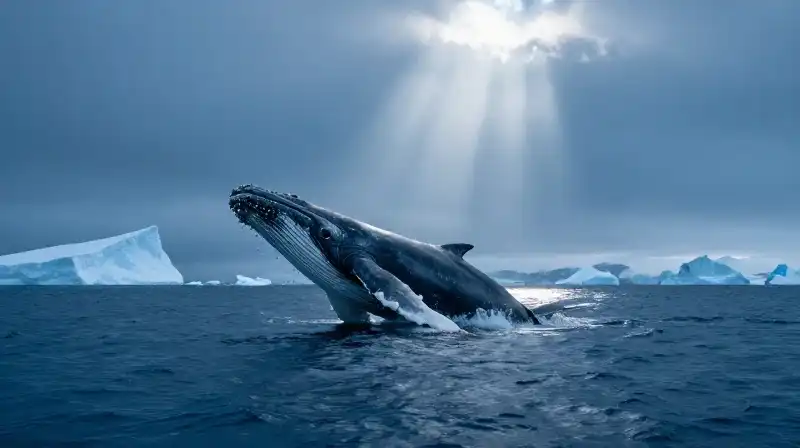
While most of the world’s oceans are defined by the continents they touch, the Southern Ocean is defined by its movement. Encircling Antarctica like a massive, swirling moat, it is the only ocean on Earth that flows uninterrupted around the entire globe. Often referred to as the Antarctic Ocean, this body of water serves as a vital engine for our planet, acting as a primary mixing zone where the world’s major oceans meet to exchange heat and carbon dioxide.
A Young and Dynamic Landscape
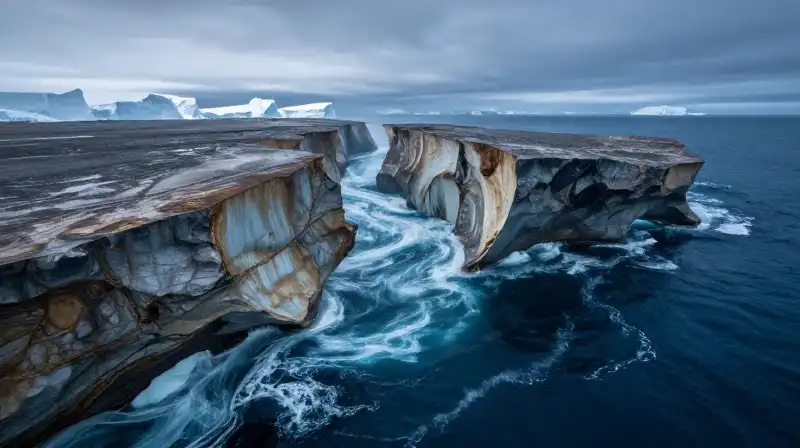
Despite its immense scale, the Southern Ocean is a relatively recent addition to the Earth’s geography. It formed approximately 34 million years ago when the tectonic plates of South America and Antarctica drifted apart, opening the Drake Passage and allowing for the continuous circumpolar current that defines the region today.
The Debate Over Boundaries
If you look at a map, you might notice that the exact borders of the Southern Ocean are not always clearly marked. Defining where one ocean ends and another begins has historically been a point of scientific debate. Different scientific organizations use different markers to delineate its limits, such as the 60th parallel south or the Antarctic Convergence, where cold polar waters meet warmer sub-Antarctic waters.
Size and Depth
The Southern Ocean is the second-smallest of the five principal oceans, covering roughly 6% of the Earth’s surface. While it is smaller than the Pacific, Atlantic, and Indian oceans, it remains significantly larger than the Arctic Ocean. Its floor is highly irregular; while the average depth is about 3,200 meters (10,700 feet), the region contains dramatic trenches. The deepest surveyed point is the Factorian Deep, located in the South Sandwich Trench, which reaches a depth of 7,434 meters (24,390 feet).
Life in the Cold: From Krill to Giants
Survival in the Southern Ocean requires specialized adaptations to handle sea temperatures that typically range from -2°C to 10°C (28°F to 50°F). Interestingly, while the waters are teeming with life, the ecosystem is characterized by an abundance of invertebrates rather than a high diversity of fish species.
The Pink Foundation of the Ecosystem
At the heart of this entire biological community is Antarctic krill. These tiny crustaceans serve as the primary food source for a massive array of roaming species, including whales and penguins. During the summer months, the swarms of krill can become so dense that they appear as visible pink patches when viewed from space.
Notable Marine Residents
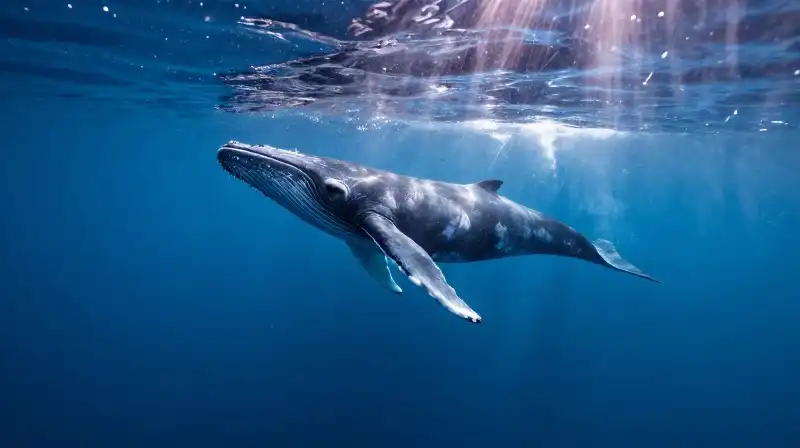
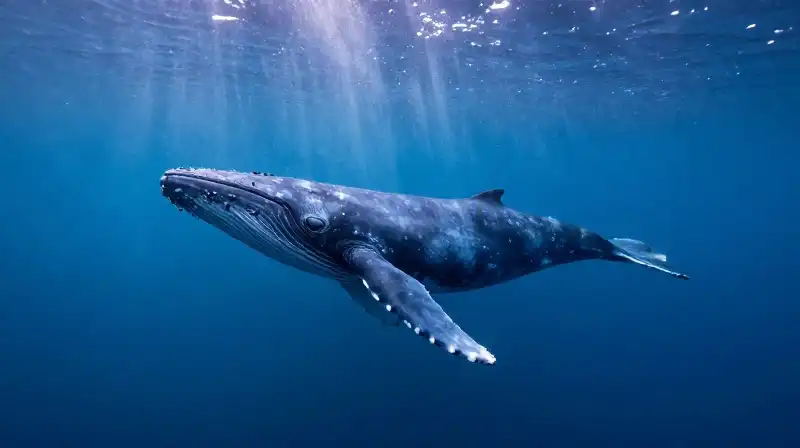
The Southern Ocean hosts some of the most iconic and largest creatures on the planet. The following table compares some of the most notable species found in these waters:
| Species | Notable Trait | Scale/Size Reference |
|---|---|---|
| Blue Whale | Largest animal on Earth | Feeds heavily on krill swarms |
| Elephant Seal | Massive marine mammal | Can reach weights up to 4,000 kg (8,818 lb) |
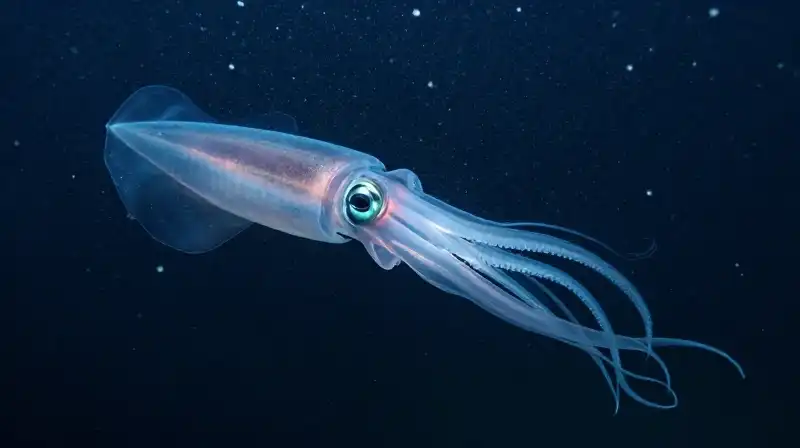
| Giant Squid | Deep-sea cephalopod | Can grow up to 15 meters (49 feet) in length |
| Emperor Penguin | Specialized polar bird | Thrives in extreme Antarctic conditions |
| Wandering Albatross | Exceptional glider | Commonly found roaming Southern Ocean winds |
Climate and the Changing Environment
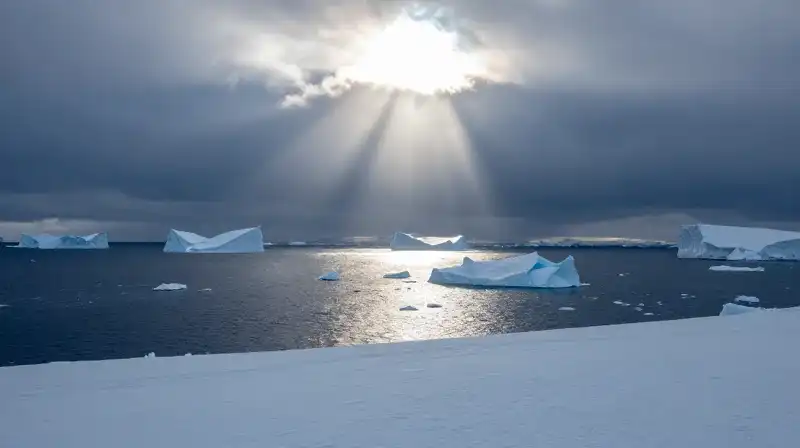
The Southern Ocean plays a critical role in global climate regulation by absorbing massive amounts of heat and carbon dioxide from the atmosphere. However, this role makes the region highly sensitive to environmental shifts. The sea ice in Antarctica is highly seasonal: while some sheets melt away during the summer, winter ice can expand to cover an area roughly twice the size of the United States.
Today, climate change is actively reshaping this environment. Scientists are observing record low sea ice levels in certain areas and an increase in ocean stratification, which can disrupt the natural mixing of nutrients and temperatures.
Common Questions About the Antarctic Ocean
What are some facts about the Antarctic Ocean?
The most defining facts include its relatively young age (34 million years), its unique status as the only ocean that flows entirely around the globe without being interrupted by land, and its role as a massive “mixing zone” for the world’s other oceans.
Is the Southern Ocean the same as the Antarctic Ocean?
The terms are often used interchangeably in casual conversation, but “Southern Ocean” is the more widely accepted scientific term used by many organizations to describe the waters surrounding Antarctica.
Why the Southern Ocean Matters
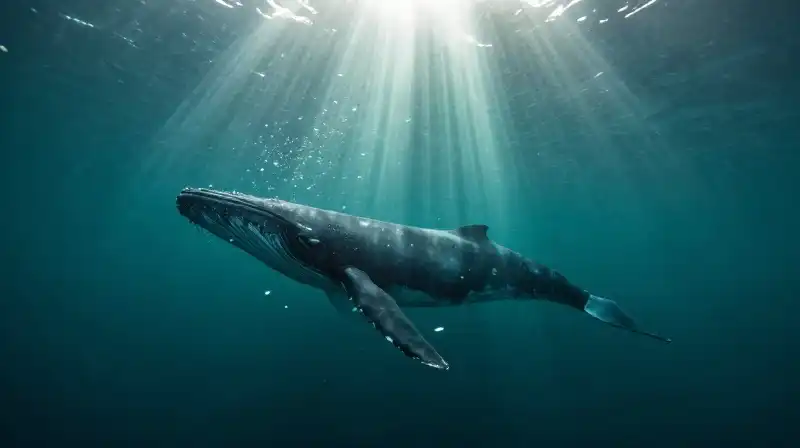
The Southern Ocean is much more than a remote, frozen expanse. It is a dynamic, relatively young, and vital component of the Earth’s life-support system. By regulating global temperatures and fueling a massive food web through the humble Antarctic krill, this ocean connects the biology of the poles to the climate of the entire planet. Understanding its depths, its shifting ice, and its unique inhabitants is essential to understanding the health of our global ocean.
Facts sourced from peer-reviewed marine biology research, NOAA, and the Smithsonian Ocean Portal. Our editorial team fact-checks all content against current scientific literature.
Frequently Asked Questions
What are some facts about the Antarctic Ocean?
The Antarctic Ocean, also known as the Southern Ocean, is approximately 34 million years old and is the only ocean that flows uninterrupted around the entire globe. It serves as a vital mixing zone where the worlds major oceans exchange heat and carbon dioxide.
Related Articles