15 Fascinating Fun Facts About Moon Jellyfish

Introduction
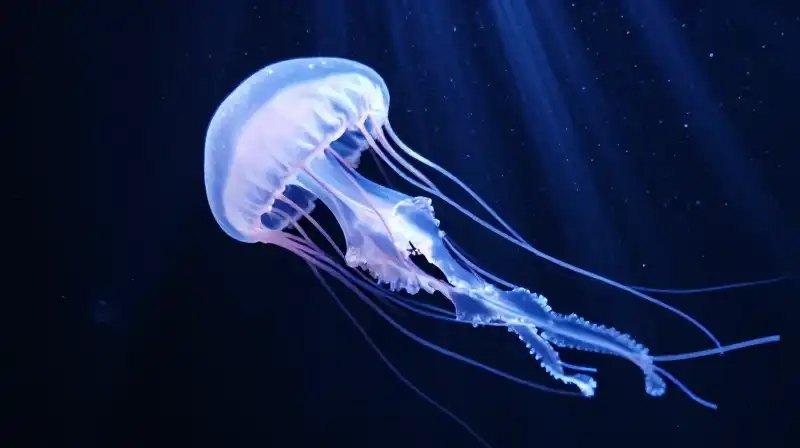
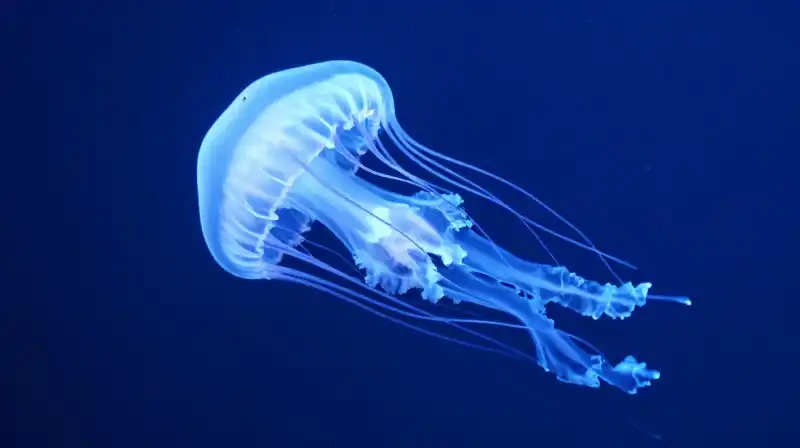
Drifting through the currents of the northeast Pacific, the moon jellyfish is a master of simplicity. While many marine creatures rely on complex nervous systems and heavy skeletal structures, this translucent invertebrate thrives by doing much less. Often seen as mere gelatinous blobs, these animals are actually highly successful evolutionary survivors that have mastered the art of existing in an ever-changing ocean environment.
15 Fascinating Fun Facts About Moon Jellyfish
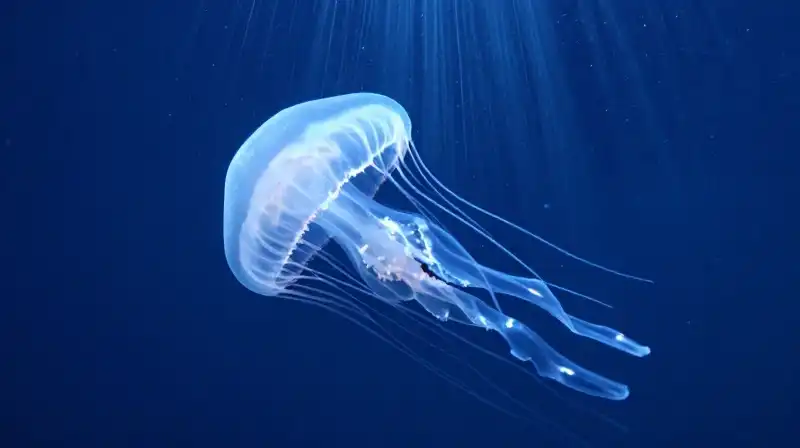
To understand why these creatures are so remarkable, we have to look past their delicate appearance and examine their biology, their history, and their strange relationship with the world around them.
- They are ancient survivors: Moon jellyfish have existed for over 600 million years. This means they predated the dinosaurs and managed to survive multiple mass extinction events thanks to their simple, adaptable biological design.
- They lack “vital” organs: In a radical departure from most animal life, moon jellyfish do not have a brain, a heart, or lungs.
- They use a “nerve net”: Instead of a centralized brain to process information, they rely on a simple nerve net to sense and respond to their surroundings.
- They breathe through their skin: Without lungs, these jellyfish absorb necessary oxygen directly through their skin.
- One hole does it all: Their anatomy is incredibly efficient, utilizing a single opening that serves as both a mouth for consuming food and an exit for expelling waste.
- They are mostly water: A moon jellyfish is composed of approximately 95% water. This makes them incredibly buoyant but also means predators must consume massive quantities of them to meet their energy requirements.
- They are ocean drifters: While they can move by using a gentle pulsing motion of their bell, they spend the majority of their lives simply drifting wherever the ocean currents take them.
- Their color can change: A moon jellyfish’s appearance is often dictated by its diet; for instance, consuming brine shrimp can actually turn their bodies an orange hue.
- They have a massive reproductive capacity: During their reproductive phase, a single adult moon jellyfish is capable of releasing up to 400,000 offspring.
- Only a few reach adulthood: Despite the massive number of offspring produced, only a tiny fraction of moon jellyfish actually survive to reach maturity.
- They undergo a complex life cycle: Their life isn’t just a continuous float; they transition from fertilized larvae (planulae) to stalk-like polyps on the seafloor. These polyps can then clone themselves or undergo a process called strobilation to produce young jellyfish known as ephyrae.
- They have specific names for groups: While a single jellyfish is an individual, a group of them is formally called a “smack,” and when they gather in massive concentrations, they are referred to as “blooms”.
- They have even traveled to space: In 1991, moon jellyfish were sent aboard the Space Shuttle Columbia to help scientists study how a lack of gravity affects their biological processes.
- They are a vital food source: They play a key role in the marine food web, serving as a primary meal for leatherback sea turtles, which can consume more than 100 jellies in a single day.
- They can be identified by specific markings: In the Salish Sea, species like Aurelia labiata can be identified by the four opaque half-circles visible on their bell and a distinctive 16-scalloped margin.
Diet and Ecological Role
The moon jellyfish is a specialized feeder, targeting small organisms that drift within its reach. Their diet typically consists of zooplankton, fish eggs, fish larvae, small crustaceans, and cladocerans, commonly known as water fleas.
This diet makes them a critical link in the ocean’s energy cycle. By consuming microscopic life and being, in turn, consumed by larger predators like sea turtles, they ensure that energy moves efficiently through the marine ecosystem.
Common Questions About Moon Jellyfish
What are some facts about moon jellyfish?
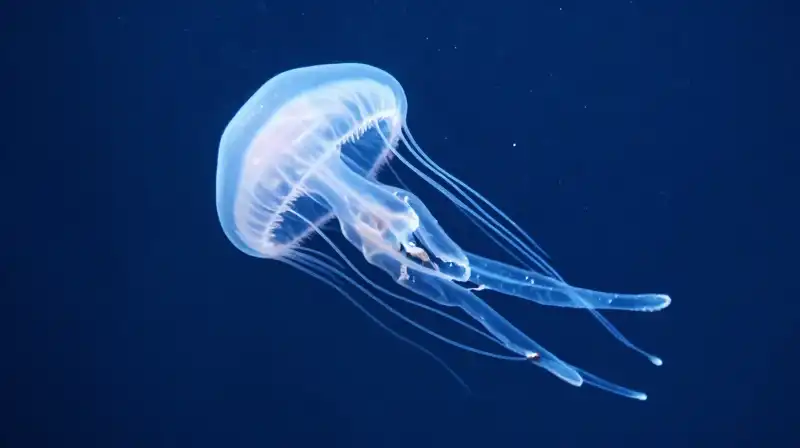
Moon jellyfish are ancient invertebrates (over 600 million years old) that lack a brain, heart, or lungs. They are composed of about 95% water and use a simple nerve net to interact with their environment. They are known for their complex life cycle involving both seafloor polyps and drifting medusae.
What do moon jellyfish eat?
Their diet is primarily composed of small organic matter including zooplankton, fish eggs, larvae, small crustaceans, and water fleas.
How long do moon jellyfish live?
While lifespans can vary based on environmental factors and species, their life cycle is defined by transitions between the polyp stage on the seafloor and the ephyrae/adult stage in the open water.
Conservation and Environmental Threats
Despite their resilience over hundreds of millions of years, moon jellyfish face modern challenges that their ancient ancestors never encountered. A significant threat to both moon jellyfish and the animals that eat them—such as sea turtles and various birds—is plastic pollution.
In the ocean, floating plastic bags often look nearly identical to drifting jellyfish. When marine animals mistake these pieces of debris for food, it leads to ingestion, which can be fatal for many species.
The Resilience of Simplicity
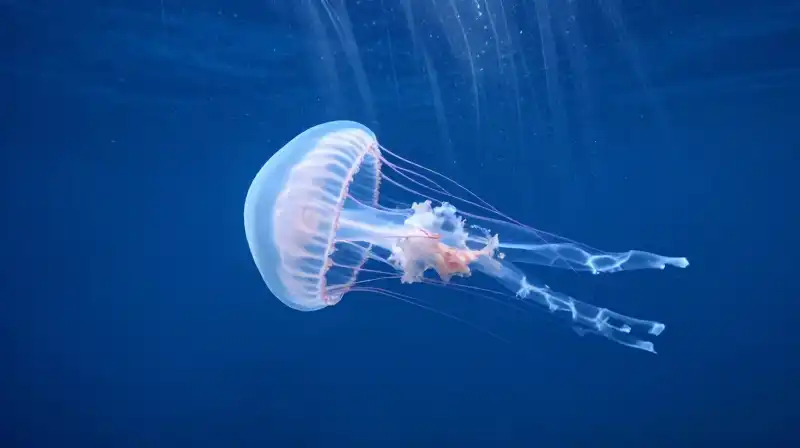
The moon jellyfish serves as a profound reminder that complexity is not a requirement for success. By stripping away the need for a brain or a heart, they have created a biological design that is incredibly efficient and nearly indestructible. From the depths of the Salish Sea to the microgravity of space, these translucent drifters continue to navigate the world’s oceans, proving that sometimes, the simplest way to survive is the best way of all.
Facts sourced from peer-reviewed marine biology research, NOAA, and the Smithsonian Ocean Portal. Our editorial team fact-checks all content against current scientific literature.
Frequently Asked Questions
What are some facts about moon jellyfish?
Moon jellyfish are ancient invertebrates that have existed for over 600 million years and lack a brain, heart, or lungs. Composed of approximately 95% water, they use a simple nerve net to respond to their surroundings and breathe through their skin.
Related Articles