
10 Fascinating Facts About Great White Sharks You Should Know


Introduction
The silhouette of a great white shark is one of the most recognizable shapes in the ocean, often conjured by cinematic depictions of underwater monsters. However, the reality of this apex predator is far more sophisticated than the “man-eater” tropes suggest. As the largest predatory fish on the planet, the great white is a marvel of evolutionary engineering, possessing sensory systems and physiological adaptations that allow it to dominate diverse marine environments. Understanding these animals requires looking past the fear to see a highly specialized hunter that plays a vital role in the health of our oceans.
10 Fascinating Facts About Great White Sharks
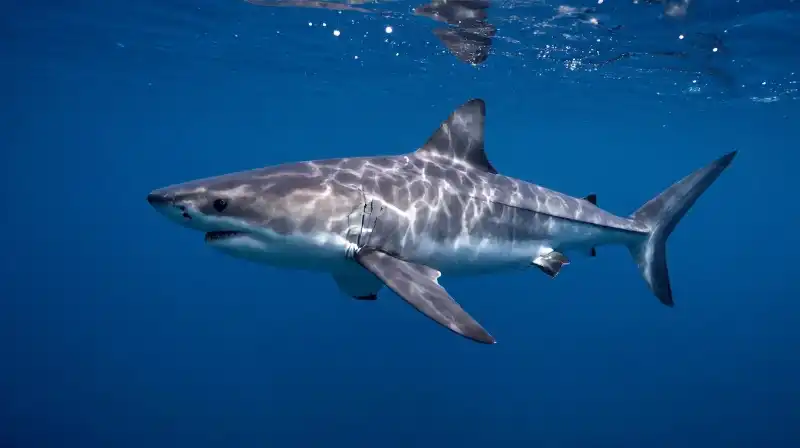
To understand why these sharks are so successful, we have to look at how they move, hunt, and survive. Here are ten essential facts that define the life of a great white.
- They are massive, powerful swimmers: Great whites typically grow to an average length of 4.6 meters (14.7 feet), but exceptional individuals have been recorded exceeding 6 meters (20 feet). To maintain this size, they utilize a highly streamlined body to achieve impressive speeds, capable of reaching bursts of up to 60km per hour or 35mph.
- They use “countershading” for camouflage: Their coloring is a masterclass in stealth. A dark grey upper body helps them blend into the shadows of the rocky seafloor when viewed from above, while a bright white underbelly mimics the sunlight filtering down from the surface when viewed from below.
- They are partially warm-blooded: Unlike most fish that are strictly cold-blooded, great whites can regulate their internal body temperature. This ability to maintain warmth allows them to swim more efficiently and hunt in much colder waters than other shark species.
- They possess an “electromagnetic sense”: Beyond sight and smell, great whites use specialized sensory organs called the ampullae of Lorenzini. These are pores filled with conductive jelly located on the nose and lower jaw that allow the shark to detect the tiny electromagnetic fields generated by the muscle movements of living creatures.
- Their sense of smell is unparalleled: A great white can detect a single drop of blood in 100 liters of water. This sensitivity is so acute that they can sense a colony of seals from as far as two miles away.
- They have a replaceable arsenal of teeth: Their mouths are equipped with up to seven rows of approximately 300 sharp, triangular teeth. These teeth are remarkably flexible and can move forward within the jaw, ensuring the shark always has a sharp edge ready for hunting.
- Their diet evolves as they age: Great whites are opportunistic hunters that change their focus over time. Young sharks typically feed on smaller prey like fish and rays, whereas adults transition to hunting larger marine mammals, including seals, sea lions, and even small whales.
- They are “born hunters”: Great white pups are born into a high-stakes environment. Inside the womb, embryos may engage in intrauterine cannibalism, consuming unfertilized eggs or weaker siblings to ensure only the strongest pups survive.
- Newborns must fend for themselves immediately: Once born, “pups” are typically four to five feet long. They receive no parental care from their mothers, who may even view their own offspring as prey.
- They have a natural rival in the Orca: Despite being apex predators, great whites are not at the very top of every interaction. The orca (killer whale) is a known predator of the great white; encounters with orcas can cause great whites to flee their usual hunting grounds for as long as a year.
Busting the “Man-Eater” Myth
One of the most persistent misconceptions about great white sharks is that they actively hunt humans. While movies often portray them as aggressive toward people, marine researchers suggest a different reality. Humans are not a primary food source for great whites. When interactions do occur, it is often suspected that the sharks are taking “sample bites” out of curiosity rather than intent to hunt.
Biological Marvels and Complexities
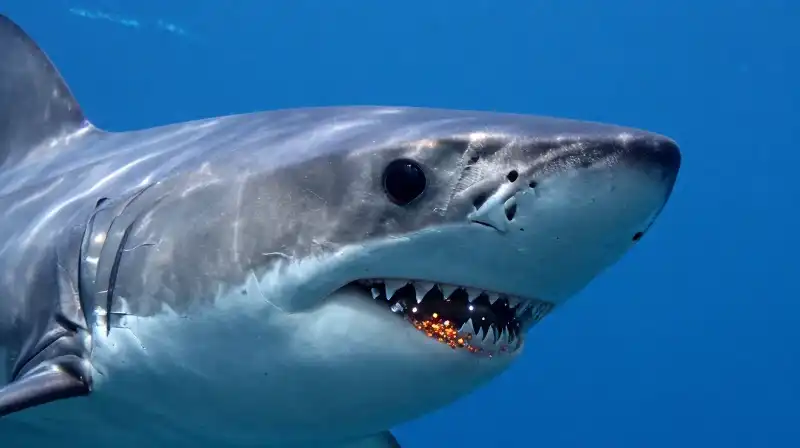
The physiology of a great white is a study in extremes. Because they sit at the top of the food chain, they experience bioaccumulation. This means they absorb high levels of mercury and arsenic from the prey they consume, resulting in highly toxic blood. Interestingly, despite these high heavy metal levels, the sharks do not appear to show symptoms of poisoning.
Comparison of Hunting Profiles
| Life Stage | Primary Diet | Key Characteristics |
|---|---|---|
| Juvenile/Pup | Small fish, rays | Rapid growth, high maneuverability |
| Adult | Seals, sea lions, small whales | High speed, massive strength, apex role |
Conservation and the Future of the Species
Despite their status as masters of the ocean, great white sharks face significant anthropogenic threats. They are currently classified as a vulnerable species on the IUCN Red List. Their populations are under pressure from human activities, specifically overfishing and illegal hunting. Protecting these predators is not just about saving a single species, but about maintaining the delicate balance of the marine ecosystems they help regulate.
Why the Great White Matters

The great white shark is more than just a powerful predator; it is a biological indicator of ocean health. From their unique thermoregulation and advanced sensory capabilities to their complex social and predatory hierarchies, they represent the intricate beauty of marine evolution. By looking past the sensationalized myths and understanding the science behind their behavior, we can better appreciate the need to conserve these magnificent creatures and the vast, blue world they inhabit.
Facts sourced from peer-reviewed marine biology research, NOAA, and the Smithsonian Ocean Portal. Our editorial team fact-checks all content against current scientific literature.
Related Articles