12 Fascinating and Surprising Facts About Jellyfish

Introduction
Drifting through the water column like translucent ghosts, jellyfish have mastered the art of survival without the fundamental tools we associate with life. They lack a brain to process thoughts, a heart to pump blood, and a skeleton to provide structure. Yet, these gelatinous organisms are among the most successful inhabitants of our oceans, having survived for hundreds of millions of years. Far from being simple, mindless drifters, jellyfish exhibit complex behaviors, specialized sensory organs, and even biological processes that challenge our understanding of aging and individuality.
12 Fascinating and Surprising Facts About Jellyfish
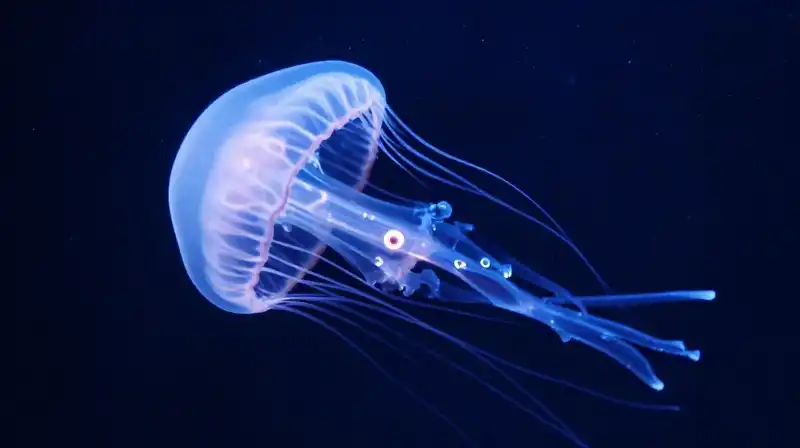
- They are ancient survivors: Jellyfish are among the oldest known organisms on the planet. Their ancestors are estimated to be at least 500 million years old, meaning they were thriving in the oceans long before the first dinosaurs ever appeared.
- They possess advanced vision: A common misconception is that jellyfish are blind. While many species have limited light sensitivity, the box jellyfish (Cubozoa) is remarkably advanced. These creatures possess 24 eyes that provide 360-degree vision, allowing them to actively hunt prey and navigate around predators.
- The “Immortal Jellyfish” exists: The species Turritopsis dohrnii has a biological loophole to death. If it becomes injured, starved, or faces extreme temperatures, an adult medusa can transform its cells back into a polyp stage. While this sounds like true immortality, researchers note a nuance: the jellyfish essentially restarts its life cycle, meaning the subsequent medusae are genetically identical clones rather than the same continuous individual.
- They operate with minimal anatomy: Belonging to the phylum Cnidaria, jellyfish are built for efficiency rather than complexity. They function without a brain, heart, or bones.
- Some live “upside-down”: While most jellyfish drift upright, the Cassiopea Andromeda, known as the upside-down jellyfish, lives differently. They form symbiotic relationships with algae, often resting on the seafloor to allow the algae to access sunlight for photosynthesis.
- They are surprisingly agile: Most jellyfish are at the mercy of ocean currents, but the box jellyfish is a capable swimmer, capable of moving up to six meters per minute. Other species have been recorded reaching top speeds of approximately 8km/h.
- Unique propulsion methods: To move through the water, some jellyfish use specialized anatomy to squirt jets of water from their mouths, propelling themselves forward.
- One opening for everything: In many species, the mouth is a multipurpose organ. It serves as the single opening used for both consuming food and discarding waste.
- Diverse and opportunistic diets: Jellyfish are not picky eaters. Their diets range from tiny marine plants to larger animals like fish, shrimp, crabs, and even other jellyfish species.
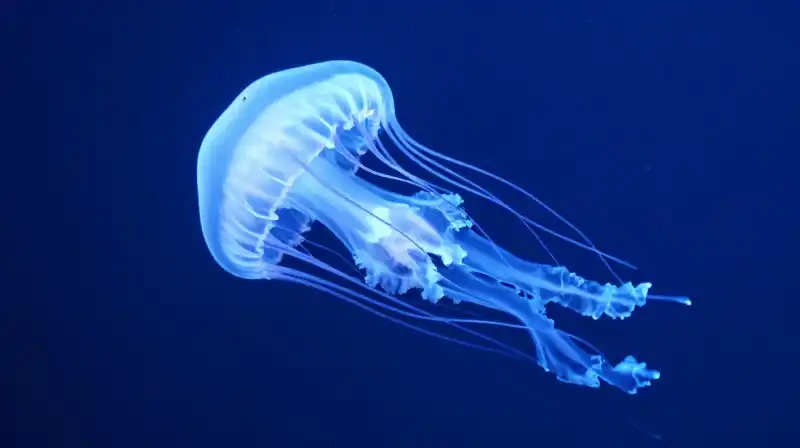
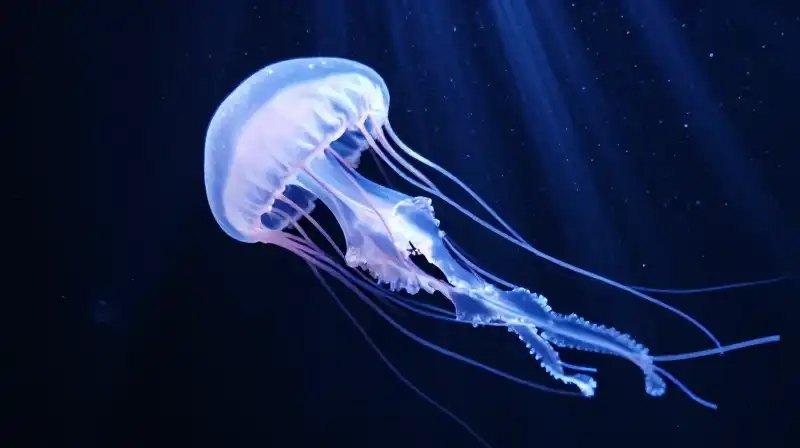
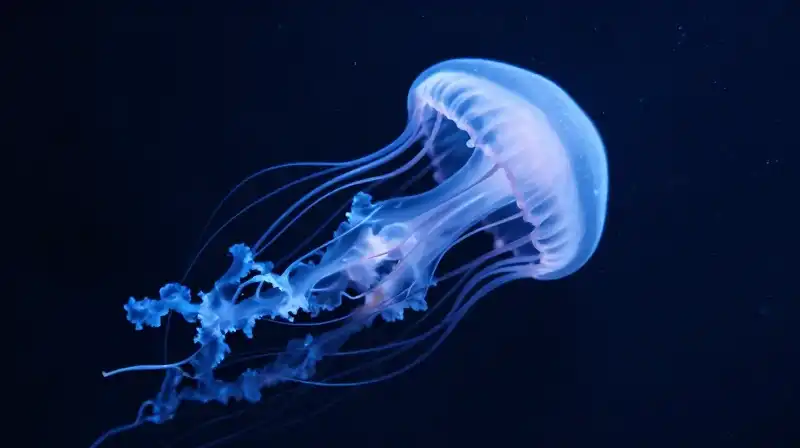
- A spectrum of light and color: While many people picture jellyfish as purely transparent, they can be incredibly vibrant, displaying colors like pink, yellow, blue, or purple. Additionally, many are bioluminescent, meaning they can produce their own light to communicate or deter threats.
- Social tendencies: Jellyfish are not always solitary drifters. Experiments with the Santa’s hat jellyfish (Periphylla periphylla) have shown that they can exhibit social behaviors, such as grouping, scattering, and regrouping in cycles, sometimes even entangling their tentacles with one another.
- Potent defense mechanisms: The sting of certain species, such as the sea wasp, is incredibly powerful. The pain can be so intense that it may cause death from shock before the venom itself even takes full effect.
Jellyfish at a Glance: Size and Speed
| Trait | Typical Range / Detail |
|---|---|
| Body Size | 2cm to 2m |
| Weight | Up to 2kg |
| Lifespan | Typically about one year in the wild |
| Top Speed | Up to 8km/h |
Addressing Common Misconceptions
Do jellyfish have teeth?
You may encounter online discussions suggesting that certain jellyfish possess “teeth.” This is a scientific misunderstanding. True jellyfish do not have teeth. However, some closely related organisms known as ctenophores use specialized structures called macrocilia bundles. These bundles function in a way that is very similar to teeth, which likely leads to the confusion.
What is unique about a jellyfish?
The most unique aspect of a jellyfish is its ability to perform complex biological functions—such as hunting, navigating, and even “reversing” its life cycle—without a centralized nervous system or a heart. Their existence proves that highly successful life forms do not need the complex organ systems that characterize most other animals.
The Remarkable Resilience of Cnidarians
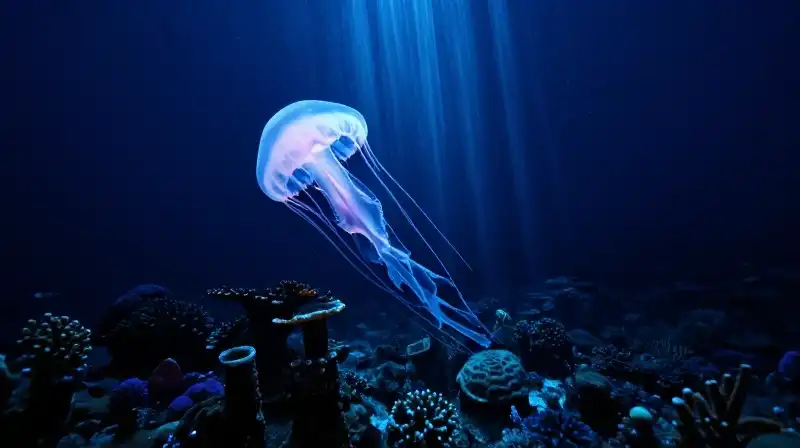
From the tiny, colorful drifters to the highly advanced box jellyfish, these creatures represent a masterclass in evolutionary adaptation. Whether they are using bioluminescence to light up the deep sea or utilizing symbiotic relationships to thrive on the seafloor, jellyfish have occupied nearly every corner of the ocean for half a billion years. Their ability to endure, adapt, and in some cases, cheat death, makes them one of the most intriguing subjects in marine biology.
Facts sourced from peer-reviewed marine biology research, NOAA, and the Smithsonian Ocean Portal. Our editorial team fact-checks all content against current scientific literature.
Frequently Asked Questions
What is unique about a jellyfish?
The most unique aspect of a jellyfish is its ability to perform complex biological functions, such as hunting and navigating, without a heart or a centralized nervous system. Some species can even reverse their life cycle.
Related Articles