10 Fascinating Facts About Crabs You Probably Didnt Know

Introduction
Crabs are among the most recognizable inhabitants of the ocean, often appearing in coastal folklore and culinary traditions alike. Yet, much of what we think we know about these crustaceans is often oversimplified or misunderstood. From their specialized anatomy to the massive scale of diversity within their species, crabs represent a highly successful biological design that has allowed them to thrive in environments ranging from tropical tide pools to the crushing depths of the deep sea.
Whether you are looking for 10 interesting facts about crabs to satisfy a curiosity or simply want to understand the mechanics of how they live, exploring their world reveals a complex group of animals. They are not just “scuttlers” on the sand; they are highly specialized decapod crustaceans with remarkable survival strategies.
10 Fascinating Facts About Crabs
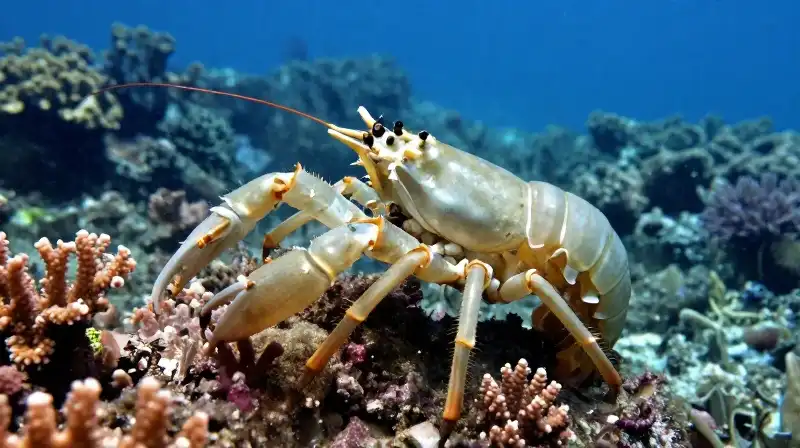
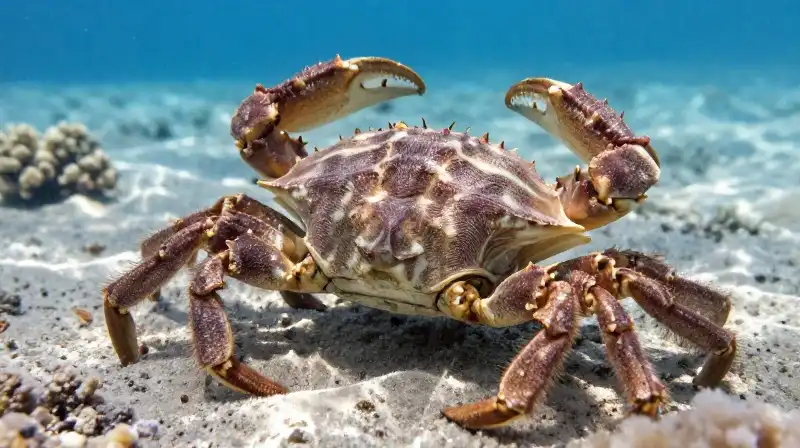
- They are defined by their ten legs. The word “decapod” refers to a group of crustaceans that possess ten legs. While all crabs follow this blueprint, their first pair of legs is highly specialized into claws, known scientifically as chelae.
- They possess armored exoskeletons. To protect their soft internal organs from predators and environmental pressure, crabs grow a hard outer shell made of calcium carbonate.
- “Softshell” is a stage of life, not a species. When people eat softshell crab, they aren’t eating a specific type of animal. Instead, it is usually a crab—often the blue crab—that has recently molted its hard shell and has not yet had time to harden again.
- They can regrow lost limbs. If a crab loses a claw or a leg to a predator, it has the ability to undergo autotomy—a process of naturally shedding a limb to survive. These limbs can then be regenerated over the course of approximately one year.
- Not everything called a “crab” is a true crab. Many creatures that look like crabs actually belong to the order Anomura, making them “false crabs.” This group includes hermit crabs, king crabs, and horseshoe crabs.
- Their movement is more versatile than it looks. While the sideways scuttle is their most famous movement, many species are capable of walking forwards, backwards, or even swimming through the water.
- They are highly prolific breeders. Female crabs are incredibly efficient at reproduction, with the capacity to release between 1,000 and 2,000 eggs during a single spawning event.
- They serve as essential omnivores. Crabs play a vital role in the marine food web by consuming a wide variety of organic matter, including algae, bacteria, fungi, worms, mollusks, and other crustaceans.
- A group of crabs has a unique name. If you happen to see a large gathering of these animals, you are looking at what is collectively known as “a cast”.
- The scale of species is enormous. Depending on the scientific source, there are anywhere from 4,500 to over 6,700 different species of crabs recognized.
A Study in Extremes: Size and Lifespan
One of the most striking aspects of crab biology is the sheer disparity in physical scale. The difference between the smallest and largest species is not just a matter of inches, but a matter of massive biological variation.
| Feature | Pea Crab (Smallest) | Japanese Spider Crab (Largest) |
|---|---|---|
| Approximate Size | 0.4 to 0.6 inches wide (a few millimeters) | 12 to 13 feet leg span |
| Typical Lifespan | 3 to 4 years | Up to 100 years |
Common Questions About Crabs
What are true facts about crabs?
True facts about crabs involve their fundamental biological classifications. They are decapods, meaning they have ten legs, and they rely on calcium carbonate for their exoskeletons. Their behaviors, such as autotomy (shedding limbs to survive) and their diverse diets as omnivores, are well-documented scientific realities of their survival strategy.
What is the most interesting crab?
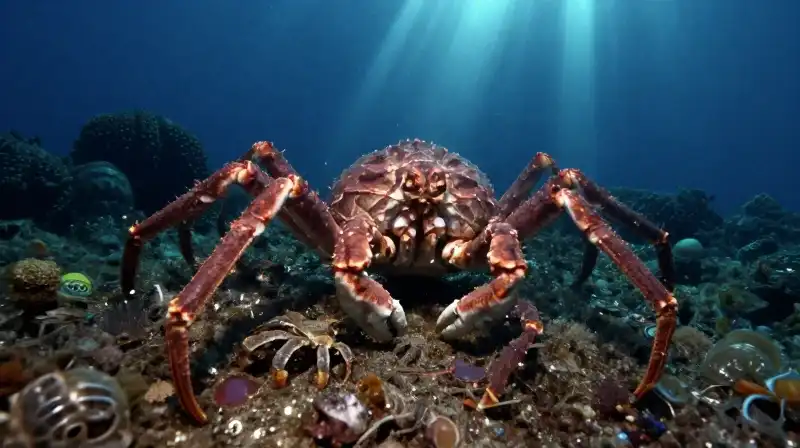
Interest is subjective, but the Japanese Spider Crab is often cited due to its staggering size and incredible longevity, living up to a century. On the opposite end of the spectrum, the Pea Crab is notable for its microscopic scale. Furthermore, the biological distinction of “false crabs” like the hermit crab makes the entire order Anomura a subject of intense fascination for marine biologists.
The Complexity of the Crustacean World
Crabs are far more than simple scavengers. Their ability to regenerate limbs, their diverse movement patterns, and their massive evolutionary success—evidenced by thousands of different species—mark them as one of the most adaptable groups in the ocean. Whether they are the tiny pea crab navigating microscopic crevices or the giant Japanese Spider Crab patrolling the deep sea floor, these decapod crustaceans are a fundamental part of the ocean’s ecological balance.
Facts sourced from peer-reviewed marine biology research, NOAA, and the Smithsonian Ocean Portal. Our editorial team fact-checks all content against current scientific literature.
Frequently Asked Questions
What are true facts about crabs?
Crabs are decapods with ten legs and armored exoskeletons made of calcium carbonate. They are omnivores that can undergo autotomy to shed and eventually regrow lost limbs.
What is the most interesting crab?
While interest is subjective, the Japanese Spider Crab is often cited due to its staggering size and longevity. The Pea Crab is also notable for its microscopic scale, and false crabs like the hermit crab are subjects of intense fascination.
Related Articles