
12 Fascinating Facts About Loggerhead Sea Turtles

Introduction
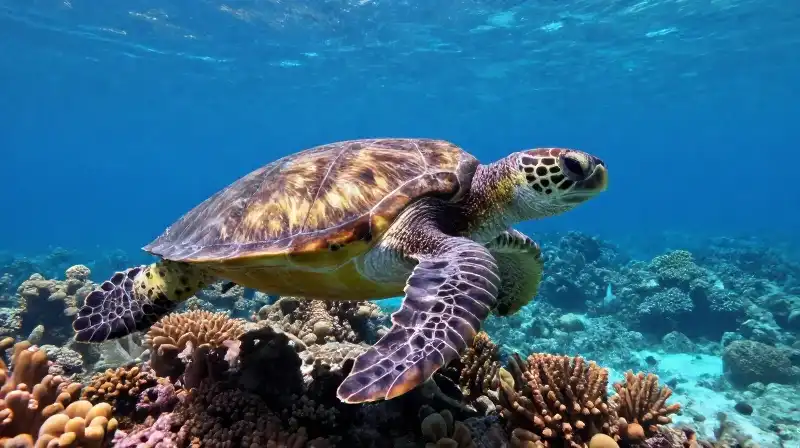
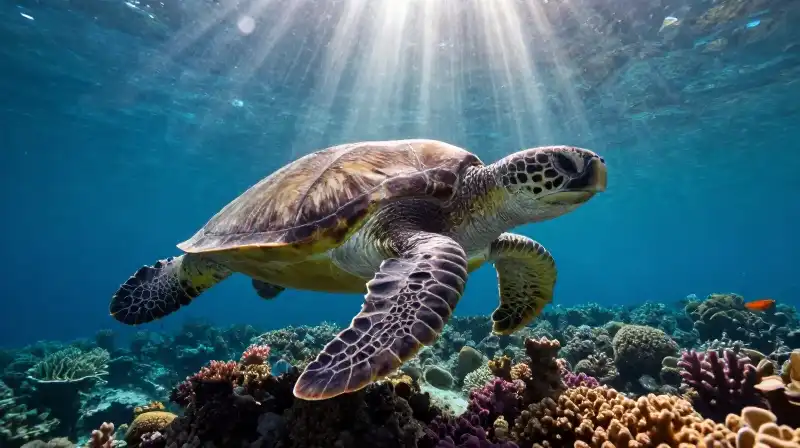
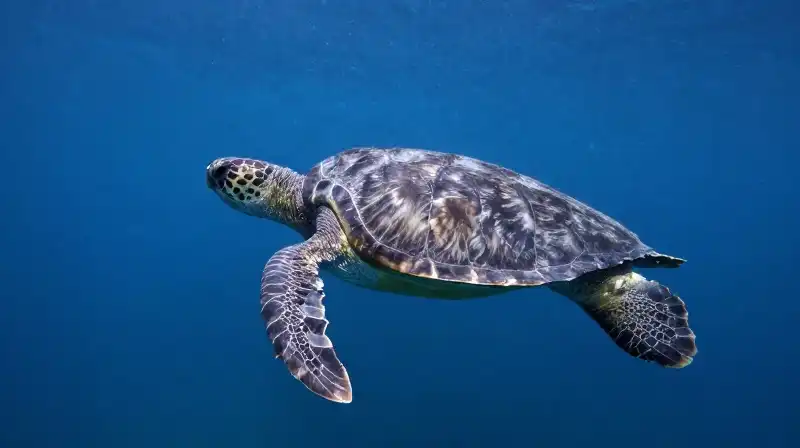
Imagine a creature that has survived on Earth for over 100 million years, navigating vast oceanic distances with a biological compass that rivals modern technology. The loggerhead sea turtle (Caretta caretta) is much more than just a slow-moving reptile; it is an ancient survivor with specialized tools for survival, from bone-crushing jaws to a unique way of managing salt. Named for their oversized, heavy heads that can resemble floating logs, these turtles play a vital role in the health of the temperate and tropical oceans across the Atlantic, Pacific, and Indian Oceans.
12 Fascinating Facts About Loggerhead Sea Turtles
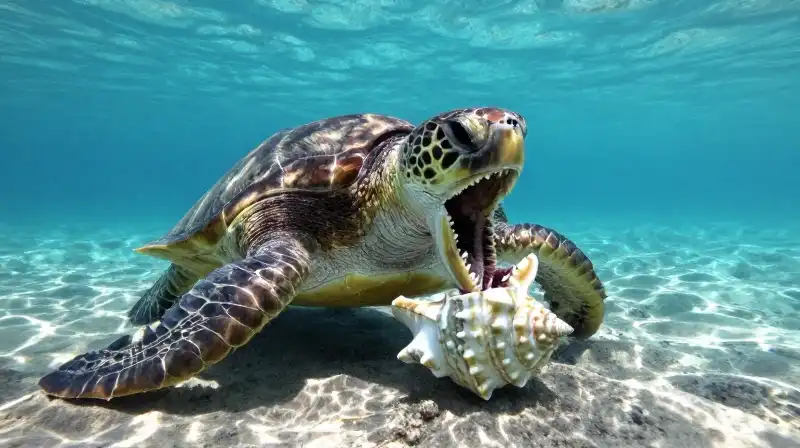
- An Ancient Lineage: Loggerheads are true evolutionary veterans. These reptiles have existed on our planet for approximately 110 million years, meaning they lived alongside the dinosaurs and have successfully navigated countless environmental shifts.
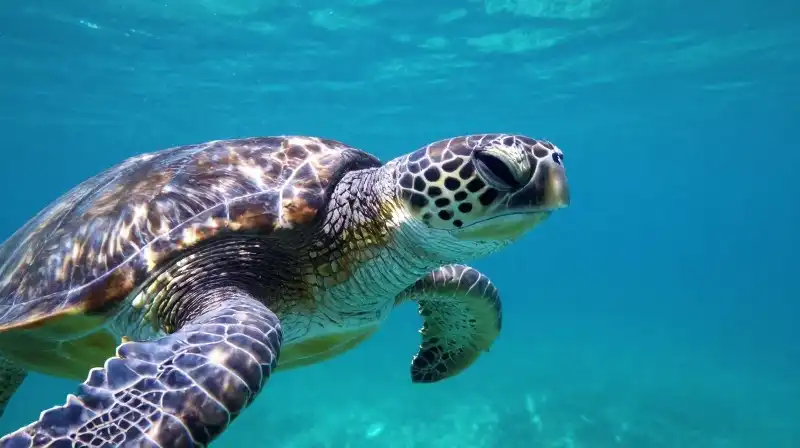
- The “Log” Head and Powerful Jaws: Their most defining feature is their massive head. This isn’t just for show; it houses incredibly powerful jaws specifically evolved to crush the hard shells of their favorite foods, including clams, crabs, mussels, sea urchins, whelks, and conchs.
- Impressive Growth Potential: A loggerhead’s life begins quite small. While newly hatched turtles are only about two inches long, adults can grow to significant sizes, reaching lengths of up to 3 feet (0.9 meters) and weighing as much as 250 pounds (113 kg).
- Biological Navigation: Female loggerheads are master navigators. They are capable of migrating thousands of miles—sometimes exceeding 12,000 km—to return to their exact “natal beach,” the very same stretch of sand where they were hatched, to lay their own eggs.
- Temperature-Dependent Sex Determination: Unlike humans, where sex is determined by chromosomes, a loggerhead’s sex depends on the heat of the sand. Warmer incubation temperatures (above 85°F) tend to produce females, while cooler temperatures produce males.
- The “Crying” Myth: If you see a loggerhead with fluid near its eyes, it isn’t crying out of sadness. This is actually a specialized salt gland adaptation that allows the turtle to drink seawater and excrete the excess salt from its system.
- The Sargassum Nursery: After hatching, young turtles spend their early years in floating mats of seaweed known as sargassum. This provides a critical “nursery” environment, offering both protective cover from predators and a primary food source.
- A Difficult Start in Life: The journey to adulthood is a gauntlet. The survival rate for young turtles is remarkably low, with experts estimating that only one in 1,000 hatchlings will actually survive to reach adulthood.
- Long-Lived Travelers: Once they survive the perils of youth, loggerheads are built for the long haul. Their lifespan is estimated to range from 47 to 67 years, though many live even longer.
- Global Habitat: While they are widespread across tropical and subtropical waters, they have limits. They thrive in temperate regions of the major oceans but generally avoid the freezing waters found near the poles.
- Threatened by Bycatch: One of the greatest dangers to loggerheads is accidental capture in fishing gear, a phenomenon known as bycatch.
- Light Pollution Hazards: For hatchlings, artificial lights on beaches can be deadly. Instead of following the moon and stars to find the ocean, they can become disoriented by beachfront lighting and wander inland.
Species Profile: Loggerhead Sea Turtle
To better understand the physical and biological scale of the Caretta caretta, refer to the summary table below.
| Feature | Details |
|---|---|
| Scientific Name | Caretta caretta |
| Typical Adult Length | Up to 3 feet (0.9 meters) |
| Typical Adult Weight | Up to 250 pounds (113 kg) |
| Estimated Lifespan | 47 to 67+ years |
| Primary Diet | Hard-shelled prey (crabs, clams, urchins) |
| Conservation Status | Vulnerable (IUCN); Threatened (U.S. ESA) |
Common Questions About Loggerheads
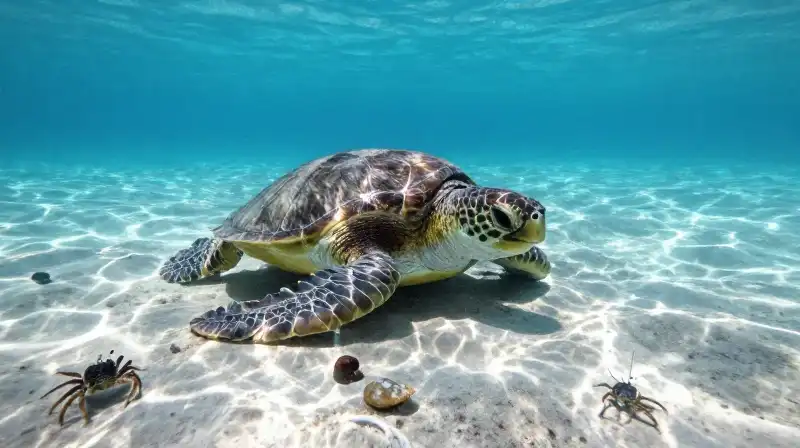
What do loggerhead sea turtles eat?
Loggerheads are specialized carnivores. Their powerful jaws are designed to crack open hard-shelled animals, specifically targeting crabs, clams, mussels, sea urchins, whelks, and conchs.
How many loggerhead sea turtles are left?
While specific global population numbers fluctuate, loggerheads face significant challenges. They are listed as “Vulnerable” by the IUCN and are considered “Threatened” under the U.S. Endangered Species Act. Their survival is heavily impacted by habitat destruction and marine pollution.
What are the main predators of loggerhead sea turtles?
The summary does not list specific natural predators, but it notes that the survival rate for hatchlings is extremely low—only 1 in 1,000 reaches adulthood—indicating heavy predation and environmental pressure during their early developmental years.
Conservation and Protection
Because loggerheads face multiple human-driven threats, conservation efforts are focused on several fronts. Beyond addressing bycatch and pollution, local communities are working to protect the nesting process. For example, in areas like Tybee Island, “turtle-friendly” lighting ordinances have been implemented. These regulations ensure that artificial lights do not disorient hatchlings, allowing them to use the natural light of the moon and stars to find their way safely to the sea.
Why the Loggerhead Matters
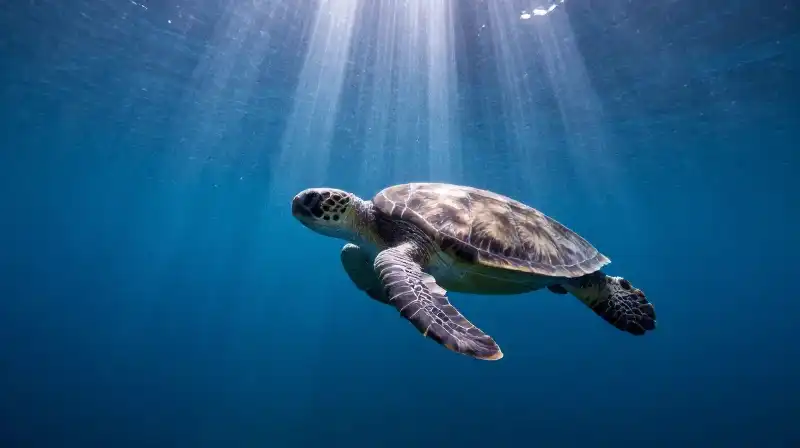
The loggerhead sea turtle is a testament to biological resilience. From their ability to manage salt through specialized glands to their incredible instinct to return to their natal beaches after traveling thousands of miles, they are marvels of evolutionary engineering. Understanding these creatures—and the specific threats they face from light pollution and fishing gear—is the first step in ensuring that this 110-million-year-old lineage continues to navigate our oceans for millions of years to come.
Facts sourced from peer-reviewed marine biology research, NOAA, and the Smithsonian Ocean Portal. Our editorial team fact-checks all content against current scientific literature.
Related Articles