
12 Fascinating Facts About Leatherback Sea Turtles

Introduction
Imagine a creature the size of a small car, gliding through the crushing darkness of the deep ocean. Unlike any other turtle you have seen, this animal doesn’t carry a heavy, bone-hard shell; instead, it possesses a flexible, leathery skin that allows it to withstand the immense pressures of the abyss. The leatherback sea turtle is a biological marvel, a circumglobal traveler that bridges the gap between tropical surface waters and the freezing, high-pressure depths of the open sea.
12 Fascinating Facts About Leatherback Sea Turtles
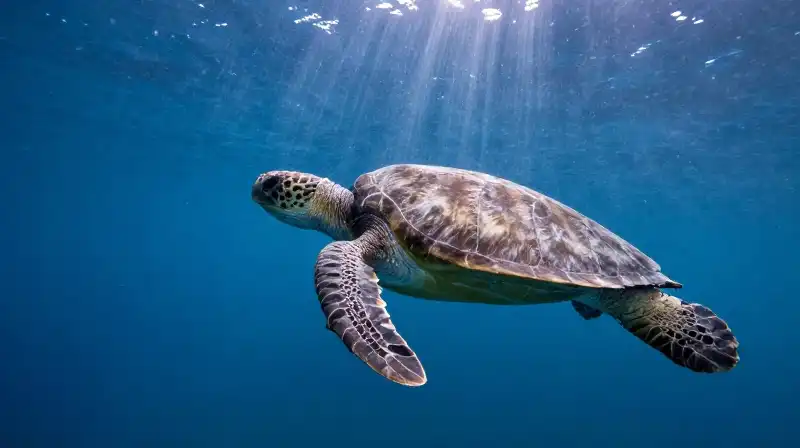
To understand why these reptiles are so unique among marine life, we have to look at their specialized anatomy, their incredible endurance, and the ways they have adapted to survive in environments that would be fatal to most other species.
- They are the giants of the turtle world. Leatherbacks are the largest sea turtle species on the planet. According to they are the third largest reptiles in the world, surpassed only by the American alligator and the saltwater crocodile.
- Their “shell” is not what you expect. While the other six species of sea turtles have hard, bony shells made of interlocking keratin plates, the leatherback has a soft, flexible carapace. This shell is made of small, unfused bony pieces covered in a tough layer of skin, a structural adaptation that prevents the shell from cracking under extreme pressure.
- They are deep-sea divers. Leatherbacks are masters of the vertical ocean. They regularly dive to depths exceeding 1,000 meters (3,280 feet), and one record-breaking dive reached 4,409 feet (1,344 meters). They can achieve this because their compressible shell handles the pressure, and they can absorb nitrogen through their carapace to avoid decompression sickness.
- They are uniquely warm-blooded. Most reptiles are ectothermic, meaning they rely on the environment for heat. However, leatherbacks are the only sea turtles considered warm-blooded. They use a thick layer of insulating fat and a specialized “countercurrent heat exchange” blood circulation mechanism to maintain a stable body temperature, allowing them to thrive in both tropical and cold waters.
- They can change color to regulate temperature. To prevent overheating in warmer waters, leatherbacks can move blood closer to the surface of their skin, which may give them a noticeable pinkish appearance.
- They are world travelers. Leatherbacks are “circumglobal” travelers, meaning they inhabit every ocean on Earth except for the Arctic and Antarctic regions. This makes them the most widely distributed of all marine turtles.
- Their migrations are legendary. Some leatherbacks undertake some of the longest migrations in the animal kingdom, traveling up to 10,000 miles (16,000 kilometers) in a single journey. One tracked female migrated from Papua, Indonesia, to the coast of Oregon, USA—a staggering 12,774 miles (20,558 kilometers).
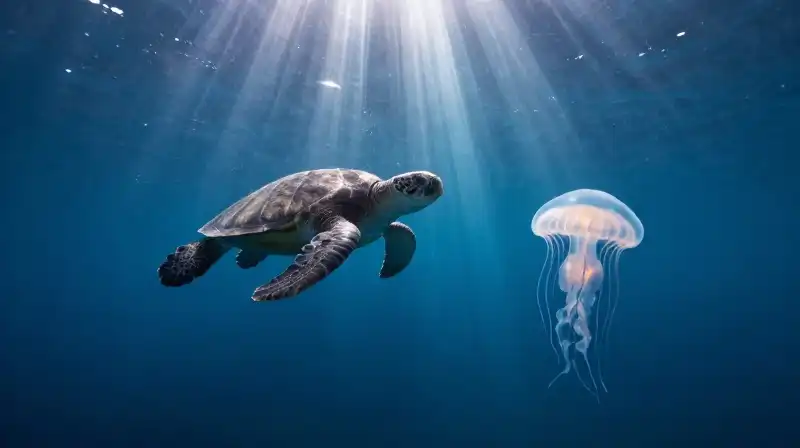
- They have a specialized diet. Despite their massive size, leatherbacks are carnivores that eat almost exclusively jellyfish and other gelatinous zooplankton.
- They have “spiky” throats. To manage their diet, leatherbacks have inward-facing, spiky throat structures called papillae. These help break down prey, protect the turtle from stinging cells, and help expel excess salt.
- Sand temperature determines their sex. Unlike humans, the sex of leatherback hatchlings is determined by the temperature of the sand during incubation rather than genetics. Warmer sand tends to produce more females, while cooler temperatures produce more males.
- Survival is a numbers game. While adult leatherbacks have few natural predators—occasionally facing sharks or jaguars—the hatchlings face a much more dangerous journey. They must survive attacks from birds, crabs, and fish, and it is estimated that only about one in a thousand hatchlings survives to adulthood.
- They face human-driven threats. Leatherback populations are under pressure from plastic pollution, coastal development, climate change, and incidental capture in fishing gear, known as bycatch.
Understanding Leatherback Scale
To visualize the size of these magnificent reptiles, consider the following average measurements compared to other common sea turtle types:
| Feature | Leatherback Sea Turtle | Other Sea Turtle Species (General) |
|---|---|---|
| Shell Type | Soft, leathery, and flexible | Hard, bony, and rigid |
| Average Length | 4.5 to 6+ feet (Some up to 6.6 feet) | Varies, but generally smaller |
| Average Weight | 600 to 1,400 pounds (Some up to 2,000 lbs) | Significantly lighter |
| Thermoregulation | Warm-blooded (Endothermic) | Cold-blooded (Ectothermic) |
Common Questions About Leatherbacks
What do leatherback sea turtles eat?
Leatherbacks are specialized feeders that focus almost entirely on jellyfish and other gelatinous zooplankton. Their unique throat papillae are essential for this diet, helping them grip slippery prey and handle the stinging cells of jellyfish.
Why are leatherback sea turtles endangered?
The threats to leatherbacks are multifaceted. Plastic pollution is a major concern because plastic bags often look like jellyfish, leading turtles to ingest them. Additionally, they suffer from bycatch in fishing gear, habitat loss due to coastal development, and the effects of climate change. While some populations are listed as vulnerable, Pacific leatherbacks are considered critically endangered, with Eastern Pacific populations having declined by more than 97 percent.
Are leatherback sea turtles dangerous?
While their size can be intimidating, leatherbacks are not typically considered a threat to humans. They are primarily interested in jellyfish. While they do have powerful jaws and the ability to bite, they are not aggressive toward people. The “danger” associated with them is usually focused on their vulnerability to human activity rather than their capacity to harm.
The Resilience of a Deep-Sea Icon
The leatherback sea turtle represents a unique evolutionary path. By trading a heavy shell for a flexible one and developing the ability to regulate their own body heat, they have conquered environments that remain inaccessible to most other reptiles. However, their highly specialized nature—specifically their reliance on jellyfish and their need for specific nesting temperatures—makes them particularly sensitive to the changing health of our oceans. Protecting these ancient travelers means addressing the broader challenges of plastic waste and global climate shifts that affect the entire marine ecosystem.
Facts sourced from peer-reviewed marine biology research, NOAA, and the Smithsonian Ocean Portal. Our editorial team fact-checks all content against current scientific literature.
Related Articles