
12 Fascinating Facts About Sea Turtles and Their Survival

Introduction
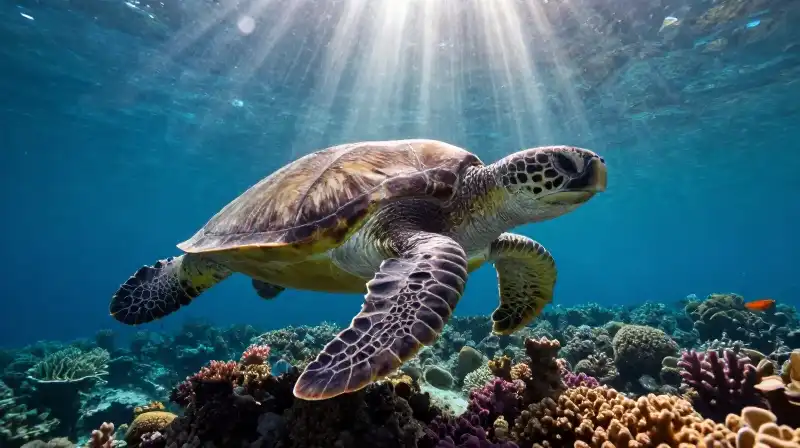
Imagine a creature that watched the rise and fall of the dinosaurs, survived mass extinctions, and still traverses entire ocean basins with unerring precision. Sea turtles are not merely ocean dwellers; they are biological masterpieces of endurance. While they may look slow or cumbersome compared to the agile predators of the reef, these ancient mariners have perfected a way of life that has remained largely unchanged for 110 million years. From the sun-drenched nesting beaches to the crushing pressures of the deep sea, their lives are defined by a series of extraordinary biological adaptations and high-stakes survival gambles.
12 Fascinating Facts About Sea Turtles and Their Survival
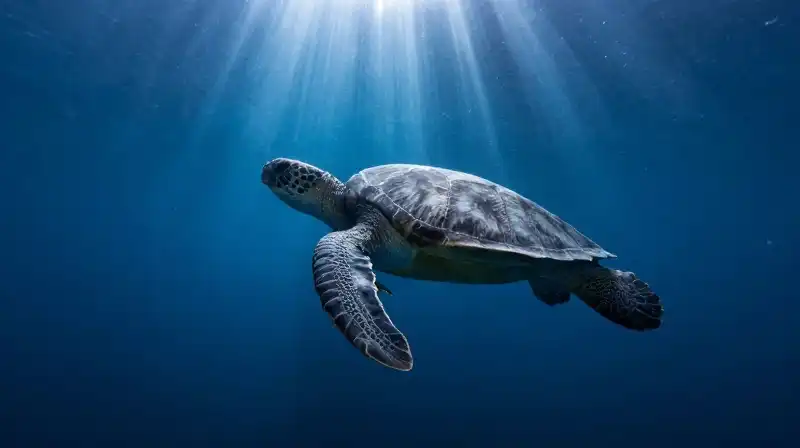
To understand why these animals are so remarkable, one must look beyond their shells. Their biology, reproductive strategies, and navigational skills reveal a complexity that many people find surprising.
- Ancient Evolutionary Success: Sea turtles are true survivors. They coexisted with dinosaurs for approximately 45 million years and have undergone very little evolutionary change since they first emerged roughly 110 million years ago.
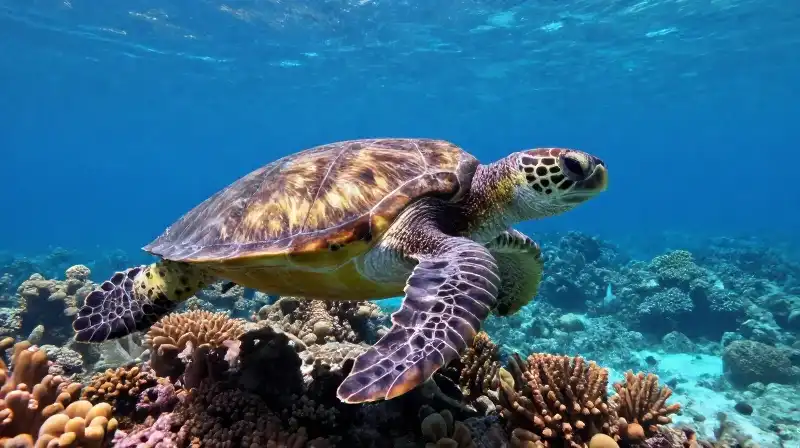
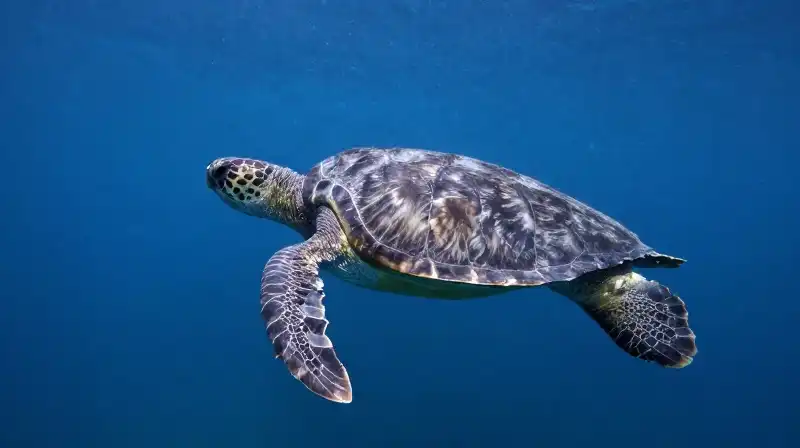
- Built for the Water, Not the Land: Unlike their terrestrial cousins, sea turtles cannot retract their heads or flippers into their shells for protection. Instead, they have evolved streamlined shells and powerful, paddle-shaped flippers specifically designed for agility and efficient movement through the water.
- Sand Temperature Dictates Sex: The gender of a sea turtle is not determined by chromosomes alone, but by the warmth of the sand where the eggs are incubated. Warmer temperatures (above 31ºC/87.8ºF) typically result in female hatchlings, while cooler temperatures (below 27.5ºC/81.5ºF) produce males.
- The “Green” in Green Sea Turtles: The Green sea turtle earns its name from the greenish color of its cartilage and fat. This isn’t due to its shell, but rather its herbivorous diet, which consists primarily of seagrass and algae.
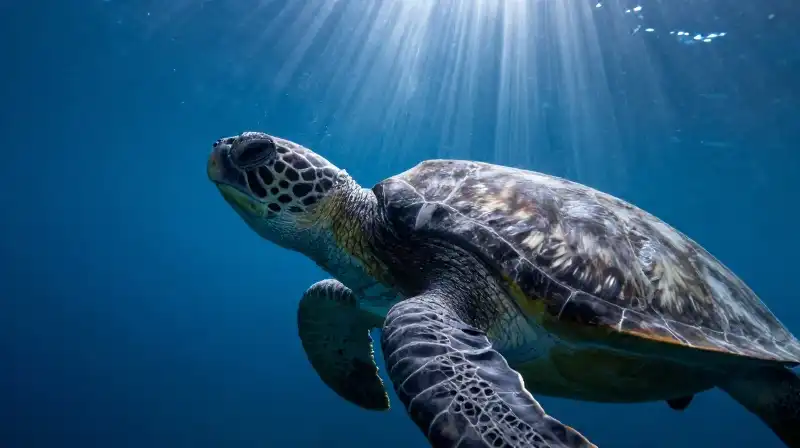
- Biological Fingerprints: No two sea turtles are exactly alike. Scientists can distinguish individuals by examining their unique “scute patterns” (the scales on the shell) and the specific arrangement of scales on their faces, much like a human fingerprint.
- Master Navigators: Sea turtles perform massive migrations that can span entire ocean basins. They achieve this by using a sophisticated internal compass that relies on Earth’s magnetic field and the position of the sun.
- The Return to Beginnings: Many species exhibit “natal homing,” a remarkable instinct where adults return to the exact same general nesting beaches where they were hatched. Some individuals have been known to return to these sites even after 30 years away.
- Deep-Sea Divers: The Leatherback turtle is a champion of the depths. They have been recorded diving to nearly 4,000 feet—deeper than many marine mammals. To feed, they use specialized throat spines called papillae to help trap jellyfish.
- Low Survival Odds: Life is incredibly difficult for a hatchling. On average, only 1 in every 1,000 sea turtle eggs will successfully survive the various predators and environmental hazards to reach adulthood.
- Unique Nesting Rhythms: While most sea turtle species prefer the cover of darkness to nest, the Kemp’s ridley is an outlier, known to routinely nest during the daylight hours.
- Mass Nesting Events: Certain species, such as the Kemp’s ridley and olive ridley, engage in a spectacular behavior called “arribadas.” During an arribada, massive groups of females arrive on a beach to nest simultaneously.
- Longevity in the Ocean: These animals are built for the long haul. While many wild sea turtles live between 50 and 70 years, some individuals have been known to reach ages of 80 or even 90 years.
Comparing Key Sea Turtle Traits
Different species have evolved different specializations to fill various niches in the ocean. Below is a comparison of some notable traits found among common species.
| Feature | Green Sea Turtle | Leatherback Turtle | Kemp’s Ridley |
|---|---|---|---|
| Primary Diet | Seagrass and algae (Herbivorous) | Jellyfish (Carnivorous) | Crustaceans and mollusks |
| Nesting Habit | Typically nocturnal | Typically nocturnal | Can nest during the day |
| Specialization | Green cartilage/fat | Extreme deep-diving | Mass “arribada” nesting |
The Challenges of Modern Survival
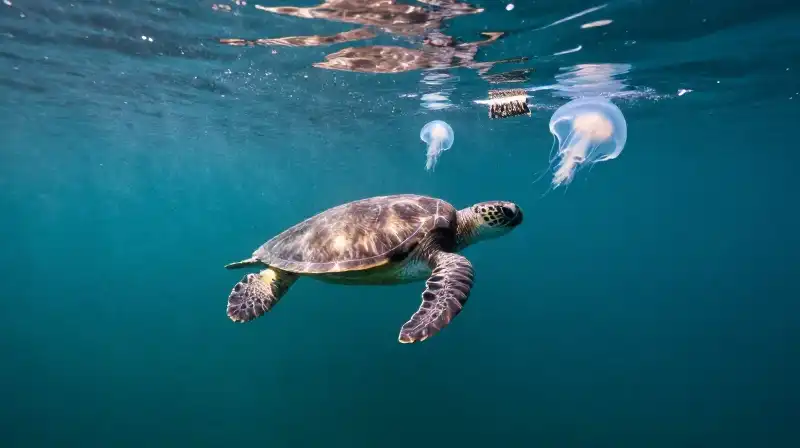
Despite their millions of years of resilience, all seven species of sea turtles currently face significant threats to their continued existence. Unlike the prehistoric challenges of predators or changing climates over geological timescales, modern threats are often driven by human activity.
- Plastic Pollution: Sea turtles often mistake floating plastic debris for food, such as jellyfish, which can lead to fatal blockages.
- Climate Change: Because sand temperature determines the sex of hatchlings, rising global temperatures threaten to skew population ratios, potentially leading to a lack of male turtles.
- Fisheries Bycatch: Turtles are often accidentally caught in nets and traps intended for fish.
- Coastal Development: Human construction along shorelines can destroy vital nesting habitats and disorient hatchlings trying to find the ocean.
Why Their Survival Matters
Sea turtles are more than just fascinating animals; they are “keystone” players in marine ecosystems. By grazing on seagrass, Green sea turtles help maintain the health of seagrass beds, which serve as vital nurseries for many other fish species. Their long lives and migratory patterns connect distant parts of the ocean, making them essential indicators of the health of our global marine environment. Understanding their complex lives—from the temperature of a sand nest to the magnetic pull of the Earth—is the first step in ensuring these ancient survivors continue to swim for another 110 million years.
Facts sourced from peer-reviewed marine biology research, NOAA, and the Smithsonian Ocean Portal. Our editorial team fact-checks all content against current scientific literature.
Related Articles