

10 Surprising Facts About Dolphins and Their Incredible Abilities


Introduction
Beyond the surface of our oceans lives a diverse group of highly intelligent marine mammals known as Odontocetes, or toothed whales. While many people immediately think of the playful bottlenose dolphin when they hear the term, this category encompasses a vast range of species—from the small porpoise to the massive killer whale. With between 40 and 49 different species inhabiting everything from the open ocean to freshwater river systems, dolphins are among the most adaptable and socially complex animals on Earth.
10 Surprising Facts About Dolphins and Their Incredible Abilities

Understanding dolphins requires looking past their friendly reputation to see the sophisticated biological tools that allow them to thrive in aquatic environments.
- Individual “Names” via Whistles: Dolphins communicate using a complex system of sounds, but perhaps most remarkably, each individual possesses a unique signature whistle. This whistle acts as a personal name, allowing them to distinguish themselves and identify one another. Interestingly, even unborn calves begin developing these specific whistles while still in the womb.
- Acoustic 3D Vision: To navigate and hunt, dolphins rely on echolocation. By sending out sound waves that bounce off objects, they create a high-resolution “3D picture” of their surroundings, allowing them to “see” through murky water or darkness.
- Triple-Chambered Digestion: To manage the prey they swallow whole, dolphins possess a specialized digestive system consisting of three stomachs. One stomach is dedicated to holding food, a second is used for mastication (processing), and a third handles final digestion.
- Rapid Skin Regeneration: Dolphins possess an extraordinary ability to heal. Their skin can regenerate nine times faster than human skin, and they have the capacity to regrow significant missing chunks of skin in as little as two weeks.
- Extreme Longevity: While many captive dolphins live significantly shorter lives, those in the wild can reach impressive ages. While averages often fall between 15 and 20 years, females can live up to 60 years, and some orca populations have been documented living to age 90.
- Complex Social Structures: Dolphins are deeply social, often remaining with their family-oriented pods for their entire lives. These groups include various relatives, providing a stable social network for hunting and protection.
- Anatomical Specializations: Not all dolphins move the same way. For example, the pink Amazon River dolphin has unfused neck vertebrae, a specialized anatomical trait that allows it to turn its head 180 degrees to navigate through dense, murky river environments.
- The Orca is a Dolphin: Despite being called “killer whales,” the Orca is actually the largest member of the dolphin family. As an apex predator, it sits at the top of the ocean’s food chain.
- Peaceful Giants: Although the name “killer whale” sounds menacing, there are almost no recorded instances of wild orcas attacking humans.
- Varying Speeds: Speed is highly dependent on the species. While a common bottlenose dolphin can reach speeds of up to 18 mph, an orca is much more powerful, capable of reaching speeds of 35 mph.
Comparing Common Marine Mammals
Because the term “dolphin” can be broad, it is helpful to see how different species within the Odontocete group compare in terms of speed and classification.
| Species | Common Classification | Top Speed (Approx.) |
|---|---|---|
| Bottlenose Dolphin | Dolphin | 18 mph |
| Orca (Killer Whale) | Dolphin (Largest species) | 35 mph |
Common Questions About Dolphin Biology
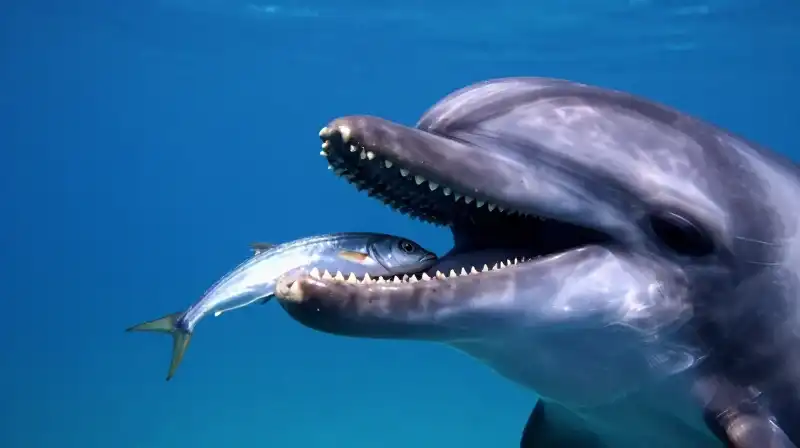
Do dolphins have 100 teeth?
While specific tooth counts can vary by species, dolphins are members of the toothed whale group (Odontocetes). Their teeth are primarily used for grasping prey rather than chewing, as their multi-stomach system handles much of the processing.
Do dolphins have 3 stomachs?
Yes. To assist in the efficient processing of prey swallowed whole, dolphins have evolved a three-stomach system: one for holding food, one for mastication, and a third for final digestion.
Conservation and the Reality of Captivity
While dolphins are highly resilient in the wild, their survival is increasingly threatened by environmental changes and human activity. One of the most significant concerns is the impact of captivity. Marine life, including dolphins and killer whales, often faces much shorter lifespans in captive environments compared to their wild counterparts. Protecting their natural habitats and understanding their complex social and biological needs is essential for the continued survival of these remarkable animals.
Why Dolphins Matter

Dolphins are more than just charismatic ocean residents; they are biological marvels. From their unique “names” and sophisticated sonar to their incredible regenerative skin and specialized digestive systems, every aspect of their anatomy is fine-tuned for life in a fluid, challenging world. Recognizing the intelligence and social depth of these animals helps us appreciate why protecting the oceans is not just about saving a species, but about preserving a complex, communicative, and highly evolved way of life.
Facts sourced from peer-reviewed marine biology research, NOAA, and the Smithsonian Ocean Portal. Our editorial team fact-checks all content against current scientific literature.
Frequently Asked Questions
Do dolphins have 100 teeth?
Specific tooth counts can vary by species, but dolphins are members of the toothed whale group.
Do dolphins have 3 stomachs?
Yes, dolphins have a three-stomach system designed to process prey swallowed whole. One stomach holds the food, a second is used for mastication, and a third handles final digestion.
Related Articles