
5 Fascinating Facts About Ocean Animals and Marine Life

Introduction
The ocean is often perceived as a silent, unchanging expanse, yet it is home to some of the most specialized biological adaptations on Earth. From the way a predator senses a meal in total darkness to the forensic methods used to track the life history of a fish, marine life is defined by incredible evolutionary ingenuity. Understanding these creatures requires looking past their surface appearances to the complex sensory and physiological tools that allow them to thrive in high-pressure, often lightless environments.
5 Fascinating Facts About Ocean Animals and Marine Life
To understand the complexity of marine biology, we can look at specific examples of how animals perceive their world, how they are studied by scientists, and how historical human interaction has shaped their names and conservation status.
-
Seals use whiskers as sensory radar:
For many seals, whiskers are far more than just facial hair; they are highly sensitive tactile organs. These whiskers can detect minute vibrations in the water caused by the movement of swimming prey. This sensory adaptation is so effective that even seals that are blind in the wild are able to hunt and feed successfully by “feeling” the movement of their food through the water.
-
Fish age can be read like a tree:
Marine biologists don’t have to guess how long a fish has been swimming in the ocean. By examining the growth rings found on a fish’s scales or its ear bones, researchers can determine its age. Much like the rings in a tree trunk, these markers provide a chronological record of the animal’s development and environmental history.
-
The “Right” whale has a somber history:
The name of the right whale is a relic of the historical whaling industry. It was dubbed the “right” whale to hunt because of its slow swimming speed and its tendency to float after being killed, making it an efficient target for early whalers. Today, the species faces a much different reality; it is currently considered the most endangered whale species off the coasts of the United States.
-
Sea turtles are strictly protected:
While many people recognize sea turtles as iconic ocean travelers, their legal status is critical to their survival. In U.S. waters, all six species—the green, hawksbill, Kemp’s ridley, leatherback, loggerhead, and olive ridley—are protected under the Endangered Species Act. This protection is vital as these species face various environmental pressures.
-
Sensory adaptations vary by species:
While seals rely on vibration, other marine creatures have developed entirely different ways to navigate. This diversity in marine biology shows that there is no single “best” way to survive in the ocean; rather, evolution favors the specific tool—whether it be vision, vibration detection, or chemical sensing—that best suits a creature’s niche.
Comparing U.S. Sea Turtle Species
Because all six species found in U.S. waters are protected, it is helpful to recognize the diversity within this group. While they share many traits, they occupy different ecological roles.
| Species Name | Conservation Context |
|---|---|
| Green Turtle | Protected under the Endangered Species Act |
| Hawksbill | Protected under the Endangered Species Act |
| Kemp’s Ridley | Protected under the Endangered Species Act |
| Leatherback | Protected under the Endangered Species Act |
| Loggerhead | Protected under the Endangered Species Act |
| Olive Ridley | Protected under the Endangered Species Act |
Why Marine Biology Matters
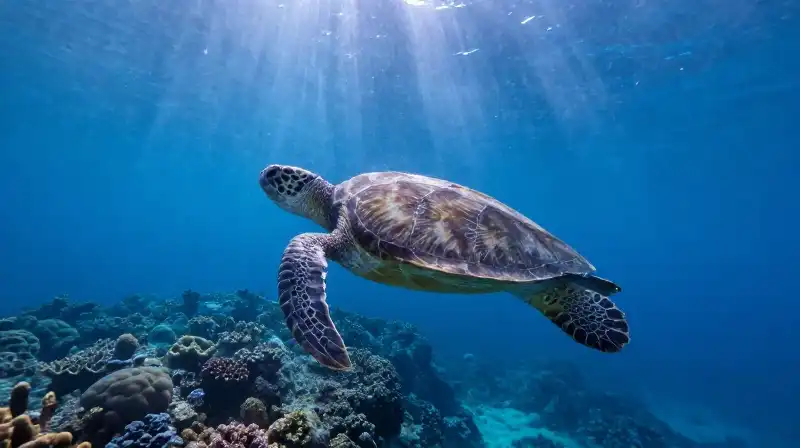
The facts surrounding these animals highlight a recurring theme: the deep connection between biological adaptation and environmental vulnerability. Whether it is the right whale’s struggle for survival or the specialized sensory tools of a seal, marine life is a finely tuned system. Learning about these interesting facts about the ocean animals is the first step toward understanding why conservation efforts, such as the protection of sea turtles, are so essential to maintaining the balance of our planet’s largest ecosystem.
Facts sourced from peer-reviewed marine biology research, NOAA, and the Smithsonian Ocean Portal. Our editorial team fact-checks all content against current scientific literature.
Related Articles