
15 Fascinating Fun Facts About Marine Life You Didnt Know

Introduction
The ocean is not merely a body of water; it is a complex, living laboratory where biology defies our terrestrial logic. From animals that can change their sex to creatures that possess more complex vision than humans, marine life operates under sets of rules that seem almost alien. Understanding these organisms requires looking past their surface appearances to the specialized adaptations that allow them to thrive in high-pressure, lightless, or salt-saturated environments. Whether it is the sheer scale of a blue whale or the microscopic precision of a mantis shrimp’s eye, the diversity of life in our seas offers a masterclass in evolutionary ingenuity.
15 Fascinating Fun Facts About Marine Life
To truly appreciate the scale and complexity of the underwater world, we have to look at the specific traits that define its most iconic—and most unusual—residents.
- The Blue Whale’s Massive Scale: The blue whale holds the title of the largest animal to ever inhabit Earth. According to these giants can reach weights of up to 247,000 pounds. To put that scale into perspective, a single blue whale’s tongue can weigh as much as an entire elephant.
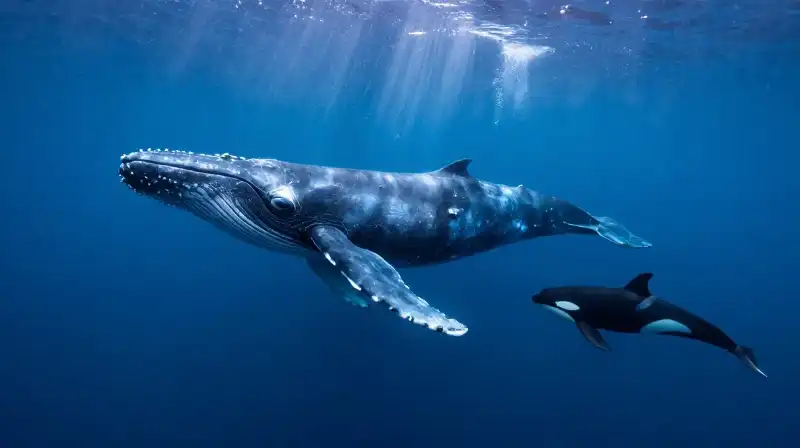
- Orcas are Dolphins, Not “Killer Whales”: While the term “killer whale” is widely used in popular culture, orcas are actually the largest members of the dolphin family. They are apex predators that sit at the top of the food chain, even demonstrating sophisticated hunting tactics such as targeting the livers of great white sharks.
- The Secret Age of Greenland Sharks: Measuring the age of long-lived species is difficult. While scientists can often estimate a fish’s age by counting growth rings on scales or ear bones, the Greenland shark’s cartilage is too soft for this method. Instead, researchers use radiocarbon dating on the protein layers in their eyes to reveal they can live for hundreds of years.
- The “Right” Way to Hunt: The North Atlantic right whale carries a somber namesake. It was historically dubbed the “right” whale to hunt because it moved slowly and had a tendency to float after being killed. Today, it is considered the most endangered whale species off the U.S. coasts.
- The Octopus’s Anatomical Limit: An octopus is almost entirely soft-bodied, allowing it to squeeze through incredibly tight spaces. Its only physical limitation is its beak; it can pass through any opening that is large enough to accommodate the diameter of that beak.
- Arms vs. Tentacles: In cephalopod anatomy, there is a distinction between arms and tentacles. Octopus arms feature suckers along their entire length, whereas tentacles are specialized appendages with suckers located only at the tips.
- The Blue Ring Octopus’s Silent Danger: The blue-ringed octopus is small but carries enough venom to be fatal to 26 adult humans. A notable danger is that the bite is often painless, which may prevent a victim from realizing they have been envenomated until they begin to experience respiratory distress.
- Mantis Shrimp Vision: While humans have three types of photoreceptors to perceive color, the mantis shrimp possesses a much more advanced visual system, featuring between 12 and 16 types of photoreceptors.
- Gender Fluidity in Fish: Some species are capable of changing their sex based on social hierarchies. For instance, in anemonefish (clownfish) groups, the largest male will undergo a biological transition to become female if the dominant female dies.
- The “Living Fossil” Coelacanth: The coelacanth was a biological sensation when live specimens were discovered in the 1930s, as the species was believed to have been extinct for over 60 million years.
- Horseshoe Crabs and Blue Blood: Despite their name, horseshoe crabs are more closely related to spiders than to true crabs. They also possess blue blood, a result of the copper present in their circulatory system.
- Sensory Whiskers: Seals use their whiskers to navigate and hunt. These whiskers can detect minute vibrations from swimming prey, a sensory advantage that reportedly allows even blind seals in the wild to hunt effectively.
- Protected Sea Turtles: All six species of sea turtles found in U.S. waters—the green, hawksbill, Kemp’s ridley, leatherback, loggerhead, and olive ridley—are currently protected under the Endangered Species Act.
- Age-Reading Methods: Beyond the Greenland shark, most fish can have their age estimated by examining growth rings found on their scales or their ear bones.
- The Octopus’s Unique Form: Unlike many other marine invertebrates, the octopus’s ability to manipulate its environment is driven by its eight distinct arms, each capable of independent movement and sensory input.
Comparing Marine Anatomy and Traits
To better understand the specialized nature of these creatures, the following table contrasts several unique biological traits mentioned above.
| Animal | Key Biological Feature | Significance |
|---|---|---|
| Mantis Shrimp | 12–16 Photoreceptors | Possesses the most complex eyes in the animal kingdom. |
| Horseshoe Crab | Copper-based blood | Results in blue-colored blood and a closer relation to spiders. |
| Blue Whale | Massive tongue weight | Can weigh as much as an entire elephant. |
| Clownfish | Sequential hermaphroditism | Can transition sex based on social dynamics. |
Common Questions About the Ocean
What are 5 interesting facts about the ocean?
While there are thousands of wonders, five standout aspects include: the presence of “living fossils” like the coelacanth; the existence of animals with blue, copper-based blood; the ability of certain fish to change their sex; the extreme longevity of the Greenland shark; and the fact that some marine predators, like orcas, are actually dolphins.
What is the rarest sea life?
Rarity in the ocean is often defined by conservation status rather than just population numbers. For example, the North Atlantic right whale is one of the most endangered whale species off the U.S. coasts, making it exceptionally rare to encounter in its natural habitat.
The Importance of Marine Biology and Conservation
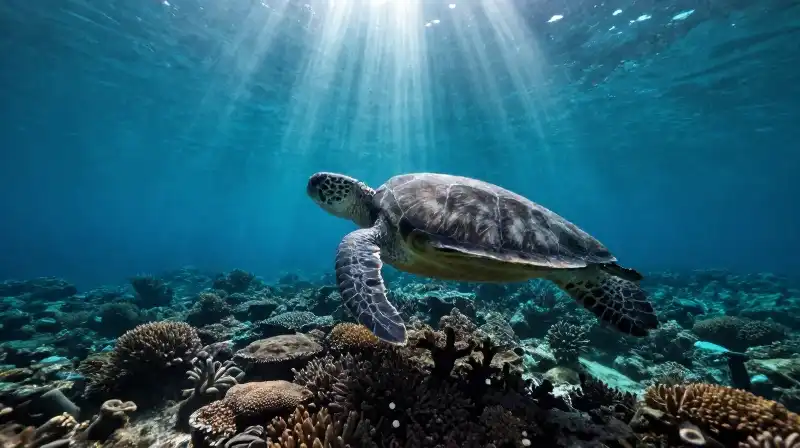
These facts do more than provide trivia; they highlight the incredible specialization required to survive in our oceans. However, this specialization also makes many species vulnerable. Whether it is the endangered status of sea turtles under the Endangered Species Act or the dwindling numbers of the right whale, the biological uniqueness of these animals is often paired with a precarious existence. Understanding the science behind their behavior and anatomy is the first step in fostering the respect and conservation efforts necessary to protect these marine ecosystems.
Facts sourced from peer-reviewed marine biology research, NOAA, and the Smithsonian Ocean Portal. Our editorial team fact-checks all content against current scientific literature.
Frequently Asked Questions
What are 5 interesting facts about the ocean?
Five interesting facts include the existence of living fossils like the coelacanth, animals with blue copper-based blood, and the ability of certain fish to change their sex. Additionally, the Greenland shark has extreme longevity, and some marine predators, such as orcas, are actually dolphins.
What is the rarest sea life?
The North Atlantic right whale is considered exceptionally rare because it is one of the most endangered whale species off the U.S. coasts.
Related Articles