
12 Fascinating Fun Facts About Leatherback Sea Turtles

Introduction
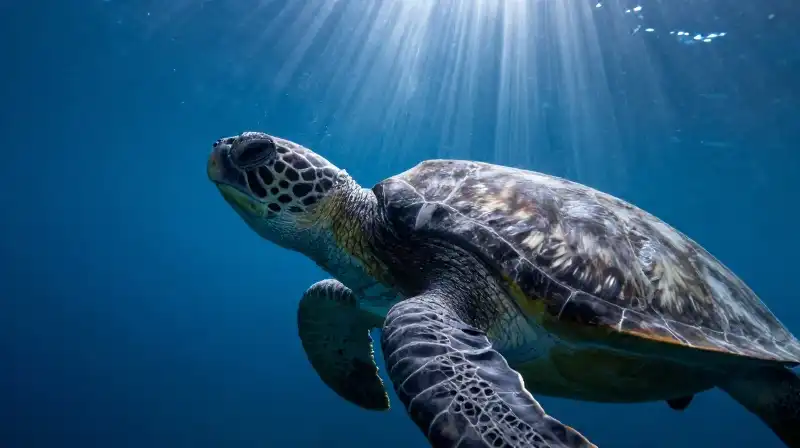
While most sea turtles are defined by the heavy, bone-hard shells they carry, the leatherback sea turtle (*Dermochelys coriacea*) follows a completely different evolutionary blueprint. As the largest sea turtle species on the planet, these ancient reptiles are built for extreme environments, capable of roaming from tropical coastlines to the frigid depths of the open ocean. They are not just large; they are biological marvels that possess traits—such as a flexible body and a specialized metabolism—that allow them to thrive where other reptiles would perish.
Massive Scale and Unique Anatomy
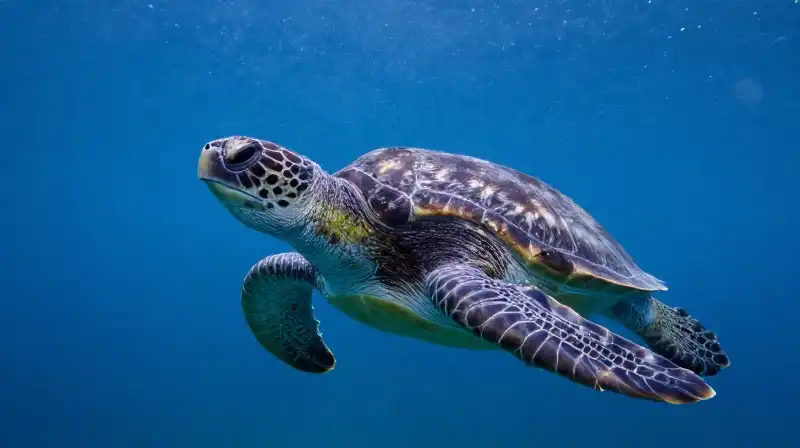
To understand the leatherback, one must first look at its sheer proportions. They are the third-largest reptiles in the world, surpassed only by the saltwater crocodile and the American alligator.
Unlike the rigid, calcified shells of a Green sea turtle or a Loggerhead, the leatherback’s “shell” is actually a flexible, soft carapace. This structure is composed of small, unfused bony pieces covered by a thick, leathery layer of skin. This anatomical difference is a key reason for their name and a vital adaptation for their lifestyle.
| Metric | Typical Adult Range | Notable Record |
|---|---|---|
| Length | 4.5 to 6+ feet | 6.6 feet |
| Weight | 600 to 1,400 pounds | Nearly 1,980 pounds |
12 Fascinating Fun Facts About Leatherback Sea Turtles
- They are effectively “warm-blooded”: Most reptiles are ectothermic, relying on the sun to regulate body temperature. However, leatherbacks utilize a thick layer of insulating fat and a specialized “countercurrent heat exchange” blood circulation system. This allows them to maintain stable internal temperatures even in cold, deep waters.
- They are master divers: Leatherbacks regularly descend to depths exceeding 1,000 meters (3,280 feet). The deepest dive ever recorded for this species reached a staggering 4,409 feet (1,344 meters).
- Their shells resist crushing pressure: To survive the intense pressure of the deep ocean, their compressible, flexible shell helps them avoid the structural damage a rigid shell might suffer.
- They manage nitrogen levels internally: To prevent decompression sickness (often called “the bends”) while moving rapidly between the surface and the deep, leatherbacks have a specialized ability to absorb nitrogen through their carapace.
- They are global travelers: Leatherbacks have one of the largest geographic ranges of any reptile, inhabiting every ocean on Earth except for the Arctic and Antarctic regions.
- They undertake epic migrations: These turtles travel thousands of miles to reach nesting or feeding grounds. One female was documented traveling 12,774 miles from Indonesia all the way to the USA.
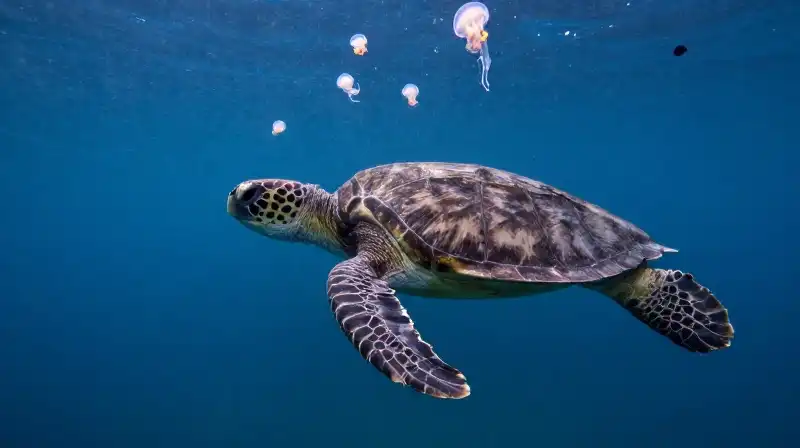
- They live on a “jellyfish diet”: Despite their massive size, they are highly specialized feeders. They subsist almost entirely on jellyfish and gelatinous zooplankton, consuming roughly 73% of their own body weight in jellyfish every single day.
- They have “spiky” throats: To handle their slippery, stinging prey, leatherbacks have inward-facing, spiky keratinous papillae lining their esophagus. These structures help break down jellyfish and protect the turtle from stinging cells.
- Temperature determines their sex: The sex of a hatchling isn’t determined by genetics, but by the sand temperature during incubation. Warmer sand produces more females, while cooler sand results in more males.
- They have very few natural predators: Due to their enormous size, adult leatherbacks have few enemies, though sharks may occasionally attempt an attack.
- Land predators target nests: While adults are safe in the water, nesting females on land can be targeted by predators such as jaguars.
- They are highly susceptible to plastic: Because they hunt by sight and smell, leatherbacks frequently mistake floating plastic bags for jellyfish, a major driver of their declining populations.
Common Questions About Leatherbacks
What do leatherback sea turtles eat?
Leatherbacks are specialized gelatinous carnivores. Their diet consists almost exclusively of jellyfish and other gelatinous zooplankton. Because jellyfish are low in calories, the turtle must consume massive quantities—up to 73% of its body weight daily—to maintain its energy.
Why are leatherback sea turtles endangered?
The threats to leatherbacks are multifaceted and largely human-driven. They face accidental capture in fishing gear (bycatch), plastic pollution (where they mistake trash for food), habitat destruction, and the effects of climate change. Conservation status varies by region; for instance, Pacific populations have seen devastating declines of between 80% and 97% in recent decades.
Are leatherback sea turtles dangerous?
While they are massive animals, leatherbacks are not typically considered a danger to humans. They are deep-ocean specialists focused on hunting jellyfish. While they possess strong jaws designed for processing prey, they are not aggressive toward people.
The Resilience of a Deep-Sea Icon
The leatherback sea turtle represents a unique evolutionary success story. By trading the traditional heavy armor of a turtle for a flexible, heat-retaining body, they have unlocked the ability to navigate the entire globe and explore the crushing pressures of the deep sea. However, their extreme specialization—specifically their reliance on a single food source—makes them particularly vulnerable to the changing health of our oceans. Protecting these ancient travelers means addressing the modern challenges of plastic, fishing, and a warming climate that threaten to disrupt their millennia-old cycles.
Facts sourced from peer-reviewed marine biology research, NOAA, and the Smithsonian Ocean Portal. Our editorial team fact-checks all content against current scientific literature.
Related Articles