
Finback Whale Facts: Speed, Size, and Surprising Traits

Introduction
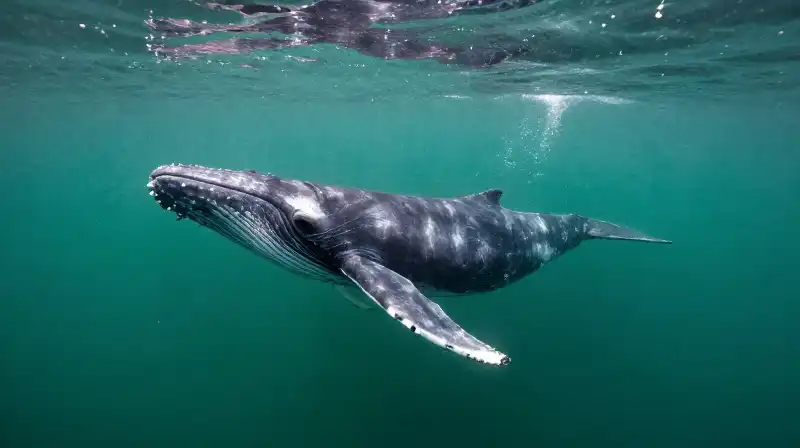
Imagine an animal so large it rivals the greatest creatures to ever inhabit the Earth, yet moves through the water with the sleek, effortless grace of a sprinter. This is the finwhale. Often called the “greyhound of the sea,” these majestic cetaceans are built for speed and scale, occupying a unique niche in the world’s oceans. While they lack the sheer, overwhelming bulk of the blue whale, they make up for it with incredible agility and a presence that can be felt hundreds of miles away through the very water they inhabit.
Essential Finwhale Facts: Speed, Size, and Biology
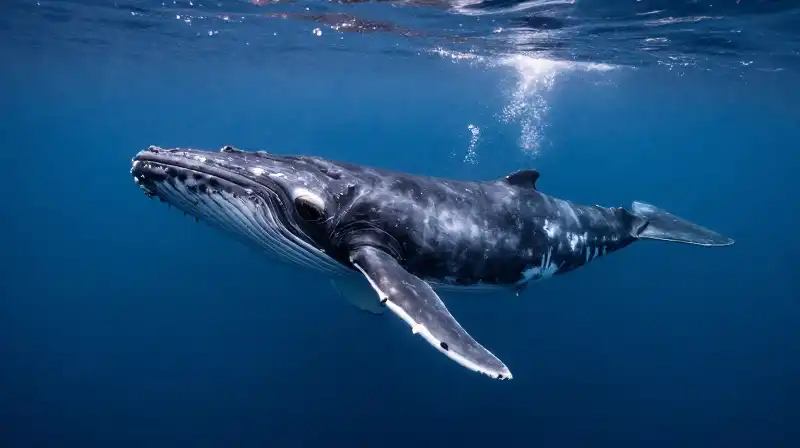
To understand the finwhale, one must first grasp the sheer scale of its existence. They are not merely large animals; they are biological marvels of efficiency.
- Unmatched Velocity: Living up to its “greyhound” nickname, the finwhale is one of the fastest cetaceans. They can maintain steady cruising speeds between 37–41 km/h (23–25 mph) and are capable of intense bursts reaching up to 46–50 km/h (29–31 mph).
- Colossal Dimensions: The finwhale is the second-largest animal to ever exist, surpassed only by the blue whale. Individual specimens can grow to lengths exceeding 27 meters (90 ft) and reach weights of up to 120 tonnes.
- Asymmetric Appearance: One of the most distinct visual identifiers of this species is the coloration of its jaw. They possess an asymmetrical pattern where the lower right jaw is white or light gray, while the lower left jaw is dark gray or black.
- Baleen Feeding: Rather than having teeth, finwhales are baleen whales. They filter food from the ocean using keratin plates—the exact same protein material found in human fingernails.
- Opportunistic Diet: They are highly efficient hunters, consuming massive quantities of krill, squid, and various species of schooling fish.
Size Comparison: Finwhale vs. Blue Whale
When discussing finwhale size, it is helpful to see how they stack up against the undisputed heavyweight champion of the ocean.
| Feature | Finwhale | Blue Whale |
|---|---|---|
| Global Rank | 2nd Largest | 1st Largest |
| Maximum Length | Over 27 meters (90 ft) | Up to ~30 meters |
| Maximum Weight | Up to 120 tonnes | Up to ~190 tonnes |
Low-Frequency Giants: The Power of Finwhale Song
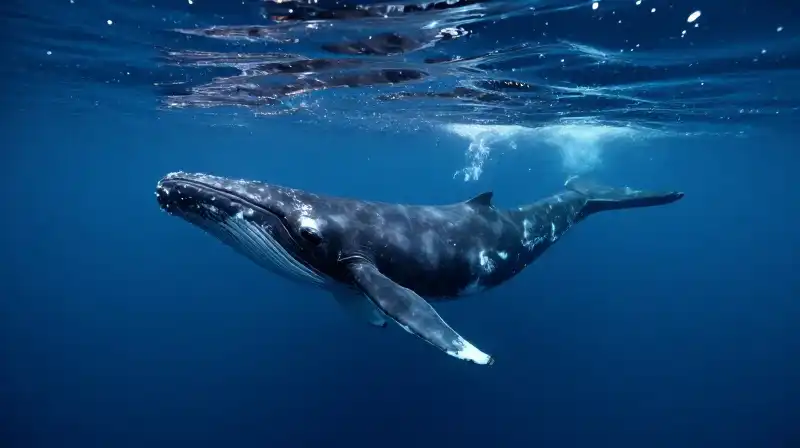
Finwhales do not just move through the ocean; they communicate through it in ways that defy human hearing. They utilize a specialized, sac-like structure connected to their lungs to produce sound, a biological adaptation that allows them to “sing” without depleting their oxygen reserves.
Their vocalizations consist of low-frequency, frequency-modulated pulses between 16 and 40 hertz. Because these sounds are so deep and powerful, they can travel vast distances. While some accounts suggest these sounds can be detected over 520 miles (850 km) away, they are reliably audible hundreds of miles away.
Common Questions About Finwhales
Are finback whales friendly?
While “friendly” is a human emotion, finwhales are generally described as solitary or social in small groups (typically 6–10 individuals) rather than being overtly aggressive toward humans. However, because of their immense size and speed, they should always be respected from a distance. Large feeding groups can gather in numbers of 100–250, creating a massive presence in the water.
Where do fin whales live?
Finwhales are a cosmopolitan species, meaning they are found in all the major oceans across the globe. However, they are notably absent from waters directly adjacent to polar pack ice.
Are fin whales dangerous?
In the wild, the only known natural predator of the finwhale is the killer whale. To humans, they do not pose a direct predatory threat, but their sheer mass and speed make them formidable animals to encounter in close quarters.
The Ecological Role of the Finwhale
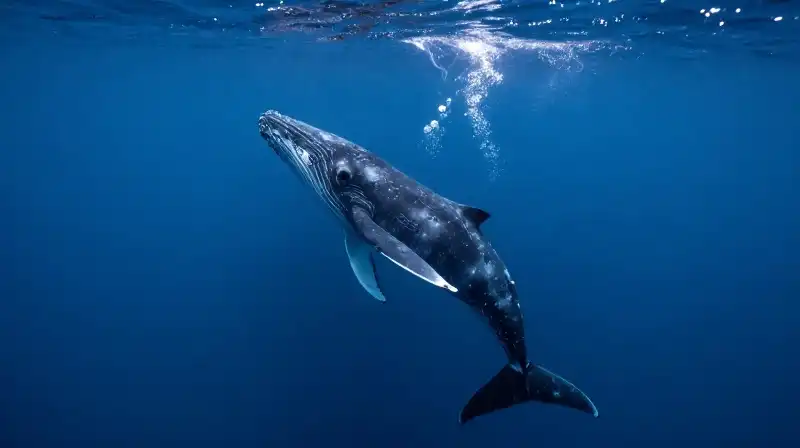
Finwhales are more than just inhabitants of the sea; they are active participants in the Earth’s climate regulation. They play a vital role in the ocean’s “carbon sink” cycle. As they dive deep to feed and resurface to breathe, they transport essential nutrients from the depths to the surface. This process stimulates the growth of phytoplankton, which is responsible for producing approximately 50% of the Earth’s oxygen.
Conservation Status and Modern Threats
The history of the finwhale is deeply intertwined with human activity. Once a primary target during the era of commercial whaling, their populations suffered significant declines. While the North Atlantic population has shown signs of recovery, the species as a whole is currently assessed as “vulnerable” by the IUCN.
Today, the threats have shifted from hunting to modern industrial and environmental pressures, including:
- Ship strikes: Collisions with large commercial vessels.
- Entanglement: Getting caught in commercial fishing gear.
- Noise pollution: Interference with their ability to communicate and navigate.
- Climate change: Altering the distribution of their food sources.
Why the Finwhale Matters
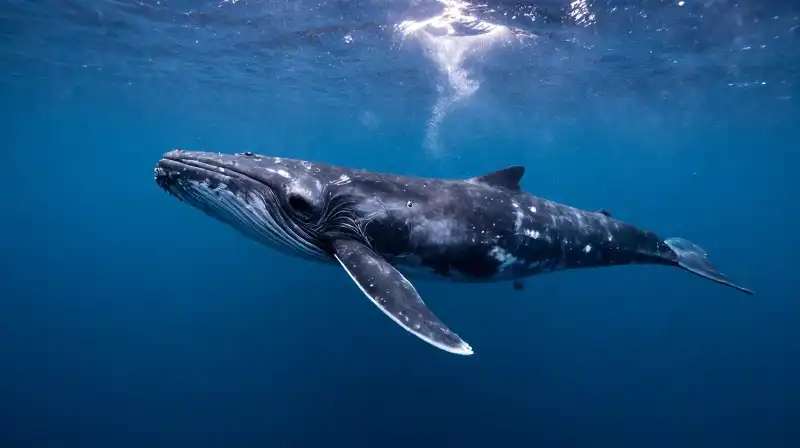
From a newborn that already weighs 1,600 kg (3,600 lbs) to a long-lived adult that may survive for over 100 years, the finwhale is a testament to biological endurance. They represent a vital link in the ocean’s nutrient cycle and a masterpiece of evolutionary engineering. Understanding these “greyhounds of the sea” is not just about appreciating their speed or size; it is about recognizing their role in maintaining the health of the very oceans that provide us with half of our oxygen.
Facts sourced from peer-reviewed marine biology research, NOAA, and the Smithsonian Ocean Portal. Our editorial team fact-checks all content against current scientific literature.
Frequently Asked Questions
Are finback whales friendly?
While friendly is a human emotion, finwhales are generally described as solitary or social in small groups rather than being overtly aggressive toward humans. Due to their immense size and speed, they should always be respected from a distance.
Related Articles