10 Fascinating Facts About Whale Sharks and Their Massive Size

Introduction
Imagine a creature as long as a standard school bus, gliding silently through the open ocean. The whale shark is a study in contradictions: it is a massive, intimidating predator in appearance, yet it is actually a gentle filter feeder that spends its days consuming microscopic life. As the world’s largest fish and the largest of all cold-blooded animals, these giants occupy a unique space in the marine ecosystem, acting as both travelers of the deep and vital indicators of ocean health.
10 Fascinating Facts About Whale Sharks and Their Massive Size
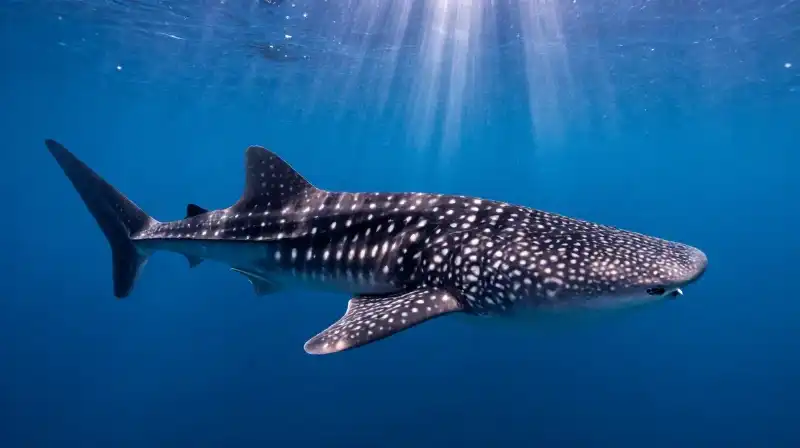
To understand the scale and complexity of these animals, we must look beyond their sheer dimensions and examine how they live, eat, and navigate the globe.
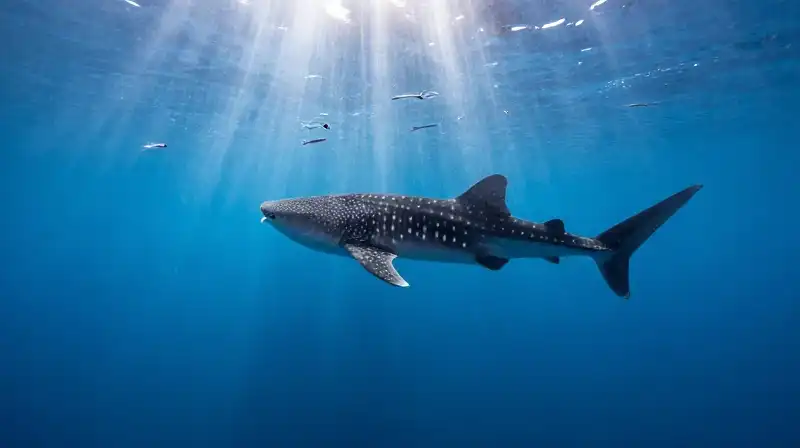
- They are the undisputed heavyweight champions of the fish world. Whale sharks can reach staggering lengths of 20 meters, which is approximately 40 feet. Their weight is equally impressive, with documented measurements reaching between 34 and 42 tons.
- Their skin is built like biological armor. To protect their massive bodies from predators and provide insulation, they possess extremely thick, tough skin that can reach a thickness of 30 cm or about five inches.
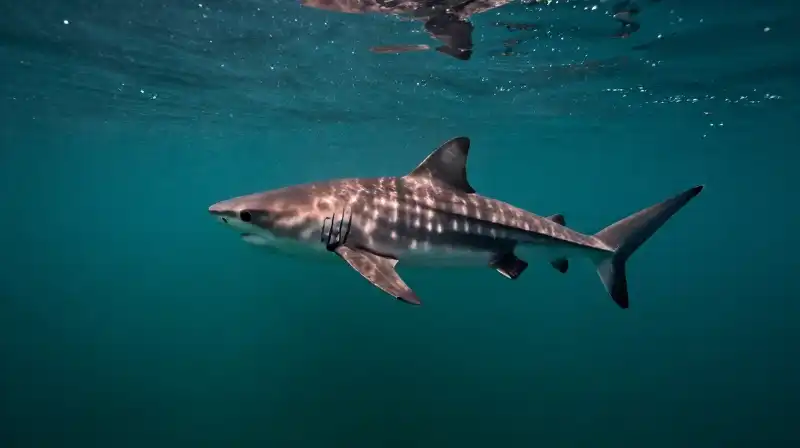
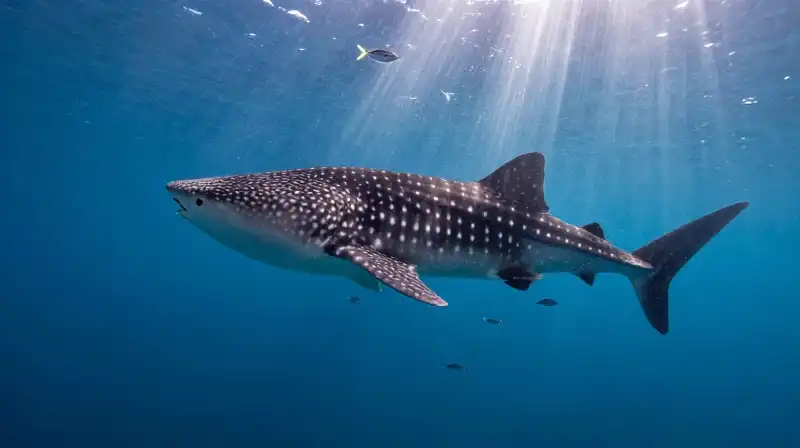
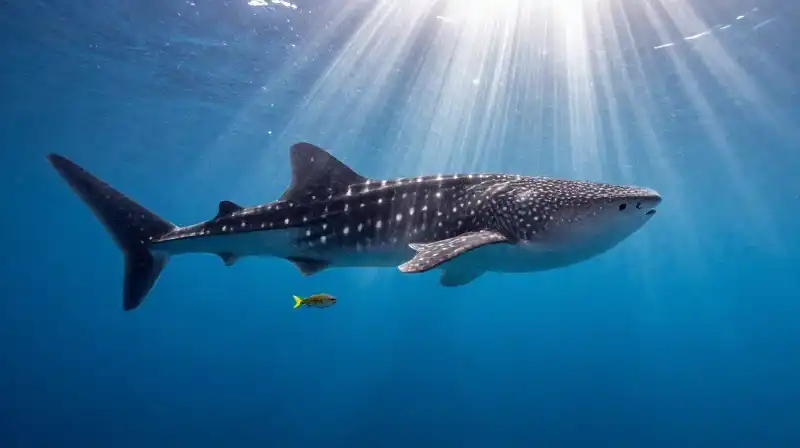
- They possess a unique “fingerprint” of stars. Every whale shark is adorned with a specific pattern of spots and stripes. These markings function much like a human fingerprint, allowing marine biologists to identify and track individual sharks across the globe.
- They are masters of efficient filtration. Despite their size, they don’t hunt large prey. Instead, they use massive mouths—up to 1.5 meters (4 feet) wide—to swallow water and filter out food. A medium-sized shark of about 6 meters can filter over 600,000 liters of seawater every single hour.
- Their diet consists of the ocean’s smallest inhabitants. These giants are non-threatening filter feeders that primarily target zooplankton, including krill, copepods, shrimp, and crab larvae. They also supplement their diet with small fish like anchovies and even tuna eggs.
- They are incredible long-distance migrators. These sharks are not sedentary; they often travel over 10,000 km (roughly 5,000 miles) annually to follow food sources. Scientists believe they may use the Earth’s magnetic field to navigate these vast distances.
- They inhabit both the surface and the deep sea. While often seen near the surface where food is abundant, tagged individuals have been recorded diving to depths of at least 1,928 meters.
- Their skeletons are light and flexible. Like all sharks, whale sharks do not have bones. Instead, they possess a cartilaginous skeleton, which provides a lighter and more flexible frame to support their immense size.
- They have an unusual anatomical quirk on their eyes. In some specimens, researchers have observed tiny, tooth-like scales known as dermal denticles located directly on their eyeballs.
- They are long-lived giants. While lifespan estimates vary, these animals are built for the long haul. Some research suggests they can live for approximately 130 years, though other estimates place their lifespan between 70 and 100 years.
Size and Physical Comparison
To visualize the scale of a whale shark compared to other biological metrics, consider the following table:
| Feature | Measurement/Detail | Source Reference |
|---|---|---|
| Maximum Length | Up to 20 meters (40 feet) | |
| Maximum Weight | 34 to 42 tons | |
| Mouth Width | Up to 1.5 meters (4 feet) | |
| Skin Thickness | Up to 30 cm (5 inches) |
Common Questions About Whale Sharks
Does a whale shark have 3,000 teeth?
Yes, it is true that whale sharks possess thousands of tiny teeth. However, despite this impressive number, they do not use these teeth for eating. Because they are filter feeders, the teeth are not used to chew or grasp prey; instead, the shark relies on its massive mouth and gill structures to process food.
Are whale sharks dangerous?
While their size can be intimidating, whale sharks are generally non-threatening to humans. They are filter feeders that focus on tiny organisms like plankton and small fish rather than large animals. Their primary biological focus is on efficient feeding and long-distance migration rather than predation of large creatures.
Conservation and the Future of the Giants
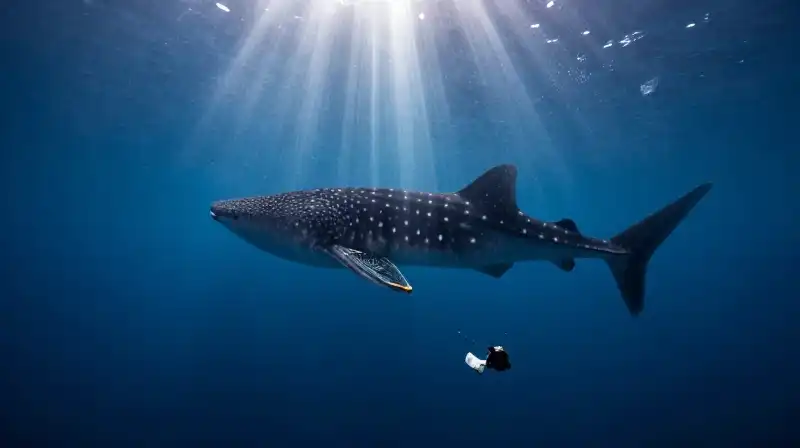
Despite having no natural predators other than killer whales when fully grown, whale sharks face significant modern challenges. Smaller, younger sharks are more vulnerable to predators like blue sharks and blue marlin. However, the greatest threats to the species are human-driven.
Whale sharks are currently listed as endangered. They face a multitude of pressures, including:
- Illegal hunting and fishing practices.
- Accidental entanglement in fishing nets.
- Boat strikes from maritime traffic.
- Pollution and rising ocean temperatures due to climate change.
Why These Giants Matter
The whale shark is more than just a biological marvel; it is a sentinel of the sea. Their complex reproductive cycle—which is ovoviviparous, meaning females produce eggs that hatch inside them to give birth to live young—and their ability to carry massive litters (one confirmed pregnancy contained 304 pups. demonstrate the incredible evolutionary investment required to maintain such a species. Understanding these giants, from their unique skin patterns to their deep-sea travels, is essential for protecting the delicate balance of our global oceans.
Facts sourced from peer-reviewed marine biology research, NOAA, and the Smithsonian Ocean Portal. Our editorial team fact-checks all content against current scientific literature.
Frequently Asked Questions
Does a whale shark have 3,000 teeth?
Yes, it is true that whale sharks possess thousands of tiny teeth. However, they do not use them for eating, as they rely on their massive mouths and gill structures to filter food.
Related Articles