Bizarre and Fascinating Deep Sea Creatures You Need to See

Introduction
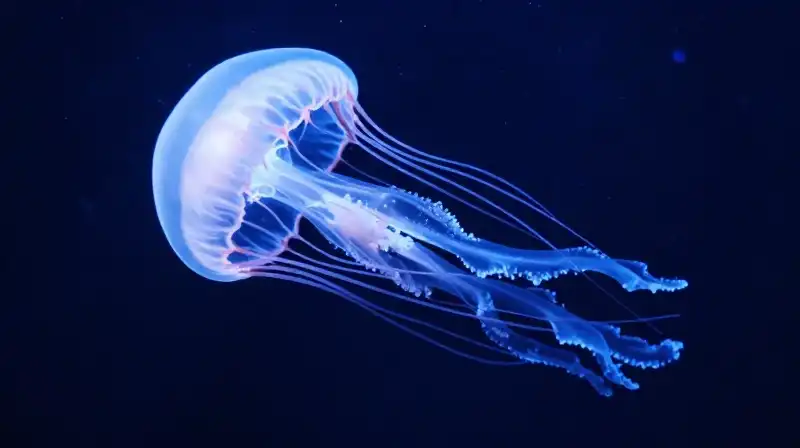
The deep ocean is a world of extremes, defined by crushing pressure, near-freezing temperatures, and a complete absence of sunlight. Yet, far from being a barren wasteland, these depths host a biological gallery of some of the most specialized and unexpected life forms on Earth. From creatures that look like floating constellations to those with anatomy designed for sudden, massive meals, the inhabitants of the deep sea challenge our understanding of what life can look like. Rather than being “monsters,” these animals are masterworks of evolutionary engineering, each possessing unique traits that allow them to thrive where most life would perish.
Masters of Adaptation: Bizarre Deep-Sea Anatomies
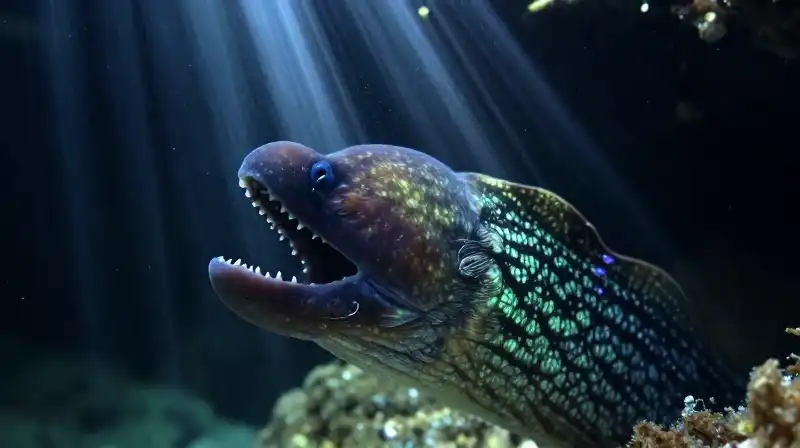
Survival in the deep sea requires more than just endurance; it requires specialized tools. Many creatures have evolved physical features that seem otherworldly, designed specifically to solve the problems of finding food and navigating the dark.
- The Black Swallower: This fish possesses an incredibly distensible stomach, allowing it to consume prey significantly larger than itself. This is a vital survival strategy in a habitat where meals are infrequent and unpredictable.
- The Gulper Eel: Named for its massive, cavernous mouth, this eel uses its oversized jaw to scoop up prey in the darkness, a necessary adaptation for an environment where food is scarce.
- The Fangtooth: As its name suggests, this predator is defined by its disproportionately large teeth. These are specialized for capturing prey in the deep-sea gloom.
- The Humpback Anglerfish: Utilizing a bioluminescent lure to attract curious prey, this specialist demonstrates how light can be used as a hunting tool in a pitch-black world.
- The Vampire Squid: This cephalopod has evolved specific traits, such as specialized sensory organs, to navigate and survive in low-light, oxygen-minimum zones.
A Study in Scale: Giants of the Deep
The deep sea is home to creatures that defy standard biological expectations regarding size. Some reach massive proportions, while others use their unique structures to span vast distances.
| Creature | Notable Feature | Scale/Context |
|---|---|---|
| Colossal Squid | Massive Scale | An exceptionally large resident that can evoke significant fear due to its sheer size. |
| Giant Siphonophore | Complex Structure | A multi-organism colony that can grow to massive, ribbon-like lengths. |
| Giant Oarfish | Large-scale Phenomenon | One of the largest known deep-sea fish, often appearing as a massive, shimmering presence. |
| Megamouth Shark | Specialized Size | A rare, large-scale predator known for its distinctive, massive mouth structure. |
The Blobfish Mystery: Appearance vs. Environment
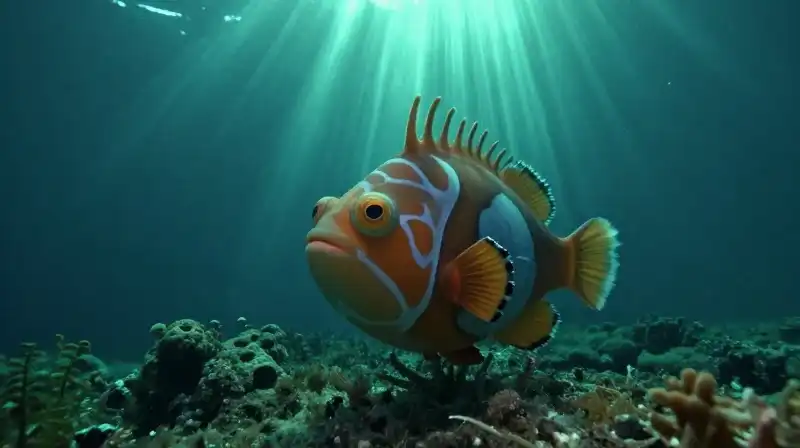
One of the most common misconceptions in marine biology involves the Blobfish. Often cited in internet culture as the “world’s ugliest animal,” its gelatinous, drooping appearance is actually a result of decompression. When the blobfish is in its natural, high-pressure habitat, it looks like a much more conventional fish. Its “blobby” appearance only occurs when it is brought to the surface, where the lack of pressure causes its tissues to expand and lose their structure. This serves as a reminder that we cannot judge deep-sea life by how they look in a laboratory or a tank; we must view them within the context of their extreme environment.
Unexpected Neighbors: From “Cute” to “Strange”
Deep-sea life isn’t just about giants and predators; it includes a spectrum of creatures with names and appearances that range from the adorable to the downright eccentric.
The “Cute” and the Curious
Not all deep-sea residents are intimidating. The Dumbo Octopus, named for its ear-like fins, is frequently noted for its distinctively “cute” appearance, providing a soft contrast to the more jagged predators of the abyss. Similarly, the Mariana Snailfish shows how life can adapt to the most extreme, crushing depths of the ocean trenches.
Creatures with Names as Descriptive as Their Forms
Many species are named for their striking or unusual silhouettes, making them some of the most memorable inhabitants of the sea floor:
- Pigbutt Worm: An unusual name for a specialized organism.
- Basket Star: Named for its intricate, branch-like appearance.
- Giant Spider Crab: Known for its long, spindly limbs that resemble an arachnid.
- Sea Pig: A type of deep-sea cucumber that moves across the ocean floor.
The Living Ocean Floor
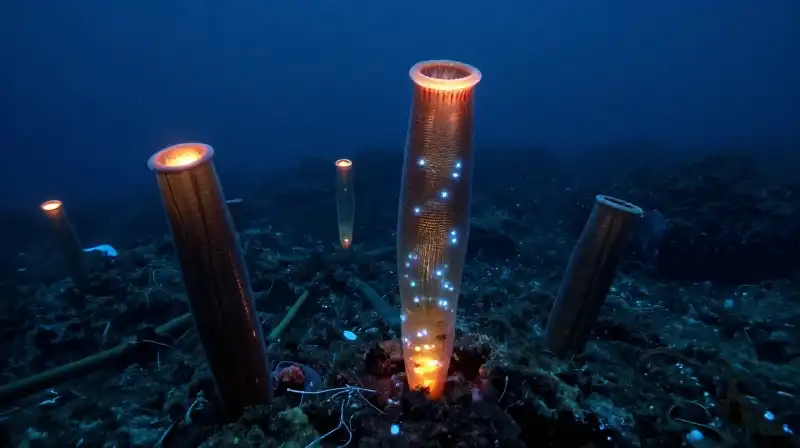
The deep sea is not just a collection of individual animals, but a series of complex, interconnected biological communities. Near hydrothermal vents and cold seeps, unique ecosystems exist that do not rely on sunlight. For instance, Giant Tube Worms inhabit these specialized communities, forming the foundation of life in areas where chemical energy, rather than photosynthesis, drives the ecosystem.
Why the Deep Sea Matters
Exploring these bizarre and fascinating deep-sea creatures reveals much more than just biological oddities. Each specialized trait—from the Black Swallower’s stomach to the Dumbo Octopus’s fins—is a testament to the incredible resilience and ingenuity of life. Understanding these creatures helps us grasp the complexity of our planet’s largest habitat and highlights the importance of marine conservation. As we continue to discover unknown sea creatures and study the deep-sea scroll of life, we realize that the abyss is not a void, but a vibrant, essential part of the Earth’s biological tapestry.
Facts sourced from peer-reviewed marine biology research, NOAA, and the Smithsonian Ocean Portal. Our editorial team fact-checks all content against current scientific literature.
Related Articles