12 Fascinating Fun Facts About Hermit Crabs You Should Know

Introduction
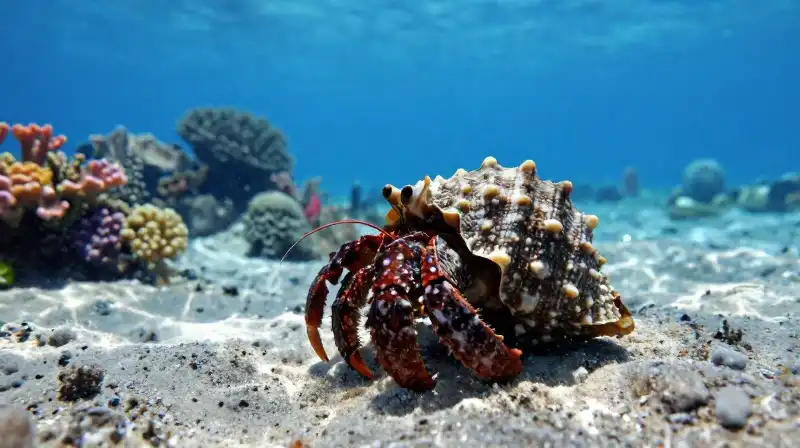
The image of a hermit crab is often that of a solitary scavenger, scuttling across the sand with a mismatched shell strapped to its back. While their name suggests a life of isolation, these crustaceans are far more complex than the “loners” their moniker implies. From their surprising social lives to the high-stakes biological process of growing a new home, hermit crabs are masters of adaptation in both marine and terrestrial environments. Understanding these creatures requires looking past the shell to discover a highly sensory, social, and resilient animal.
A Surprisingly Social Life
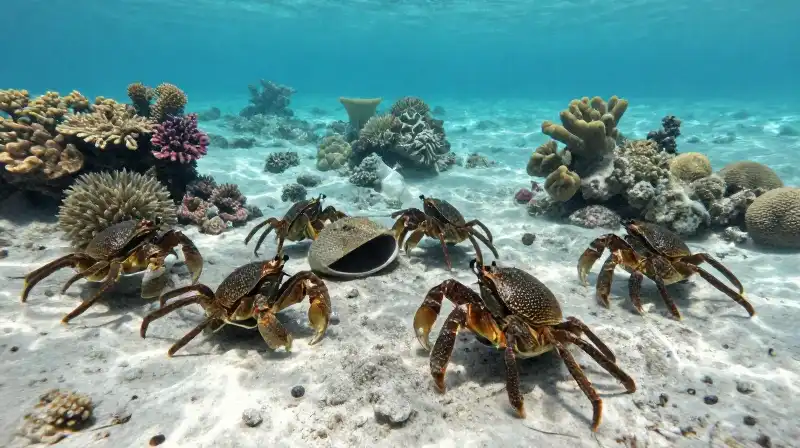
Despite their name, hermit crabs are not solitary wanderers. Research indicates that they are highly social creatures that tend to live in large groups rather than in isolation. This social structure likely helps with finding food and navigating their environment. They even have a way of communicating with their peers; they produce soft, high-pitched chirps that can strikingly resemble the sound of a small frog.
What Do Hermit Crabs Eat?
Hermit crabs are opportunistic scavengers, meaning they aren’t picky eaters and will consume whatever nutrient-rich material they can find. Their diet shifts depending on whether they are in the wild or a controlled environment:
- In the wild: They serve as vital recyclers in the marine food web, dining on small fish, plankton, worms, and various floating organic particles.
- In terrestrial or pet environments: Their diet can be quite diverse. They often enjoy fruits such as mango and apples, as well as proteins like cooked chicken, fish, and even eggshells to ensure they receive enough calcium.
How They Sense the World
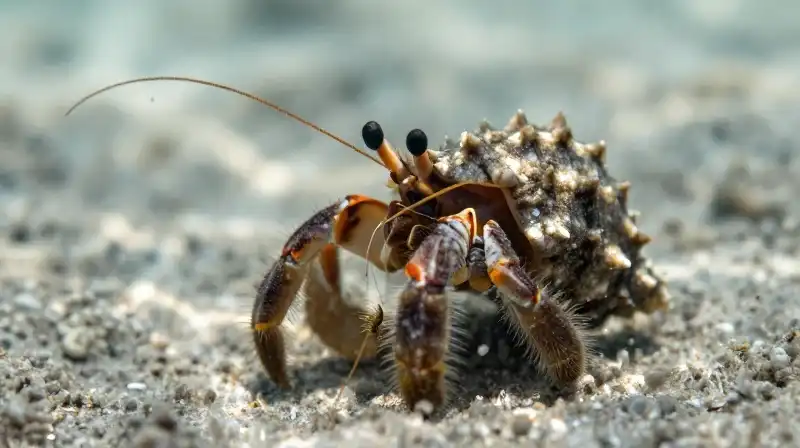
Because many hermit crabs spend a significant portion of their lives tucked inside a shell, they rely on specialized physical tools to understand their surroundings. They use tiny, stiff hairs located on their legs and thorax to navigate and sense textures. Furthermore, they frequently use their antennae to “taste” new food sources, allowing them to identify nutrients before they even take a bite.
The High-Stakes Process of Molting
A hermit crab’s growth is a periodic and vulnerable biological event. Because they possess a hard exoskeleton, they cannot simply grow larger; they must shed their old skin through a process called molting.
The frequency of this process depends heavily on the age of the crab:
| Age Group | Molting Frequency |
|---|---|
| Younger Crabs | May molt multiple times per year |
| Older Crabs | May molt only once every 18 months |
Molting is an incredibly delicate time. After shedding the old exoskeleton, the crab’s new shell is soft and highly vulnerable to predators for about a week. Interestingly, to recover essential minerals used in building their armor, a crab may actually eat its own discarded shell after the molt is complete.
Survival Strategies and Adaptations
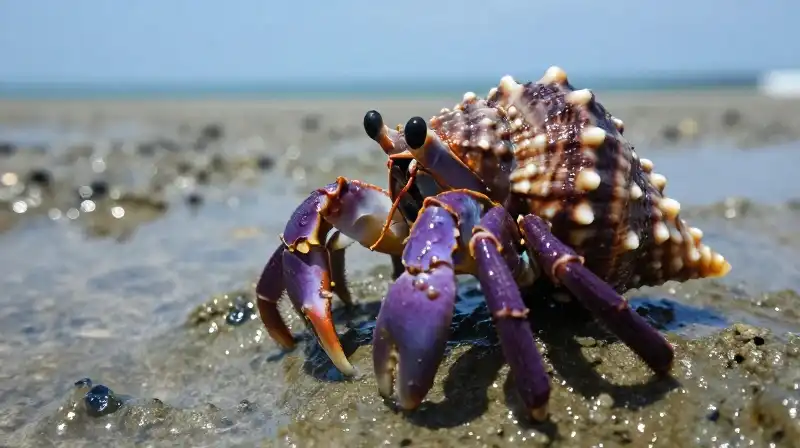
The survival of a hermit crab is inextricably linked to the availability of empty seashells. Since their abdomens are soft and unprotected, they must find discarded shells to act as mobile fortresses against predators.
Some species have even evolved specialized ways to transition between water and land. For example, the Purple Pincer (*Coenobita clypeatus*) possesses modified gills. These allow them to breathe on land by utilizing water stored within their shells to facilitate necessary oxygen exchange.
Role in the Ecosystem
While they are scavengers, hermit crabs are also a critical food source for a variety of other animals. They are frequently preyed upon by sea stars, larger crab species, and birds such as gulls and crows. In the ocean, various fish, including pricklebacks and snailfish, also hunt them. This makes them a vital link in the transfer of energy within the marine food web.
Common Questions About Hermit Crabs
What are some fun facts about hermit crabs for kids?
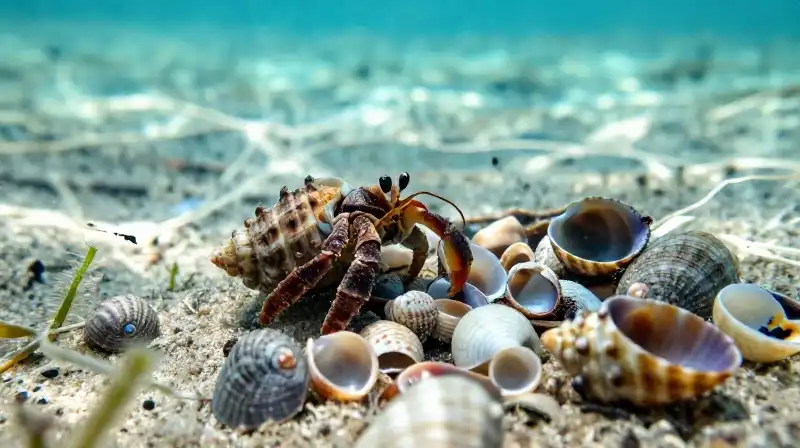
For younger explorers, the most amazing facts involve their “changing houses.” Just like humans grow out of clothes, hermit crabs have to find a new, bigger shell every time they grow! They also “taste” with their antennae and make little chirping sounds that sound like tiny frogs.
Are hermit crabs dangerous?
Generally, hermit crabs are not dangerous to humans. While they have claws that they use for defense and feeding, they are much more interested in scavenging for food than interacting with people. Most “danger” associated with them involves the delicate nature of their molting process and their need for specific environmental conditions to survive.
What happens to a hermit crab without a shell?
A hermit crab without a shell is in extreme danger. Because their abdomen is soft and lacks the hard protection of a typical crab, they are highly vulnerable to both predators and dehydration. The shell is not just a home; it is a biological necessity for their survival.
The Remarkable Resilience of the Hermit Crab
From the ability to breathe on land using stored water to the complex social behaviors expressed through high-pitched chirps, hermit crabs are far more than simple scavengers. They are highly specialized survivors that navigate a world of constant change—molting to grow, searching for new homes, and playing a crucial role in the balance of the ocean’s food web. Whether in the deep sea or on a tropical beach, their ability to adapt makes them one of the most fascinating subjects in marine biology.
Facts sourced from peer-reviewed marine biology research, NOAA, and the Smithsonian Ocean Portal. Our editorial team fact-checks all content against current scientific literature.
Frequently Asked Questions
What are some fun facts about hermit crabs for kids?
Hermit crabs must find new, bigger shells as they grow and use their antennae to taste food. They also make high-pitched chirping sounds that resemble the sound of a small frog.
Related Articles