
15 Fascinating Fun Facts About Beluga Whales

Introduction
While many whales are defined by their massive size or intimidating presence, the beluga whale captures attention through its striking appearance and remarkably expressive behavior. Often called “white whales,” these highly intelligent marine mammals possess a suite of physical and social adaptations that make them unique among cetaceans. From their ability to navigate through shifting Arctic ice to their complex vocal repertoires, belugas are much more than just a splash of white in a dark ocean; they are specialized survivors of the polar seas.
15 Fascinating Fun Facts About Beluga Whales
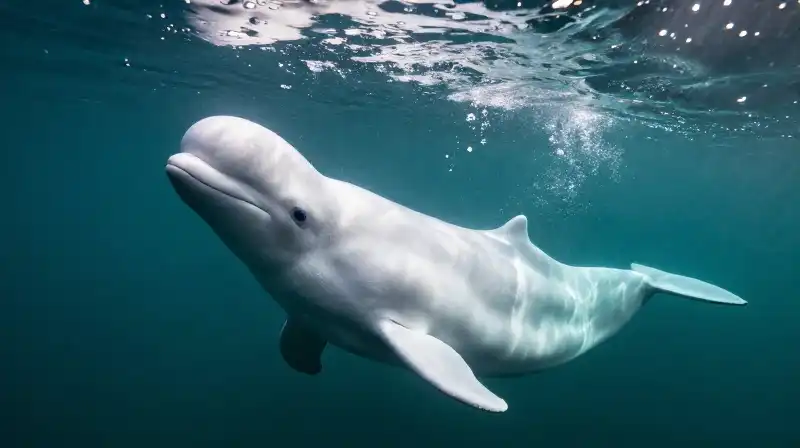
To understand what makes this species so special, we have to look closely at their anatomy, their social lives, and the ways they interact with their freezing environment.
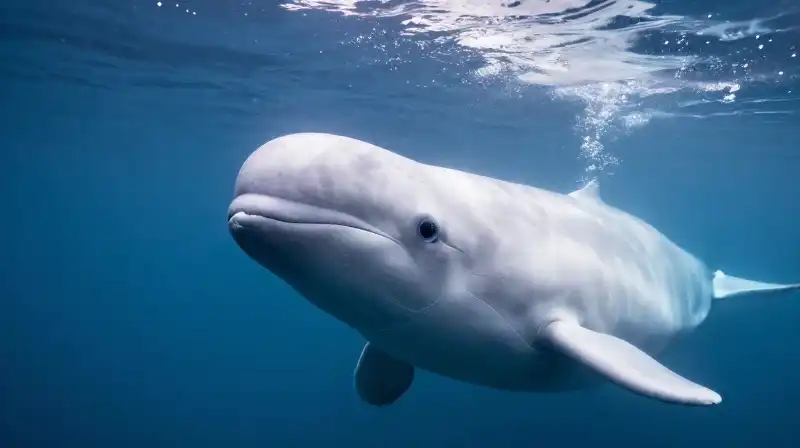
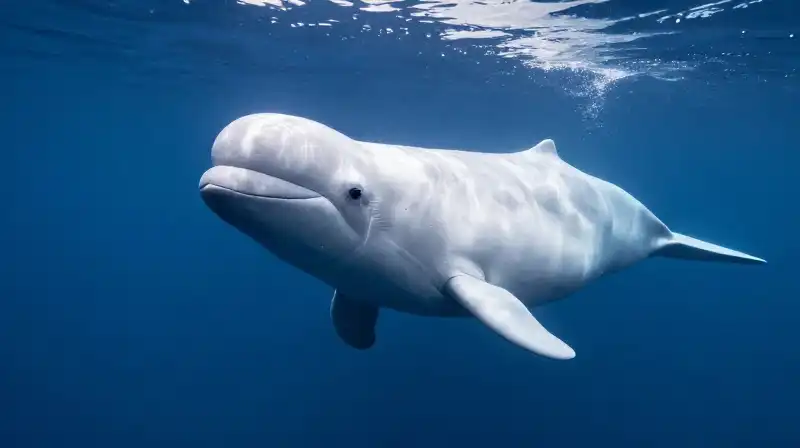
- They aren’t born white. Despite their famous appearance, belugas are actually born dark gray. It takes time for their pigmentation to change, and they typically do not reach their signature white coloration until they are about eight years old.
- The name means “white.” The term “beluga” is derived from the Russian word bielo or belukha, which translates directly to “white”.
- They have a “melon” for sonar. Belugas possess a bulbous, fatty forehead structure called a melon. This organ is essential for echolocation, helping them navigate and find prey in dark or murky waters. Interestingly, they can actually change the shape of this melon during vocalization to focus their sound.
- They are known as “sea canaries.” Belugas are incredibly vocal members of the ocean. They produce a massive repertoire of sounds, ranging from whistles and clicks to mews, bleats, chirps, and even bell-like tones.
- They have highly mobile necks. Most whales have fused neck vertebrae, which limits their head movement. Belugas, however, have unfused cervical vertebrae, allowing them to turn their heads up, down, and side-to-side with ease.
- They lack a dorsal fin. Instead of the tall fin seen on dolphins or orcas, belugas have a low dorsal ridge. This is a specific adaptation for life in icy waters, as it prevents heat loss and allows them to swim more easily beneath thick ice sheets.
- They can swim backward. Unlike many other large marine mammals, belugas are capable of swimming both forward and backward, a useful skill when navigating tight spaces in the ice.
- They swallow food whole. Although they are classified as “toothed whales,” belugas do not chew. They use suction to capture prey—such as fish, squid, and crustaceans—and swallow it entirely.
- They are voracious eaters. To maintain their energy in cold environments, an adult beluga can consume approximately 27 kilograms (60 lbs) of food every single day.
- Calves have long dependencies. The gestation period for a beluga is roughly 14 to 15 months. Once born, calves rely heavily on their mothers, typically nursing for up to two years.
- They vary in size. While they are considered one of the smaller whale species, they are still substantial animals. Adult males can reach weights of up to 1,500 kg (3,307 lbs).
- They are social creatures. Belugas rarely live in isolation; they are highly social animals that live in organized groups known as pods.
- They face natural predators. In their Arctic habitats, belugas must stay vigilant against predators such as polar bears and orcas.
- Climate change is a major threat. As Arctic ice melts and sea temperatures rise, the delicate balance of the beluga’s habitat is shifting, impacting their ability to hunt and navigate.
- Human activity impacts their communication. Beyond climate change, belugas are threatened by industrial pollution, oil and gas development, and noise pollution, which can interfere with the vital sounds they use to communicate and find their way.
Physical Adaptations at a Glance
To see how the beluga differs from more commonly known whales, consider the following comparisons regarding their specialized anatomy:
| Feature | Typical Large Whale | Beluga Whale |
|---|---|---|
| Neck Vertebrae | Fused (limited movement) | Unfused (high mobility) |
| Dorsal Structure | Prominent dorsal fin | Low dorsal ridge |
| Primary Navigation | Varies by species | Highly developed melon for echolocation |
What do beluga whales eat?
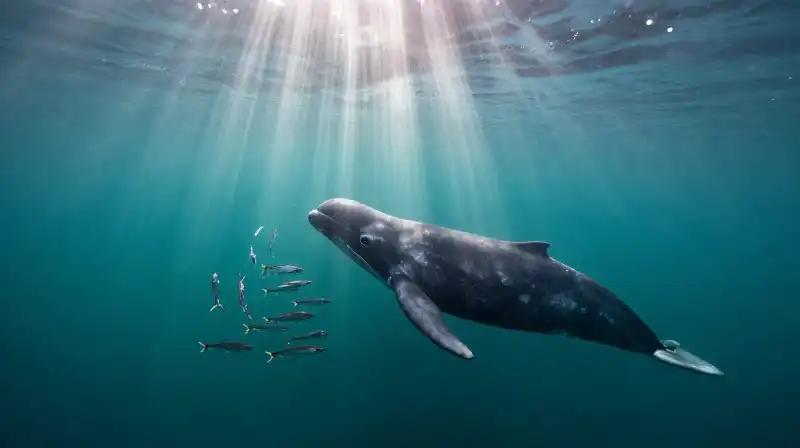
If you are wondering about their diet, belugas are opportunistic feeders that rely on the abundance of the Arctic sea floor and water column. Their diet primarily consists of fish, squid, and various crustaceans. Because they lack the ability to chew, they use a powerful suction method to pull prey into their mouths, swallowing their meals whole to ensure efficient energy intake.
Conservation Status and Threats
While the species as a whole is currently classified as “near threatened” on the IUCN Red List, it is important to recognize that conservation needs vary by location. Some specific populations are in much more precarious positions; for instance, the belugas in Cook Inlet are listed as endangered or even critically endangered.
The challenges they face are multifaceted. Anthropogenic (human-caused) factors like urban and industrial pollution, as well as noise pollution from shipping and resource development, can disrupt their acoustic world. Because belugas rely so heavily on sound for survival, loud underwater noise is not just a nuisance—it is a direct threat to their ability to communicate and navigate safely.
The Remarkable Complexity of the Beluga
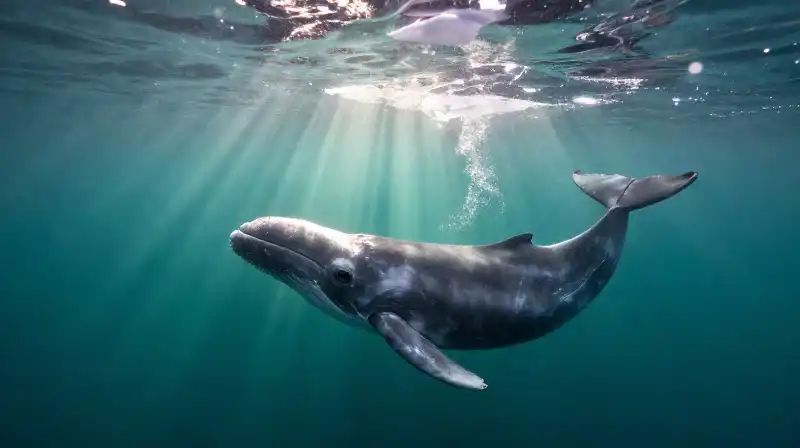
The beluga whale is a master of adaptation. Every aspect of their biology—from the flexible neck that allows them to peer around ice floes to the specialized melon that serves as their biological sonar—is fine-tuned for life in one of the most challenging environments on Earth. Understanding these animals goes beyond recognizing their white color; it requires appreciating their complex social structures and the immense difficulty of surviving in a rapidly changing Arctic. Protecting these “sea canaries” means protecting the very sounds and ice-filled waters that define their existence.
Facts sourced from peer-reviewed marine biology research, NOAA, and the Smithsonian Ocean Portal. Our editorial team fact-checks all content against current scientific literature.
Related Articles