
25 Fascinating Facts About Killer Whales and Orcas

Introduction
Despite the name “killer whale,” orcas are not whales at all. They are actually the world’s largest members of the dolphin family, belonging to the Delphinidae taxon. These apex predators are found in every single ocean on the planet, ranging from the icy reaches of the Arctic to the frigid waters of Antarctica. Because of their striking black-and-white appearance and their reputation as master hunters, they have captured the human imagination for centuries, often appearing in everything from folklore to modern documentaries.
25 Fascinating Facts About Killer Whales and Orcas
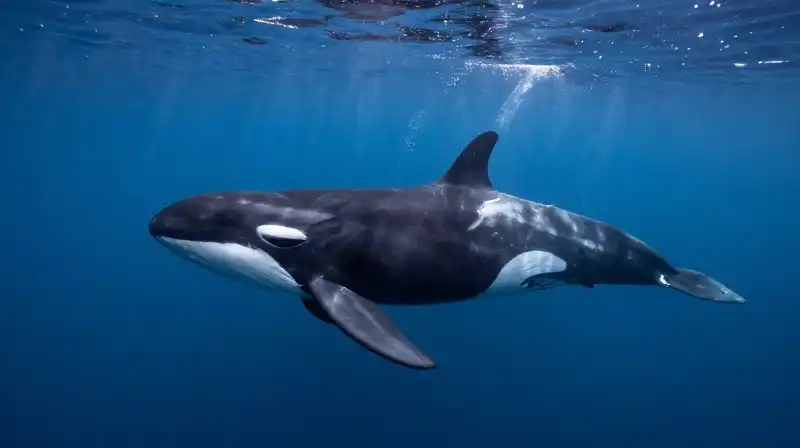
To understand why these animals are so central to marine biology, we have to look at their size, their incredible intelligence, and the unique ways they navigate life in the deep sea. Here is a breakdown of what makes them truly remarkable.
Physical Characteristics and Size
- They are massive dolphins: While they look like whales, they are biologically dolphins.
- Impressive male length: Adult males can grow to lengths of nearly 33 feet (10 meters).
- Substantial weight: A large male can weigh up to 22,000 pounds (10,000kg).
- Female size: While still huge, females are generally smaller, weighing up to 5,500kg.
- Camouflage patterns: Their coloration is a form of “countershading.” Their dark backs make them hard to see from above against the deep ocean, while their white bellies blend with the sunlight from below.
- Powerful teeth: Orcas possess approximately 45 teeth, each roughly 7.6 centimeters long, which are specialized for ripping and tearing prey.
- High-speed swimmers: They are among the fastest marine mammals, with recorded top speeds reaching approximately 33.5 mph (54 kph) or 30 knots.
Intelligence and Social Culture
- Complex “cultures”: Orcas pass down unique dialects, specific vocalizations, and learned hunting techniques through generations.
- Sophisticated hunting: They use coordinated tactics, such as “wave-washing,” where they create waves to knock prey off ice floes.
- Herding behavior: Some groups work together to herd fish into tight, manageable areas for easier consumption.
- Specialized diets: While some are generalists, others are “ecotypes” that only eat specific things. For example, “offshore orcas” are known to hunt sharks.
- High cognitive function: Their ability to teach their young specific skills is a hallmark of their advanced intelligence.
Biology and Life Cycles
- Long pregnancies: Orcas have exceptionally long gestation periods, lasting between 15 and 18 months.
- Female longevity: In the wild, females are estimated to live between 50 and 90 years.
- Male longevity: Males typically have shorter lifespans, averaging around 30 years.
- Unihemispheric sleep: To avoid drowning or being caught off guard, they sleep with only one half of their brain at a time.
- One eye open: Because of their unique sleeping pattern, an orca often keeps one eye open while resting.
History and Nomenclature
- The “Killer” origin: The name “killer whale” was coined by ancient sailors who observed these predators hunting and consuming much larger whale species.
- Global presence: They are truly cosmopolitan, inhabiting every ocean on Earth.
Conservation and Threats
- Anthropogenic threats: Human activities like vessel strikes, noise pollution, and entanglement in fishing gear pose constant risks.
- Pollution: Toxic waste in the ocean can accumulate in their bodies.
- Hunting: Targeted whaling continues in specific regions, such as Japan and Greenland.
- Data deficiency: The IUCN currently lists the overall status of orcas as “data deficient,” meaning we need more research to fully understand their global health.
- Population struggles: Certain groups, such as the Southern Residents, face significant difficulties in recovery.
Size Comparison Summary
| Feature | Adult Male | Adult Female |
|---|---|---|
| Approximate Length | Up to 33 feet (10m) | Smaller than males |
| Weight | Up to 22,000 lbs (10,000kg) | Up to 5,500 kg |
Common Questions About Orcas
Do orcas sleep with one eye open?
Yes, this is a result of a biological process called “unihemispheric sleep.” Because orcas are conscious breathers, they cannot fall into a deep, unconscious sleep like humans do. Instead, they rest one half of their brain at a time while the other half remains alert to manage breathing and watch for predators. This often results in the whale keeping one eye open during the process.
Can orcas live to 100?
While there is no definitive evidence that they reach a century, their lifespans are impressively long for marine mammals. Female orcas are estimated to live between 50 and 90 years in the wild. While some individual records suggest they may live longer, 50 to 90 years is the scientifically recognized range for most populations.
Understanding the Apex Predator
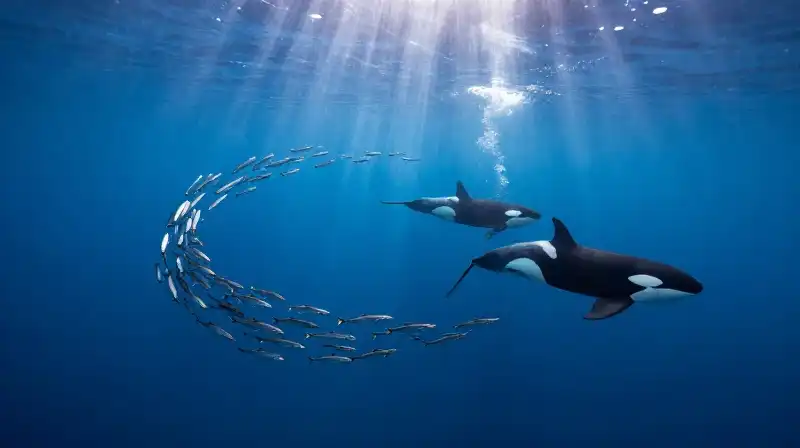
Orcas are much more than just “scary” predators; they are highly social, culturally complex animals that play a vital role in the ocean’s ecosystem. Their ability to adapt—whether by developing specific hunting techniques for different prey or by navigating different ocean temperatures—makes them one of the most successful species on Earth. However, as they face increasing threats from human-driven pollution and noise, understanding their complex biology and social structures becomes even more critical for their long-term conservation.
Facts sourced from peer-reviewed marine biology research, NOAA, and the Smithsonian Ocean Portal. Our editorial team fact-checks all content against current scientific literature.
Frequently Asked Questions
Do orcas sleep with one eye open?
Yes, orcas often keep one eye open while resting due to a biological process called unihemispheric sleep. This allows one half of their brain to remain alert to manage breathing and watch for predators while the other half rests.
Can orcas live to 100?
There is no definitive evidence that orcas reach a century. In the wild, females are estimated to live between 50 and 90 years, while males typically average around 30 years.
Related Articles