
10 Fun Facts About Beluga Whales: The Canaries of the Sea

Introduction
In the icy reaches of the Arctic, a splash of bright white moves through the dark, frigid waters. This is the beluga whale, a creature so distinct in its appearance and vocal ability that it has captured the imagination of explorers and scientists alike for centuries. Often called the “canaries of the sea,” belugas possess a musicality that sets them apart from almost any other marine mammal. Far from being just a silent wanderer of the north, they are highly social, incredibly agile, and possess biological adaptations that allow them to navigate a world of shifting ice and deep, murky currents.
10 Fun Facts About Beluga Whales
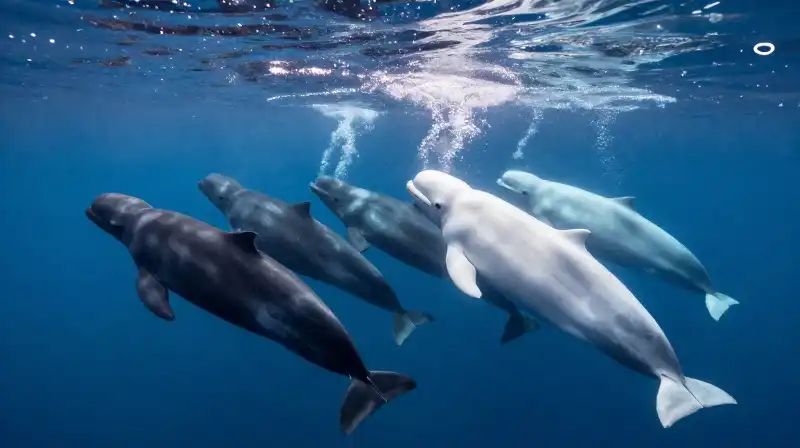
While many people recognize them by their snowy color, there is much more to these whales than meets the eye. Here are ten fascinating details about their biology, behavior, and lifestyle.
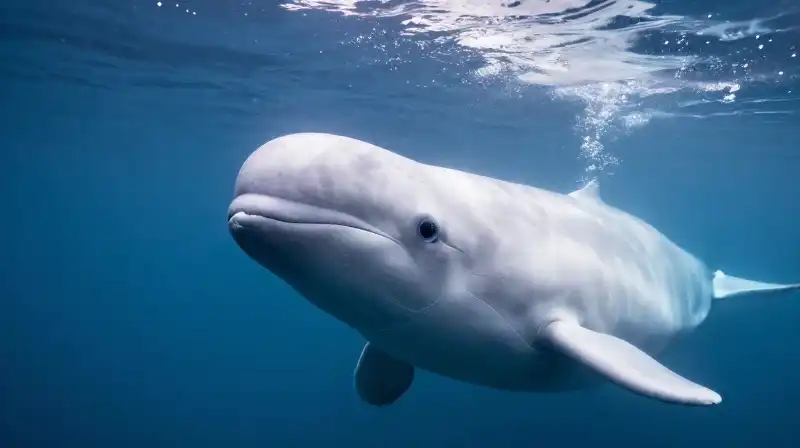
- They aren’t born white. Despite their famous appearance, beluga calves are actually born a dark gray color. It can take up to eight years for a beluga to fully transition to its iconic white complexion.
- They are master communicators. Belugas earned the nickname “canaries of the sea” because of their vast vocal repertoire. They don’t just make one sound; they produce a complex range of whistles, clicks, mews, bleats, chirps, and even bell-like tones.
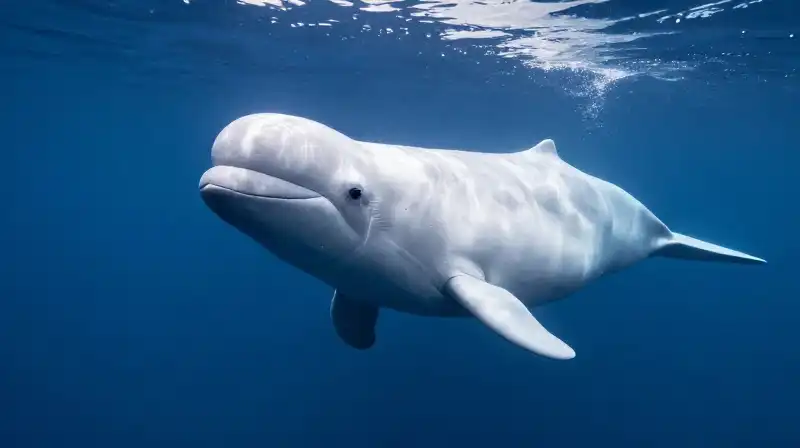
- The “melon” is a biological tool. The bulbous forehead seen on a beluga is an organ known as a “melon.” This fatty structure is essential for echolocation; by changing the shape of the melon, the whale can focus sound waves to navigate and hunt in dark or silt-heavy waters.
- They have flexible necks. Unlike most other whale species, whose neck vertebrae are fused together, belugas have flexible cervical vertebrae. This allows them to turn their heads up, down, and side-to-side, providing a massive advantage when targeting prey in cluttered environments like ice floes.
- They swallow food whole. Although they are classified as “toothed whales,” belugas do not chew. Instead, they use suction to swallow prey—such as fish, squid, crustaceans, and worms—entirely whole.
- They are high-volume eaters. Maintaining life in the cold Arctic requires significant energy. A single adult beluga can consume approximately 27 kilograms (about 60 lbs) of food every single day.
- They are surprisingly agile divers. Belugas are capable of swimming backward, a rare trait among many large marine mammals. They can also dive to depths of 800 meters and hold their breath underwater for up to 25 minutes.
- They live in social “pods.” Belugas are not solitary travelers; they are highly social animals that prefer to live in organized groups known as pods.
- They have a slow reproductive cycle. Raising a calf is a long-term commitment. Females have a gestation period of 14 to 15 months and typically give birth to just one calf every three years. These calves remain dependent on their mothers, nursing for up to two years.
- Their name has linguistic roots. The term “beluga” is derived from the Russian word bielo, which translates to “white”.
Beluga Whale Physical Profile
To understand the scale of these animals, it helps to look at their physical dimensions. While sizes can vary based on age and environment, the following ranges are typical for adults:
| Feature | Typical Measurement/Weight |
|---|---|
| Adult Length | 13 to 20 feet |
| Adult Weight | Up to 1,600 kg (1.5 tons) |
| Maximum Dive Depth | 800 meters |
| Breath-hold Capacity | Up to 25 minutes |
Survival and Conservation
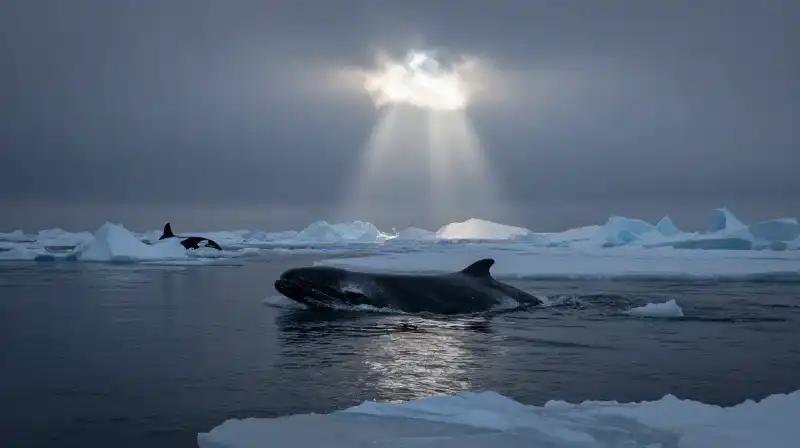
Life in the Arctic is a constant balance of predator and prey. For the beluga, natural predators include orcas and polar bears. However, modern challenges have introduced new pressures that are harder to navigate than shifting ice.
Currently, belugas are classified as “near threatened” on the IUCN Red List, with an estimated global population of 150,000 individuals. Their survival is being challenged by several human-driven factors:
- Climate Change: Melting sea ice alters their natural habitat and hunting grounds.
- Industrial Activity: Oil and gas development and general industrial pollution can contaminate their environment.
- Noise Pollution: Because belugas rely so heavily on sound for communication and echolocation, man-made noise can interfere with their ability to navigate and find mates.
- Hunting: Direct human hunting remains a factor in certain regions.
Why the Beluga Matters
The beluga whale is more than just a beautiful inhabitant of the North; it is a biological marvel. From their ability to “sing” through the water to the anatomical flexibility of their necks, they represent a highly specialized evolution designed for one of the most demanding environments on Earth. Understanding their complex social structures and their reliance on acoustic communication helps us realize that protecting the ocean isn’t just about saving a single species—it’s about preserving the delicate, noisy, and vibrant connections that allow these “canaries of the sea” to thrive.
Facts sourced from peer-reviewed marine biology research, NOAA, and the Smithsonian Ocean Portal. Our editorial team fact-checks all content against current scientific literature.
Related Articles