
12 Fascinating Facts About Beluga Whales and Their Secrets

Introduction
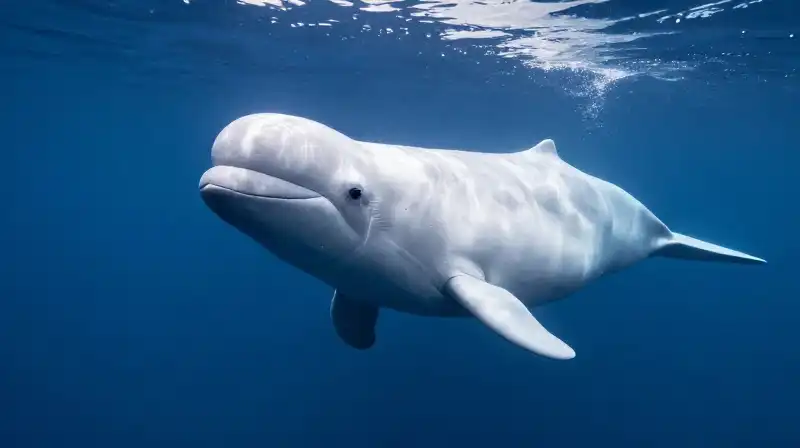
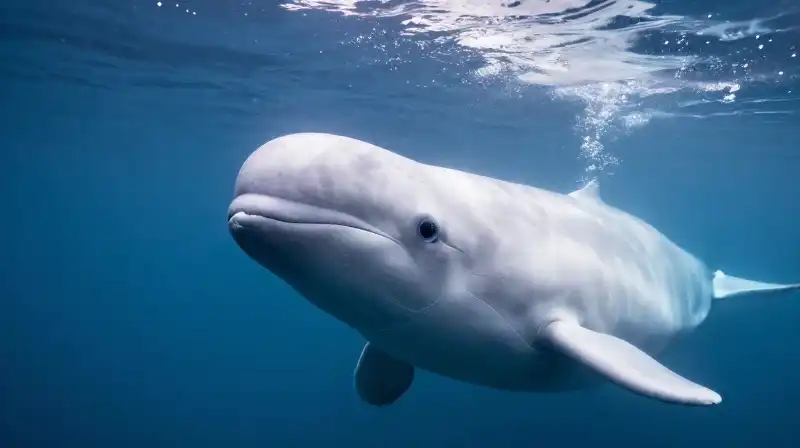
In the frigid, ice-choked waters of the Arctic and sub-Arctic, a ghost-white silhouette often glides through the slush. While many people associate whales with the massive, dark shapes of blue or humpback whales, the beluga offers a completely different profile. Characterized by a bright complexion and a remarkably expressive face, the beluga is a master of adaptation, built specifically to thrive in environments that would freeze most other mammals. From their ability to “sing” to their unique skeletal structure, these whales possess a suite of biological secrets that make them some of the most specialized residents of the deep North.
The Beluga Profile: Size and Physicality
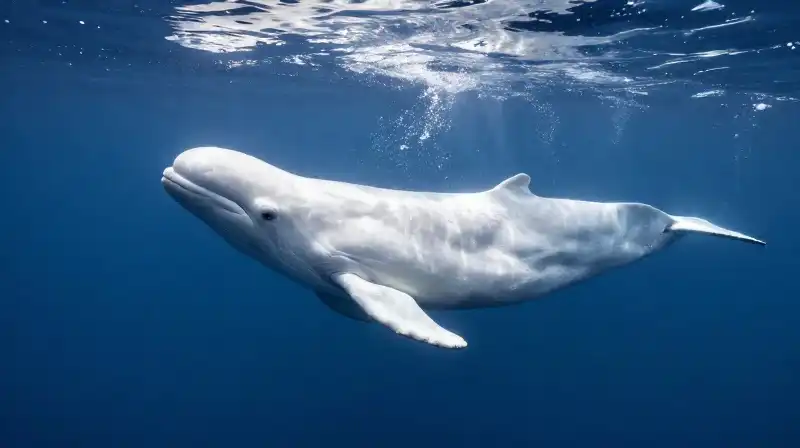
Before diving into their specific behaviors, it is helpful to understand the sheer scale of these animals. Though they are smaller than many of their oceanic cousins, they are still substantial marine mammals.
| Attribute | Typical Range/Value |
|---|---|
| Adult Length | 13 to 20 feet |
| Adult Weight | 1 to 1.5 tons |
| Maximum Speed | Approximately 22 km/h or 14 mph |
| Diving Depth | Up to 800 meters |
| Maximum Dive Time | Up to 25 minutes |
12 Fascinating Facts About Beluga Whales
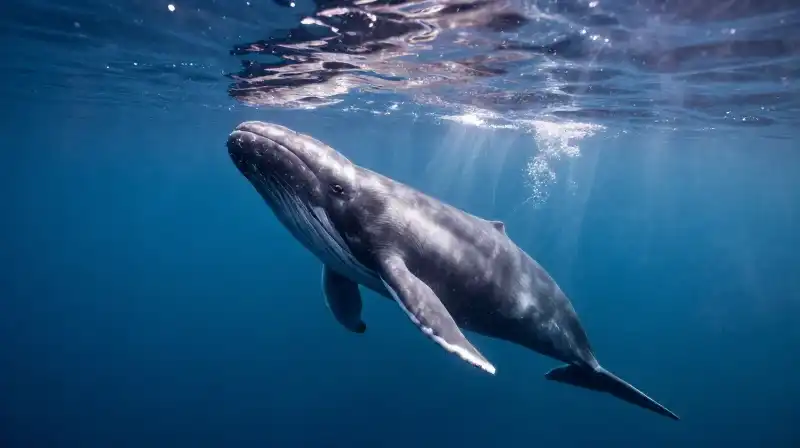
- They aren’t born white. While we call them “white whales,” calves are actually born a dark gray color. According to it can take up to eight years for a beluga to transition to its iconic snowy white adult coloration.
- They have “neck mobility.” Most whales have vertebrae that are fused together, creating a rigid spine. However, belugas have flexible necks with non-fused vertebrae. This allows them to turn their heads up, down, and side-to-side—an essential skill for hunting prey hidden in silt or navigating tight spaces in the ice.
- The “Melon” is a shape-shifting tool. That bulbous forehead you see on a beluga is actually a fatty organ called a “melon”. It isn’t just for show; it is used for echolocation. Belugas can actually change the shape of the melon to help focus sound waves, allowing them to identify and locate objects with incredible precision.
- They are the “Canaries of the Sea.” Belugas are famous for their vocal complexity. They use a massive range of sounds—including whistles, clicks, mews, bleats, and chirps—to communicate with one another.
- They lack a dorsal fin. To navigate icy waters without injury, belugas have evolved to lack the prominent dorsal fin found on most other whales. Instead, they possess a tough dorsal ridge and a thick layer of blubber to retain heat.
- They swallow food whole. Despite being classified as “toothed whales,” belugas do not chew. They use suction to swallow their prey—which includes fish, squid, crustaceans, and worms—entirely whole.
- They are highly intelligent socialites. Living in groups known as pods, belugas are deeply social. Their intelligence is well-documented; some individuals in captivity have even demonstrated the ability to mimic human speech.
- A common name misconception. While they share the name with the sturgeon (a type of fish), belugas are not related to them at all. They are closely related to the narwhal.
- Slow but steady swimmers. While they aren’t built for high-speed chases, they are incredibly efficient divers, capable of staying submerged for nearly half an hour.
- Long-term motherhood. Raising a calf is a significant investment for a female beluga. Following a gestation period of 14 to 15 months, a female typically gives birth to one calf roughly every three years, with the calf nursing for up to two years.
- Lifespan in the wild. In their natural Arctic habitat, these mammals can live a relatively long life, typically ranging from 35 to 50 years.
- Natural predators. Even these formidable divers have enemies. In their Arctic range, the primary natural predators of the beluga are polar bears and orcas.
Conservation and Threats
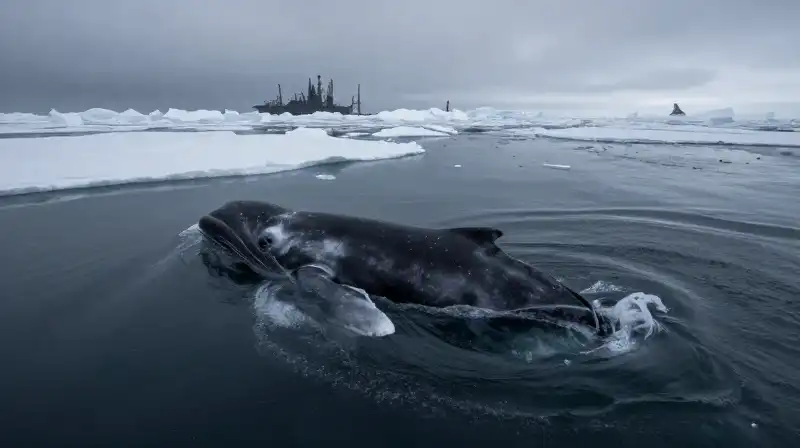
Despite their resilience in extreme cold, belugas are facing significant modern challenges. They are currently classified as “near threatened” on the IUCN Red List. Unlike the natural threats of orcas or bears, the pressures facing belugas today are largely human-induced.
Key threats include:
- Climate Change: Rapidly changing ice patterns alter their traditional habitats.
- Pollution: Contaminants in the water can impact their health and reproductive cycles.
- Industrial Noise: Because belugas rely so heavily on sound for communication and echolocation (using that specialized melon), noise from shipping and industrial development can disrupt their ability to navigate and hunt.
- Habitat Destruction: Changes to the Arctic ecosystem can limit their access to food and safe breeding grounds.
Why the Beluga Matters
The beluga whale is more than just a beautiful inhabitant of the North; it is a biological marvel of specialization. Every aspect of their anatomy—from the flexible neck that allows for precise hunting to the shape-shifting melon used for sonar—is a testament to millions of years of evolution in one of the planet’s most demanding environments. Understanding their complex social structures and their “song” helps us realize that they are not just creatures of instinct, but intelligent, communicative beings. Protecting them means protecting the very acoustic and icy landscapes that allow their unique way of life to exist.
Facts sourced from peer-reviewed marine biology research, NOAA, and the Smithsonian Ocean Portal. Our editorial team fact-checks all content against current scientific literature.
Related Articles