Mimic Octopus Fun Facts: Natures Most Intelligent Impersonator

Introduction
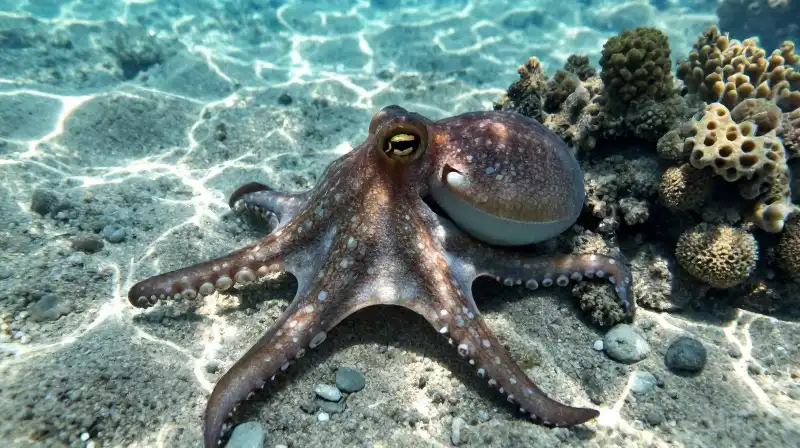
In the silty, sunlit shallows off the coast of Sulawesi, Indonesia, a small creature is performing a masterclass in deception. While most octopuses rely on blending into the background to stay hidden, the mimic octopus (*Thaumoctopus mimicus*) takes a more proactive approach: it becomes someone else entirely. Discovered only as recently as 1998, this cephalopod is the world’s first documented practitioner of “dynamic mimicry,” a sophisticated survival strategy where the animal shifts between multiple different impersonations depending on the specific threat it encounters.
The Art of the Impersonation
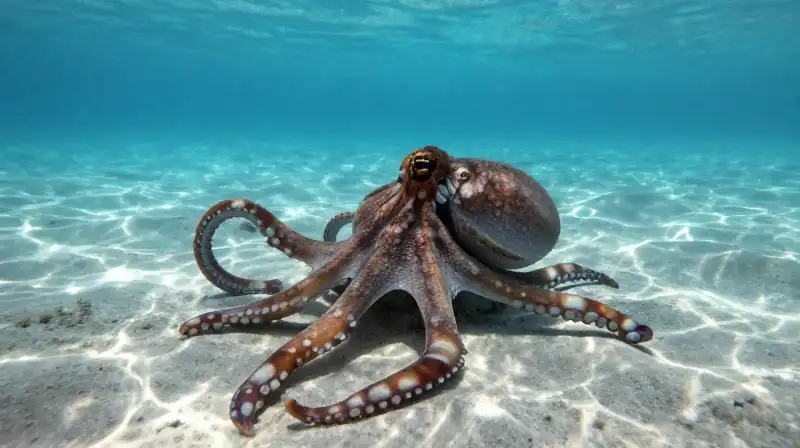
The mimic octopus does not just change its color; it alters its entire silhouette and movement pattern. This intelligence allows it to navigate high-risk environments like open sand flats, where it lacks the protection of a coral reef.
How it works: Chromatophores and Body Language
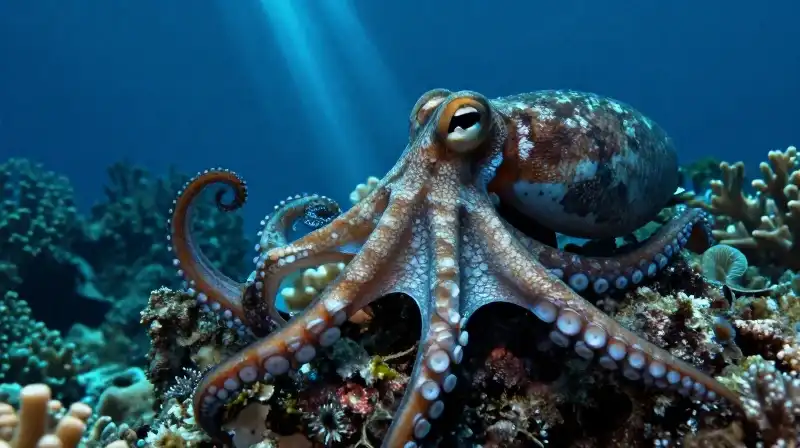
The octopus relies on two primary tools to pull off its disguises: biological pigment and physical geometry. It uses chromatophores—tiny, specialized pigment sacs located in its skin—to rapidly adjust its color and texture to match its target. Because octopuses lack a rigid skeleton, they possess extreme physical flexibility, with their only hard body part being their beak. This allows them to contort their limbs into shapes that resemble entirely different species.
A Selective Defense Strategy
What makes the mimic octopus truly remarkable is its ability to choose the right “costume” for the right predator. It doesn’t just mimic any creature; it selects an animal that the specific threat is known to avoid. For example:
- The Lionfish: To deter predators, it may splay its arms out to mimic the venomous, flowing spines of a toxic lionfish.
- The Banded Sole: It can fold its arms behind its body and use jet propulsion to glide through the water, perfectly imitating this specific type of flatfish.
- Banded Sea Snakes: If bothered by damselfish, the octopus may impersonate a venomous sea snake to scare them off.
- Other Impersonations: Documented mimics also include jellyfish, anemones, and even the mating partners of other animals, such as crabs, to lure prey into striking distance.
Species Profile: The Mimic Octopus at a Glance
Understanding the physical constraints and life cycle of the mimic octopus helps explain why such advanced mimicry is necessary for its survival.
| Attribute | Details |
|---|---|
| Typical Size | Approximately 2 feet (60 cm) in total length. |
| Habitat | Open, silty sand flats and shallow coastal waters. |
| Lifespan | Relatively short, approximately nine months. |
| Activity Pattern | Diurnal (active during the day). |
| Key Anatomy | Highly flexible body; uses a specialized arm called a hectocotylus for reproduction. |
Why is the Mimic Octopus so good at mimicking?
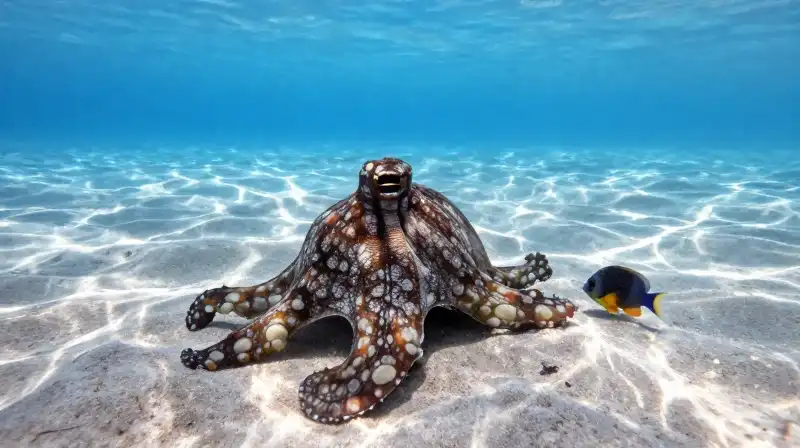
The question of why this species is such a successful “copycat” comes down to the high-stakes environment it inhabits. Unlike many of its relatives that hide in dark crevices or remain nocturnal to avoid being seen, the mimic octopus is active during the day on open sand flats. This makes it highly visible to predators. To survive in this “exposed” lifestyle, it had to evolve a level of cognitive flexibility that allows it to recognize threats and deploy a specific, visual counter-measure immediately.
Interestingly, the mimic octopus even has its own “copycat” in the animal kingdom. The harlequin jawfish has been observed mimicking the coloration of the mimic octopus to help it hide while swimming nearby.
Pop Culture vs. Marine Biology
The mimic octopus gained significant fame through the character “Hank” in the film Finding Dory. While the film correctly identifies the species, it also introduces some biological dramatization. For instance, while Hank can drive a truck, real mimic octopuses cannot. However, the film’s portrayal of the octopus’s intelligence and dexterity is grounded in reality; some biologists suggest that octopuses possess enough strength and ability to survive for certain periods outside of the water.
The Intelligence of Deception
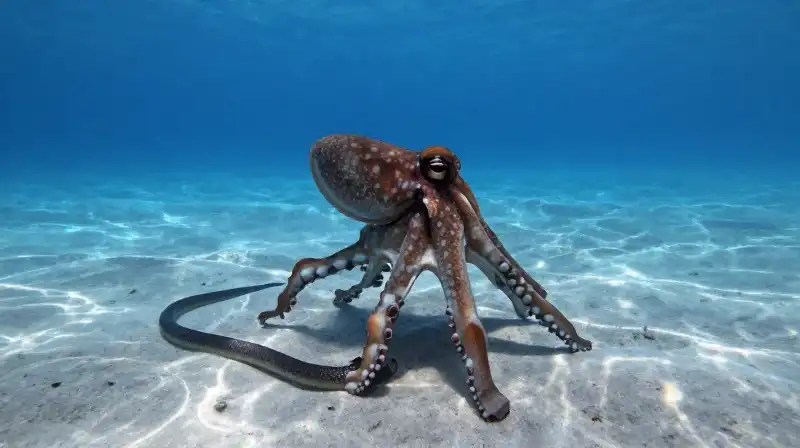
The mimic octopus is much more than a biological curiosity; it is a testament to the power of evolutionary intelligence. By mastering the ability to transition between different identities, it has turned a vulnerable lifestyle into a successful one. Whether it is wiggling into the sand to become a “subterranean expert” with only its eyes exposed, or transforming into a venomous sea snake, the mimic octopus demonstrates that in the ocean, sometimes the best way to survive is to change who you are.
Facts sourced from peer-reviewed marine biology research, NOAA, and the Smithsonian Ocean Portal. Our editorial team fact-checks all content against current scientific literature.
Frequently Asked Questions
Why is mimic octopus so good?
The mimic octopus is successful because it uses cognitive flexibility to recognize specific threats and deploy tailored impersonations of animals that those predators avoid. It achieves this by utilizing chromatophores for color and texture changes and its flexible body to alter its silhouette and movement.
Related Articles