Fascinating Facts About the Giant Pacific Octopus

Introduction
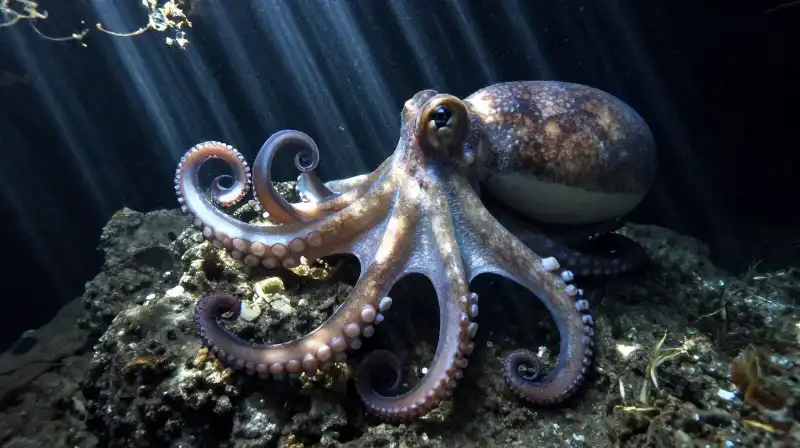
Imagine a creature that can change its entire appearance in the blink of an eye, solve complex puzzles, and move with a level of intelligence that rivals many vertebrates. The giant Pacific octopus (GPO) is not just a master of disguise; it is a biological marvel of the cold, temperate waters of the Pacific Ocean. As the world’s largest octopus species, it commands attention through its sheer scale and its sophisticated, decentralized nervous system that allows it to interact with its environment in ways few other invertebrates can.
Size and Growth: From Rice Grains to Giants
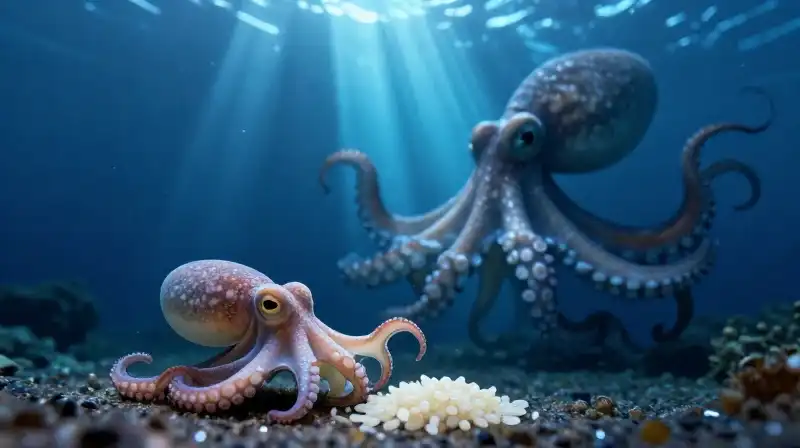
The life cycle of a giant Pacific octopus is a study in extreme contrasts. They do not begin their lives as formidable hunters, but as microscopic larvae. According to these larvae hatch from eggs no larger than a grain of rice, weighing a mere 22 milligrams.
As they mature, their growth is staggering. While a typical adult might weigh around 50 kg (110 lbs), the species is capable of much larger proportions. To understand the scale of this species, consider the following size comparisons:
| Metric | Typical Adult | Largest Ever Recorded |
|---|---|---|
| Weight | ~50 kg (110 lbs) | ~270 kg (nearly 600 lbs) |
| Span/Length | ~5 meters | 9 meters |
Anatomy of a Mastermind
What truly sets the giant Pacific octopus apart is not just its size, but how its body functions. Their biology is optimized for both survival in chilly waters and high-level problem solving.
A Distributed Brain
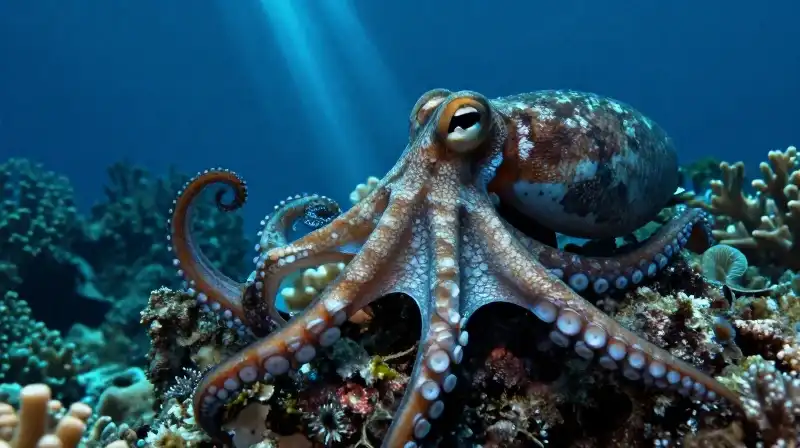
Most animals rely on a single central command center, but the GPO operates more like a network. While they possess one central brain, they also have eight “satellite” brains—clusters of neurons known as ganglia—located in each arm. This unique neural structure allows each arm to process sensory information and execute movements independently, without constantly taxing the main brain. This autonomy is a key component of their celebrated intelligence; they can explore crevices and manipulate objects with one arm while the rest of the body remains alert for predators.
Sensory Arms and Vision
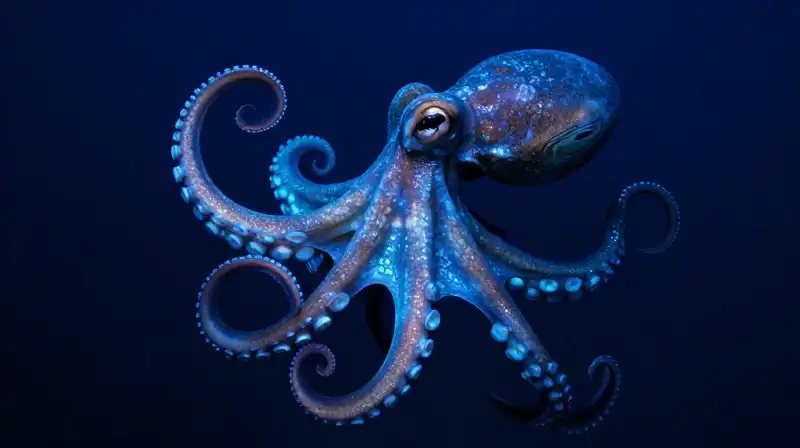
Each of the eight arms is equipped with approximately 2,240 suction cups. These are far more than just gripping tools; they function as sophisticated sensory organs that allow the octopus to taste and smell its surroundings directly through its skin. To complement this tactile input, the GPO utilizes rectangular-shaped pupils. This specific eye shape provides a wide, panoramic field of vision, which is essential for scanning the seafloor for both potential prey and hidden threats.
Copper-Based Blood
Because they inhabit cold Pacific environments, these cephalopods have evolved a different way to transport oxygen. Instead of the iron-based hemoglobin found in humans, they use hemocyanin, a copper-based protein. This adaptation helps them extract oxygen more effectively in low-temperature, high-pressure environments.
Survival Strategies: Camouflage and Diet
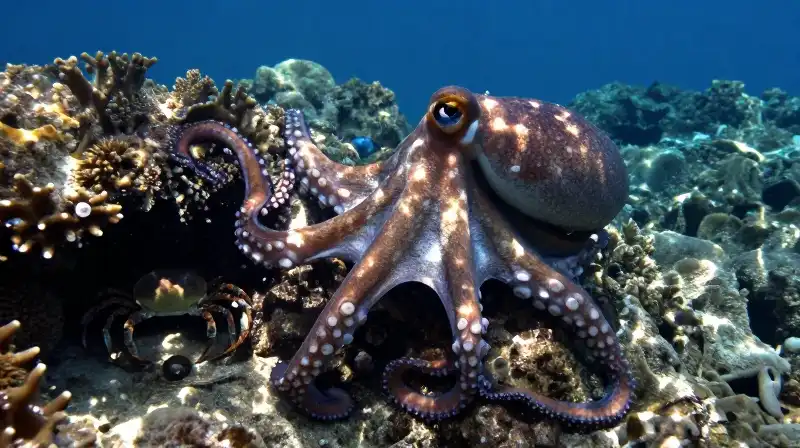
In the wild, being a large, soft-bodied animal makes the GPO a target for predators like seals, sea otters, and sharks. To survive, they rely on a combination of high-level intelligence and near-instantaneous camouflage.
- Rapid Camouflage: Using millions of pigment-containing cells called chromatophores, a GPO can alter its skin color and texture in as little as one-tenth of a second. This allows them to vanish against rocks, sand, or coral.
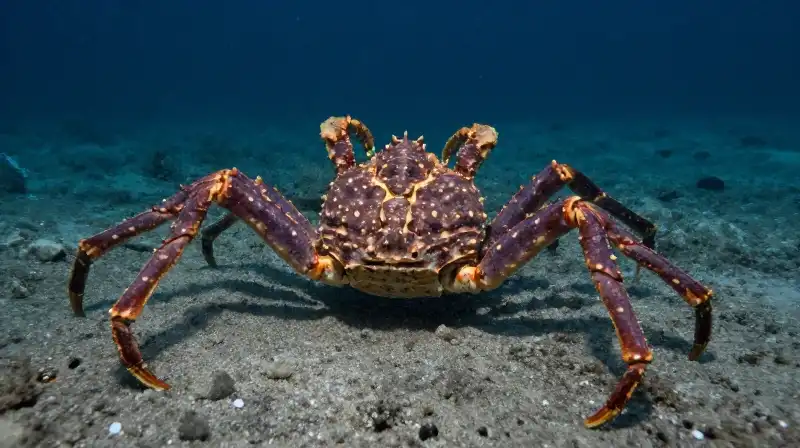
- Opportunistic Hunting: Their diet is diverse. While they primarily hunt crustaceans like crabs and shrimp, as well as molluscs, they are opportunistic enough to hunt small sharks and even birds.
- Specialized Feeding: To tackle hard-shelled prey, the GPO uses a powerful beak to bite shells open or pull them apart. They also possess a specialized, rough tongue called a radula, which they can use to “drill” holes into shells after secreting saliva to soften them.
The Intense Life Cycle and Lifespan
Despite their intelligence and complexity, the giant Pacific octopus lives a relatively short and intense life, typically spanning only three to five years. This brevity is most evident in their reproductive cycle. The process is particularly taxing for females; after laying eggs, a female may spend up to six months guarding and oxygenating them without eating a single meal. This dedicated period of care often leads to the female’s death shortly after the young hatch.
Conservation and Environmental Threats
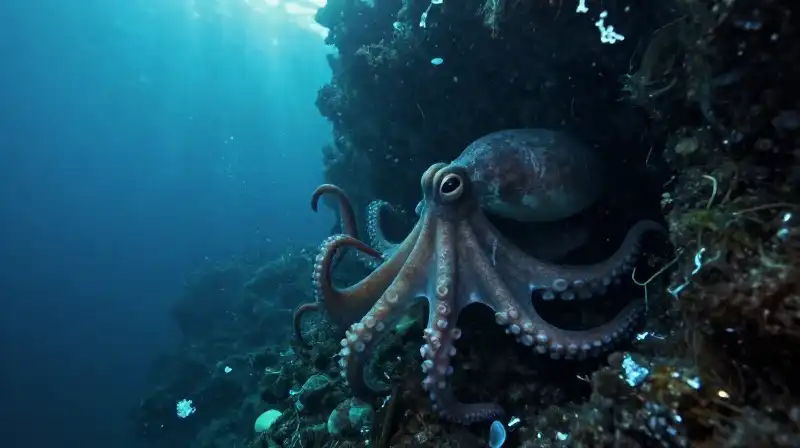
While the giant Pacific octopus is not currently classified as an endangered species—largely due to their ability to produce vast numbers of eggs—they are not without risk. They face several modern environmental challenges:
- Climate Change and Pollution: Shifting ocean temperatures and chemical runoff pose ongoing threats to their delicate habitats.
- Fisheries Impact: The species is commercially harvested for food and used as bait. Additionally, they are frequently caught as bycatch in other major fisheries, such as cod and crab operations.
Summary: Why the GPO Matters
The giant Pacific octopus serves as a profound example of how evolution can produce complex intelligence and specialized biology in a completely different direction from the vertebrate lineage. From their decentralized “eight-brained” nervous system to their ability to chemically adapt to cold water, they represent one of the most successful and fascinating evolutionary experiments in the ocean. Understanding these creatures helps us appreciate the sheer diversity of life and the intricate ways organisms adapt to survive in the deep.
Facts sourced from peer-reviewed marine biology research, NOAA, and the Smithsonian Ocean Portal. Our editorial team fact-checks all content against current scientific literature.
Frequently Asked Questions
What are some facts about the giant octopus?
The giant Pacific octopus is the worlds largest octopus species, featuring a decentralized nervous system with satellite brains in each arm and copper-based blood. It can rapidly change its skin color and texture for camouflage and typically lives for only three to five years.
Related Articles