10 Fascinating Facts About the Octopus and Its Unique Biology

Introduction
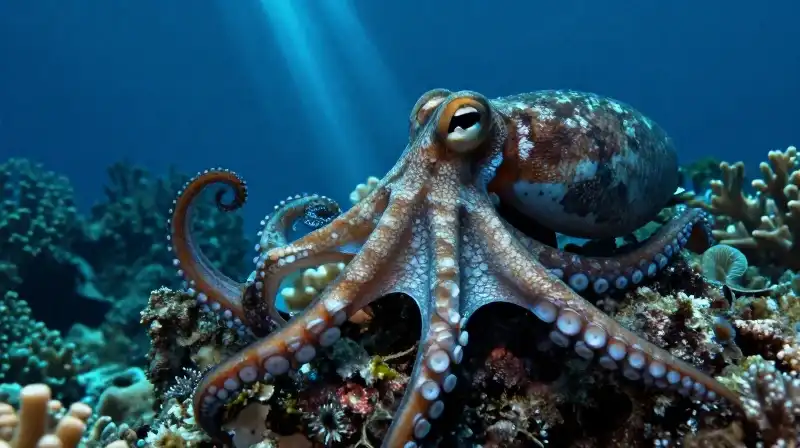
Imagine an animal that can change its skin texture to mimic a jagged rock, solve a complex puzzle, and squeeze its entire body through a hole no larger than its own beak. This is the reality of the octopus, a creature that challenges our very understanding of intelligence and biology. Far from being simple “sea monsters,” octopuses are sophisticated invertebrates that have evolved a suite of alien-like characteristics to thrive in the competitive ecosystems of the ocean floor.
10 Fascinating Facts About the Octopus
To understand why these cephalopods are so remarkable, we have to look past their eight arms and dive into the intricate mechanics of how they live, breathe, and think.
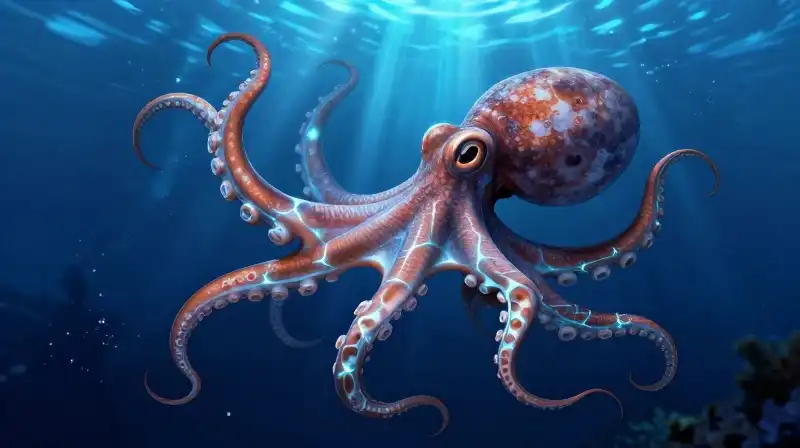
- A Decentralized “Nine-Brain” System: While they have a central doughnut-shaped brain in their head, an octopus operates much like a distributed network. According to and they possess “mini-brains” located at the base of each of their eight arms. This allows the limbs to act with a level of independence, handling local tasks like grasping or tasting without needing constant instructions from the central brain.
- Three Hearts and Blue Blood: Their circulatory system is built for extreme environments. They possess two peripheral hearts that pump blood to the gills and one central heart that circulates it to the rest of the body. Interestingly, and the central heart actually stops beating when the octopus swims, which is why many species prefer to crawl along the seabed to conserve energy. Their blood is blue because it uses copper-based hemocyanin rather than iron-based hemoglobin, a trait that makes oxygen transport more efficient in cold, low-oxygen waters.
- Master Mimics and Camouflage Artists: Octopuses don’t just hide; they transform. Using specialized cells called chromatophores and skin structures called papillae, they can alter their color, brightness, and texture instantly. While many use this to blend in, the mimic octopus (*Thaumoctopus mimicus*) takes it a step further by actively impersonating venomous animals like sea snakes or lionfish to scare off predators.
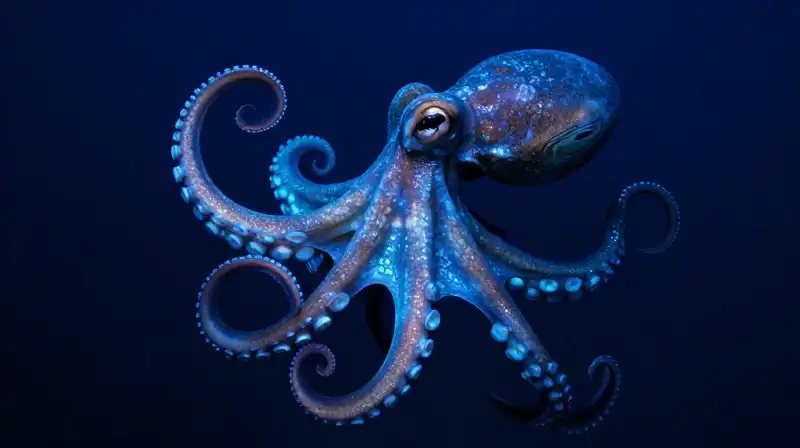
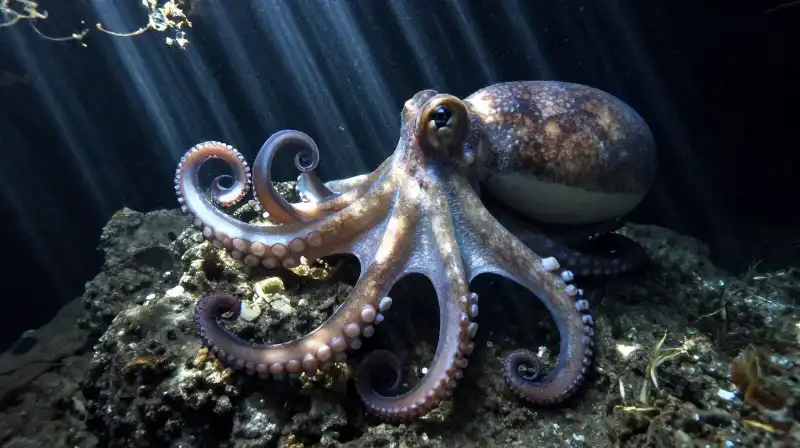
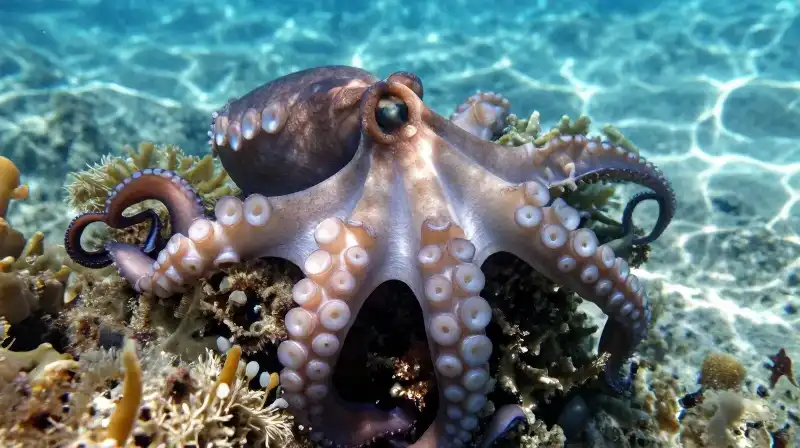
- Taste Through Touch: An octopus’s sensory world is deeply tactile. They possess more than 2,000 suction cups across their arms, which do more than just grip; they act as chemical sensors. This allows the octopus to “taste” and “smell” their environment through direct contact.
- Intelligence Beyond Invertebrates: These animals are among the most capable invertebrates on Earth. Research shows they can solve complex mazes, use tools—such as carrying coconut shells for portable shelter—and even recognize individual human faces.
- The “Boneless” Advantage: Because they lack a skeletal structure, an octopus is incredibly flexible. The only hard part of their body is their beak. This means they can squeeze through any opening that is large enough to accommodate that beak.
- Universal Venom: It is a biological fact that all octopuses are venomous. They use toxins to paralyze their prey and assist in the digestive process. However, most species pose no threat to humans; the blue-ringed octopus of Australia is a notable exception and is considered highly dangerous.
- The Ink Defense: When threatened, many species release a cloud of melanin-based ink. This isn’t just a visual screen; the ink can temporarily paralyze a predator’s senses of smell and taste, giving the octopus a chance to escape.
- Short but Intense Lifespans: Most octopuses live relatively short lives, typically ranging from 1 to 2 years, though some larger species may reach up to 5 years.
- Extreme Maternal Sacrifice: The drive to ensure the next generation survives can lead to incredible biological feats. For example, the deep-sea *Graneledone boreopacifica* was observed brooding its eggs for 53 months without eating, eventually dying once the eggs finally hatched.
Social Complexity and “Underwater Cities”
While many people assume octopuses are purely solitary hunters, recent observations suggest more complex social structures. Some species, such as the gloomy octopus (*Octopus tetricus*), have been seen building “underwater cities”—communal dens constructed from discarded shells and rocks. This communal living suggests a level of environmental manipulation that is rare among solitary invertebrates.
Common Questions About Octopuses
What are the 8 things on an octopus?
When people ask about the “8 things” on an octopus, they are referring to the eight arms that define the animal. These arms are equipped with hundreds of suction cups that serve as both grippers and sensory organs for tasting and smelling the surroundings.
Are octopuses colorblind?
This is one of the most surprising biological contradictions of the octopus. Despite being masters of color change and camouflage, they are technically colorblind. They possess only one type of color receptor, meaning they see the world differently than humans do, even as they manipulate color so effectively.
Why the Octopus Matters
The octopus is a testament to the different ways evolution can solve the problems of survival. They have achieved high-level intelligence, complex sensory processing, and near-perfect camouflage without the benefit of a centralized skeleton or a traditional vertebrate brain. By studying these creatures, marine biologists gain deeper insights into the versatility of life and the incredible ways organisms adapt to the pressures of the deep sea.
Facts sourced from peer-reviewed marine biology research, NOAA, and the Smithsonian Ocean Portal. Our editorial team fact-checks all content against current scientific literature.
Frequently Asked Questions
What are the 8 things on an octopus?
The eight things on an octopus are its arms. These arms are equipped with suction cups that act as grippers and sensory organs for tasting and smelling.
Related Articles