Master of Deception: Fascinating Mimic Octopus Facts and Abilities

Introduction
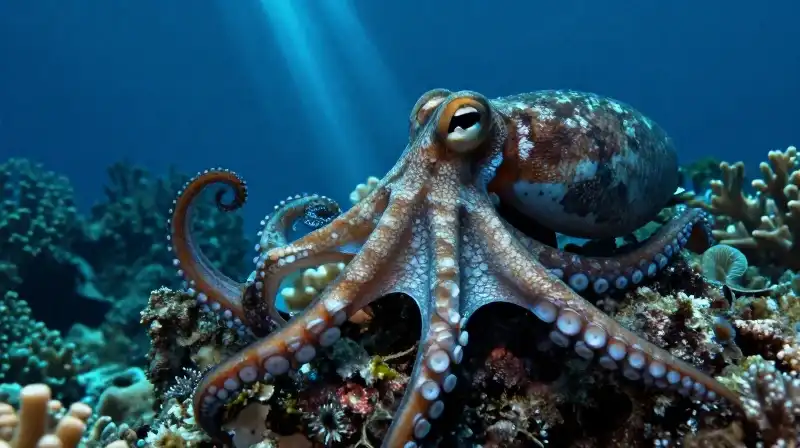
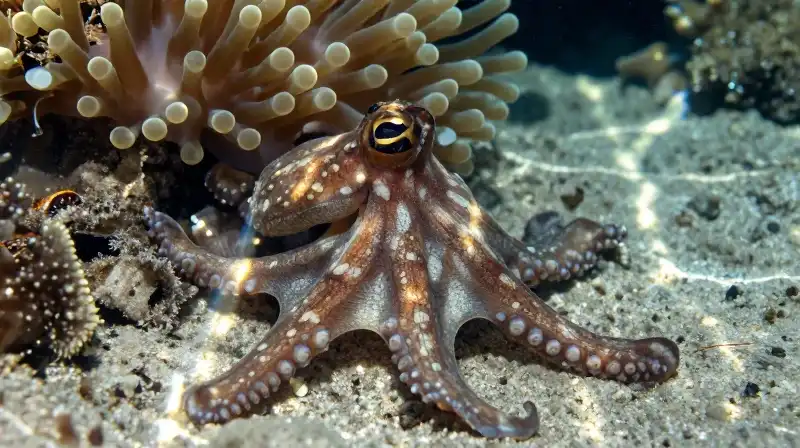
Imagine an animal that doesn’t just hide from its enemies, but actively chooses to become someone else entirely. In the silty, murky waters off the coast of Sulawesi, Indonesia, a small cephalopod is rewriting the rules of survival. Discovered in 1998, the mimic octopus (*Thaumoctopus mimicus*) has earned its reputation not through size or strength, but through a sophisticated, calculated form of psychological warfare known as “dynamic mimicry.” While most octopuses use camouflage to blend into the background, this species uses its intelligence to impersonate specific, dangerous animals that might intimidate a passing predator.
The Art of the Impersonation
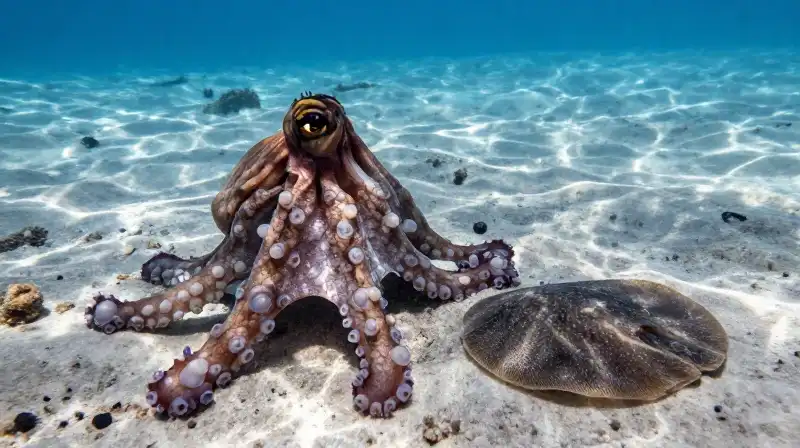
The mimic octopus is the first animal known to science to shift between multiple different imitations based on the specific threat it encounters. This isn’t a random change in pattern; it is a targeted response. To pull off these transformations, the octopus utilizes two primary biological tools: incredible physical flexibility and specialized pigment cells.
How It Changes Shape and Color
Because the mimic octopus lacks a rigid skeleton—its only hard body part is its beak—it can contort its body into nearly any shape. It manipulates its appearance using chromatophores, which are tiny pigment sacs located just under the skin. By contracting or expanding these sacs, the octopus can rapidly change its color and texture to match its chosen “costume”.
Researchers and divers have documented several distinct “performances” used to deter predators:
- The Banded Sole: To mimic this toxic flatfish, the octopus folds its arms behind its body and uses jet propulsion to glide through the water, perfectly replicating the flatfish’s unique swimming motion.
- The Lionfish: When it feels threatened by something that might be deterred by venom, the octopus splays its arms outward to resemble the long, stinging spines of a lionfish, while simultaneously adopting its brown and white striped coloring.
- The Banded Sea Snake: To simulate a venomous snake, the octopus hides six of its arms and stretches the remaining two in opposite directions, undulating them to match the movement and striped patterns of a sea snake.
- Other Observed Mimics: Beyond these primary examples, the species has been observed potentially resembling anemones, jellyfish, stingrays, seahorses, and even mantis shrimp.
Species Profile: The Mimic Octopus
Understanding the mimic octopus requires looking past its performances to its physical reality. It is a relatively small creature with a life cycle that is as intense as its disguises are complex.
| Feature | Details |
|---|---|
| Size | Approximately 2 feet (60 cm) in total length. |
| Habitat | Mucky environments such as river mouths, estuaries, and silty ocean floors. |
| Lifespan | Relatively short, lasting approximately nine months. |
| Primary Defense | Dynamic mimicry and intelligence-based impersonation. |
Intelligence and Unusual Symbiosis
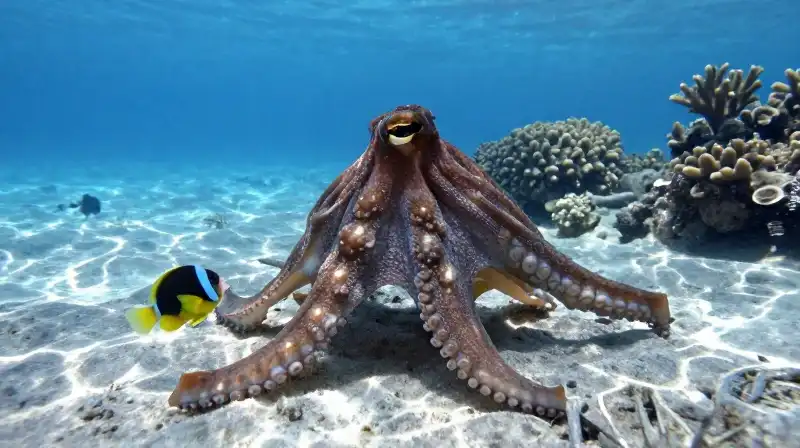
One of the most remarkable aspects of the mimic octopus is its decision-making process. It doesn’t just change shape at random; it is highly intelligent and selects a specific impersonation based on which animal it believes will most effectively scare off a particular predator. This implies a level of cognitive processing where the octopus assesses a threat and selects an appropriate “counter-measure.”
This intelligence is matched by some fascinating social observations. For instance, a unique biological relationship has been noted between the mimic octopus and the harlequin jawfish. The jawfish often stays in close proximity to the octopus, mimicking the octopus’s coloration to help avoid detection.
Life Cycle and Reproduction
The life of a mimic octopus is a brief, high-stakes journey. Because they live for only about nine months, every biological function is geared toward rapid growth and reproduction. Reproduction involves specialized anatomy; male mimic octopuses possess a unique arm called a hectocotylus, which they use to transfer sperm to the female. In a tragic biological trade-off, the male’s hectocotylus falls off during the process, and the male typically dies shortly after mating.
Frequently Asked Questions
Why is the mimic octopus so good at impersonating others?
Its success comes from the combination of high intelligence and physiological versatility. Unlike other cephalopods that simply match the color of a rock, the mimic octopus evaluates the predator and uses its chromatophores and lack of a skeleton to change its actual silhouette and movement pattern.
Where does the mimic octopus live?
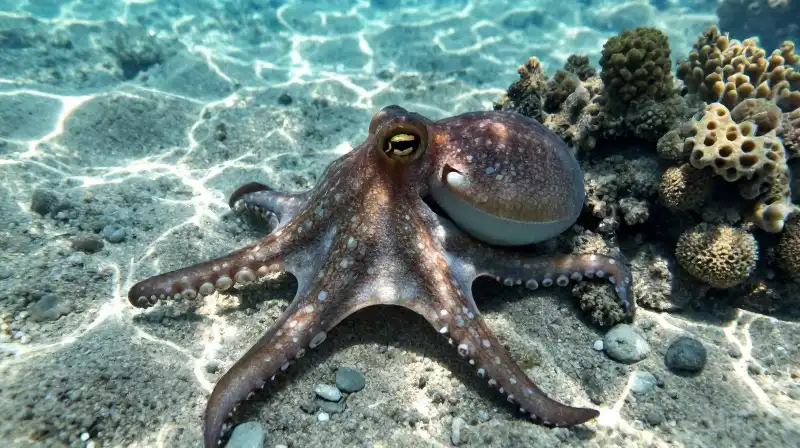
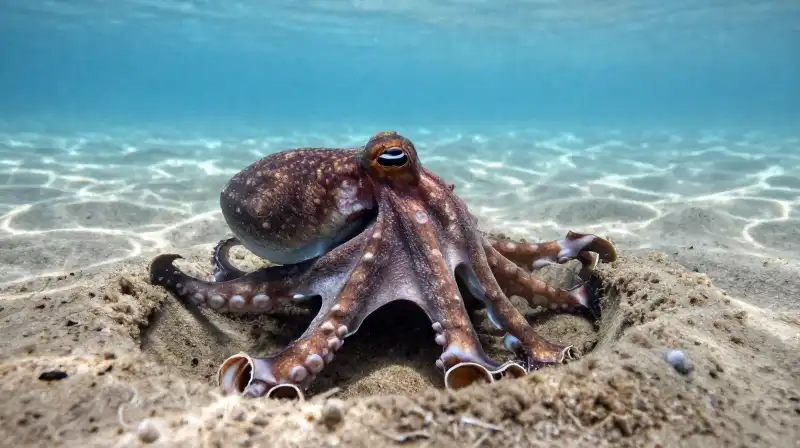
While many octopuses prefer the complex structures of coral reefs, the mimic octopus thrives in “mucky” environments. It prefers silty ocean floors, estuaries, and river mouths where it can easily burrow into the sand to hide.
The Complexity of Deception
The mimic octopus reminds us that survival in the ocean isn’t always about being the biggest or the fastest predator. For this small, two-foot cephalopod, survival is a matter of intellect and artistry. By mastering the art of deception, the mimic octopus has turned its vulnerability into a tactical advantage, proving that in the deep sea, sometimes the best way to stay alive is to become someone else entirely.
Facts sourced from peer-reviewed marine biology research, NOAA, and the Smithsonian Ocean Portal. Our editorial team fact-checks all content against current scientific literature.
Frequently Asked Questions
Why is mimic octopus so good?
The mimic octopuss success stems from its high intelligence and physiological versatility. It uses its chromatophores and lack of a rigid skeleton to evaluate predators and change its silhouette, color, and movement patterns to impersonate specific, dangerous animals.
Related Articles