
Fascinating Crab Fun Facts: From Tiny Peas to Giant Spiders

Introduction
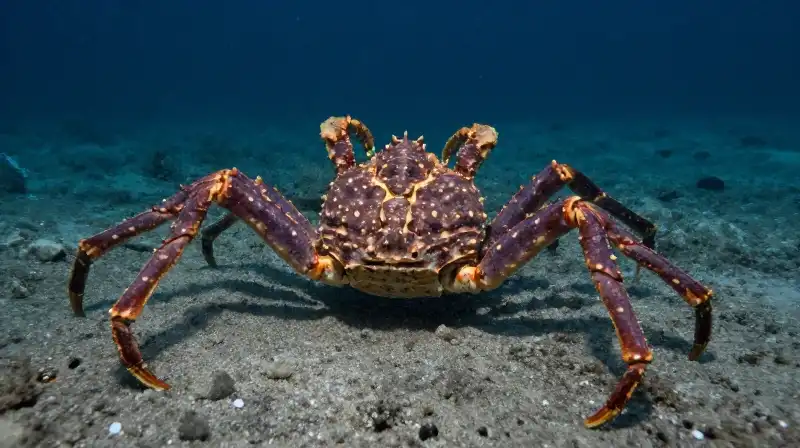
Crabs are far more than just a staple of coastal seafood; they are a diverse and highly successful group of crustaceans that have conquered nearly every corner of the planet. From the sun-drenched sands of tropical beaches to the crushing pressures of the deep sea, these creatures inhabit marine environments, freshwater systems, and even terrestrial landscapes. While we often picture them scuttling sideways across a tide pool, their biological complexity—ranging from their armored skeletons to their remarkable ability to regrow lost limbs—reveals a much more sophisticated side of marine life.
The Anatomy of a Decapod
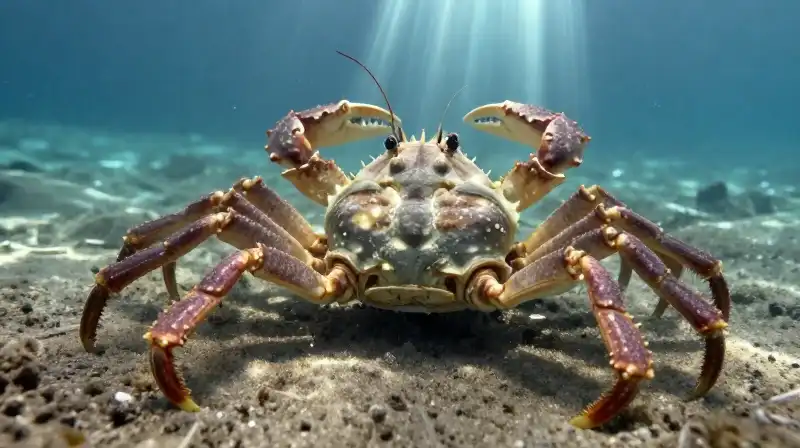
The term “crab” covers a wide range of species, but most belong to a specific biological classification. Crabs are considered decapods, a name derived from the Greek for “ten-footed”. This isn’t just a count of their legs; it defines their fundamental body plan. Their first pair of legs has evolved into specialized tools known as chelae, or claws, which they use for defense, feeding, and social interaction.
Because crabs have soft internal organs, they rely on an exoskeleton for protection. This thick external shell is composed of calcium carbonate, providing a rigid suit of armor that protects them from predators and physical damage. However, this armor comes with a trade-off: as the crab grows, it must eventually shed its old shell to make room for a larger one.
From Tiny Peas to Giant Spiders
One of the most striking aspects of the crab world is the sheer scale of diversity. Depending on the scientific estimate, there are anywhere from 4,500 to more than 6,700 different species of crabs in existence. This diversity is most visible when comparing their sizes.
| Species Type | Common Name/Example | Approximate Size/Scale |
|---|---|---|
| Smallest | Pea Crab | Only a few millimeters to about 0.6 inches in diameter. |
| Largest | Japanese Spider Crab | A massive leg span reaching up to 12 to 13 feet or 4 meters. |
Life in the Shell: Behavior and Survival
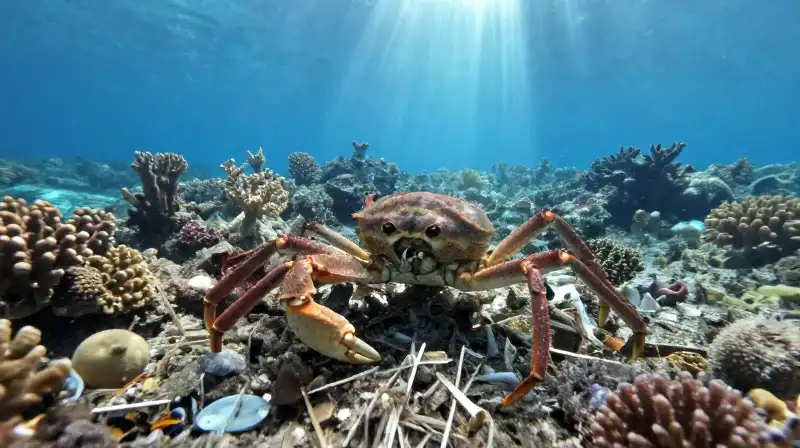
Crabs are not just passive scavengers; they are active participants in complex social and biological processes. Their lives are defined by constant adaptation and specialized survival tactics.
- Movement Patterns: While the “sideways walk” is their most famous trait, it is not their only mode of transport. Many species are capable of walking forward or backward, and some even possess specialized limbs for swimming.
- Dietary Flexibility: As omnivores, crabs play a vital role in the marine food web. They primarily consume algae but are opportunistic eaters, also consuming bacteria, fungi, worms, mollusks, and other small crustaceans.
- Regeneration: If a crab loses a limb or a claw to a predator, it has a remarkable survival mechanism called autotomise. They can naturally shed a limb to escape danger, and that limb can eventually regenerate over a period of approximately one year.
- Social Communication: Crabs communicate with one another through physical signals, such as waving their pincers or using rhythmic drumming motions. These interactions are often intense, as males may engage in combat to secure mates or defend prime hiding spots.
Are They All “True” Crabs?
A common source of confusion in marine biology is the naming of certain creatures. If you see “crab” in a name, it doesn’t necessarily mean the animal belongs to the order Brachyura (the “true” crabs). Many well-known species actually belong to the order Anomura.
What are the differences? Unlike true crabs, members of the Anomura order—such as hermit crabs, king crabs, horseshoe crabs, and porcelain crabs—typically possess more elongated abdomens and tails, much like shrimp or lobsters. While they share many ecological roles with true crabs, their evolutionary lineage is distinct.
What are true facts about crabs?
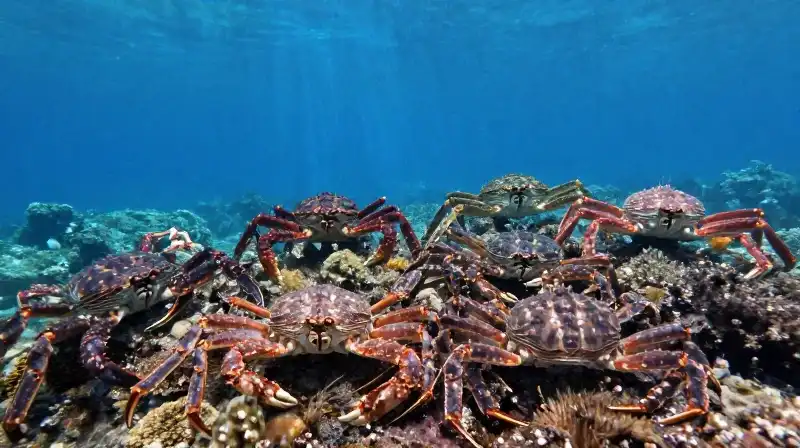
If you are looking for the most fundamental truths about these creatures, they can be summarized by their biological resilience and their role in the global ecosystem. They are decapod crustaceans with calcium carbonate exoskeletons, they possess incredible size variation, and they are vital to the ocean’s health. Additionally, they are a significant part of the global economy; crabs account for approximately 20% of all marine crustaceans caught by humans, totaling about 1.5 million tonnes every year.
A Remarkable Marine Legacy
Whether they are living for a few short years or enduring for up to a century—as seen in the long-lived Japanese spider crab—crabs are a testament to evolutionary success. A group of crabs is even given its own collective noun: a “cast”. From their ability to regenerate limbs to their diverse habitats spanning land and sea, crabs remain one of the most fascinating and essential components of our world’s oceans.
Facts sourced from peer-reviewed marine biology research, NOAA, and the Smithsonian Ocean Portal. Our editorial team fact-checks all content against current scientific literature.
Frequently Asked Questions
What are true facts about crabs?
Crabs are decapod crustaceans with calcium carbonate exoskeletons that exhibit incredible size variation and play a vital role in the oceans health. They also account for approximately 20% of all marine crustaceans caught by humans, totaling about 1.5 million tonnes annually.
Related Articles