
6 Amazing Facts About Ocean Animals and Their Secrets

Introduction
The ocean functions as a complex, living machine where every creature—from the smallest invertebrate to the largest whale—possesses specialized tools for survival. Understanding these animals requires looking beyond their outward appearance to the biological secrets that allow them to navigate, age, and hunt in a world of crushing pressure and near-total darkness. By examining the specific adaptations of marine life, we gain a clearer picture of how these ecosystems maintain their delicate balance.
6 Amazing Facts About Ocean Animals and Their Secrets
While many people view the sea as a mysterious void, marine biology reveals a world of precise mechanics and evolutionary ingenuity. Here are six remarkable truths about the inhabitants of our oceans.
-
Reading the history of a fish:
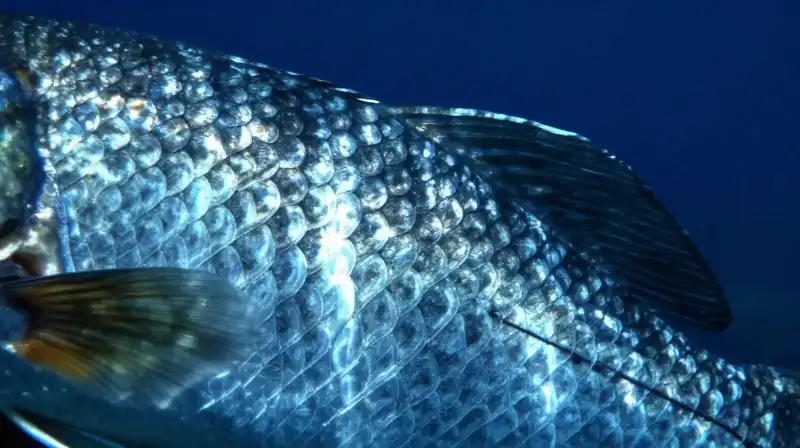
Determining how long a fish has lived is not always a matter of guesswork. Scientists can determine the age of a fish by examining and counting growth rings found on its scales or its ear bones. Much like the rings in a tree trunk, these markings provide a biological timeline that helps researchers understand population demographics and the health of various fish stocks.
-
The sensory power of seal whiskers:
For many seals, vision is only one part of the hunting equation. Some seal species rely heavily on their whiskers to detect minute vibrations caused by swimming prey. This tactile sensitivity is so advanced that it appears to allow even blind seals in the wild to hunt and feed effectively, turning their whiskers into high-precision underwater sensors.
-
The tragic naming of the Right Whale:
The name of the right whale is a somber reminder of maritime history. It earned its title because it was considered the “right” target for hunters. This was due to its slow swimming speed and its tendency to float at the surface after being killed, making it an easier catch than more agile species. Today, this species is a focus of intense conservation efforts, as it is currently considered the most endangered whale species located off the coasts of the United States.
-
The protected status of sea turtles:
Sea turtles are among the most iconic marine travelers, yet they face significant environmental pressures. In U.S. waters, all six species of sea turtles are protected under the Endangered Species Act. These species include the:
- Green turtle
- Hawksbill turtle
- Kemp’s ridley turtle
- Leatherback turtle
- Loggerhead turtle
- Olive ridley turtle
-
The math behind lobster yields:
Invertebrate biology provides fascinating insights into the efficiency of marine food sources. For example, understanding the specific ratio of live lobsters required to produce a single pound of lobster meat helps researchers and industry professionals manage sustainable yields.
-
Evolutionary adaptations in the deep:
Many ocean animals have developed “extreme” biology to survive specific niches. While some animals focus on speed, others focus on sensory detection or specialized bone structures to endure the vast differences in pressure and light between the surface and the deep sea.
Sea Turtle Species in U.S. Waters
Because all six species found in U.S. waters are protected, it is helpful to distinguish between them. While they may look similar to the casual observer, their habitats and biological needs differ.
| Species Name | Conservation Status (U.S.) | Primary Characteristic |
|---|---|---|
| Green Turtle | Protected (ESA) | Known for their relatively smooth shells and herbivorous diet. |
| Hawksbill | Protected (ESA) | Named for their narrow, pointed beaks used to eat sponges. |
| Kemp’s Ridley | Protected (ESA) | One of the rarest and most critically endangered turtles. |
| Leatherback | Protected (ESA) | The largest turtle species, featuring a leathery, rather than bony, shell. |
| Loggerhead | Protected (ESA) | Possess large heads and powerful jaws for crushing prey. |
| Olive Ridley | Protected (ESA) | Known for large-scale nesting events called “arribadas.” |
Why These Facts Matter for Conservation
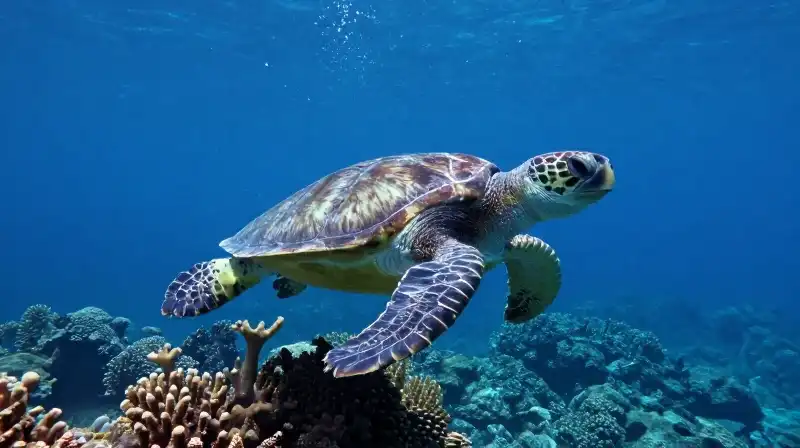
Learning amazing facts about ocean animals is more than just a pursuit of curiosity; it is the foundation of marine conservation. When we understand that a right whale is uniquely vulnerable due to its historical hunting patterns, or that all six sea turtle species require strict legal protection, we move from simple observation to informed advocacy. These biological secrets—whether it is the way a seal “sees” with its whiskers or how a scientist counts a fish’s age—provide the data necessary to protect these species from extinction and manage our oceans responsibly.
Facts sourced from peer-reviewed marine biology research, NOAA, and the Smithsonian Ocean Portal. Our editorial team fact-checks all content against current scientific literature.
Related Articles