12 Fascinating Facts About Whale Sharks and Their Giants Lifestyle

Introduction
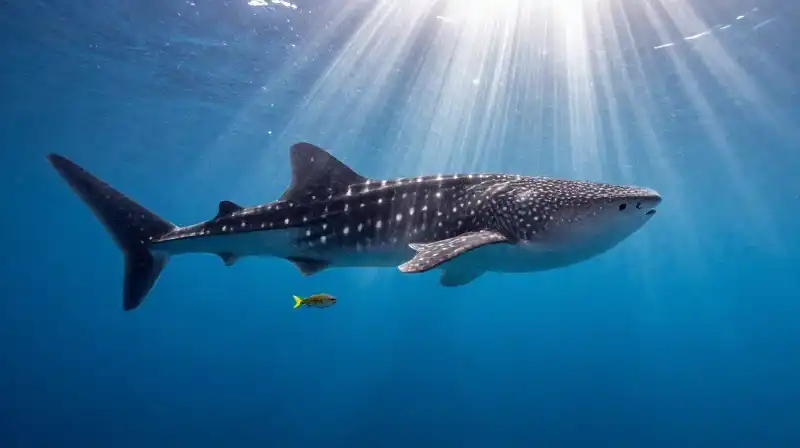
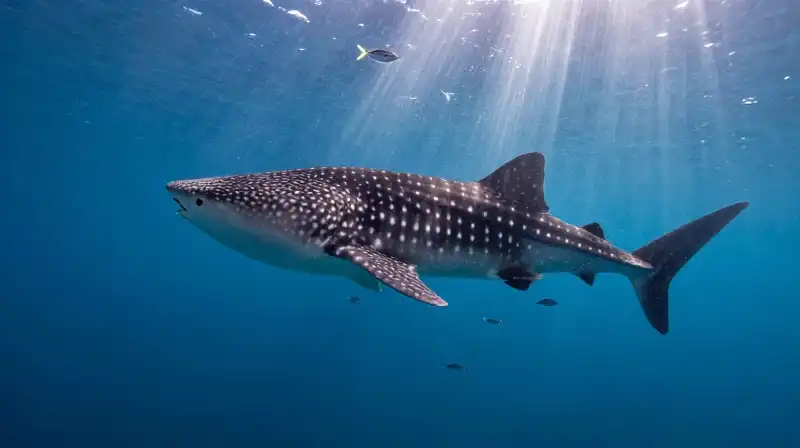
The name “whale shark” immediately conjures images of massive, mammalian leviathans, but this ocean giant is actually a fish. Despite their intimidating size, these gentle creatures occupy a unique niche in the marine ecosystem, acting as massive biological filters rather than apex predators. Understanding the whale shark requires looking past the name to recognize them as the largest fish on Earth—a cartilaginous marvel that has navigated tropical waters for millions of years.
More Than Just a Big Fish: Size and Biology
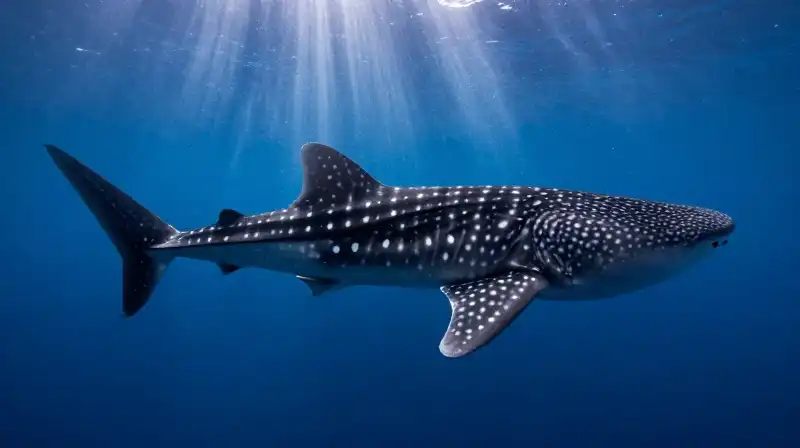
To grasp the scale of a whale shark, one must look at the sheer numbers behind their growth and anatomy. They are true sharks, meaning they possess a skeleton made of cartilage rather than bone, and they breathe through gills like all other fish.
| Feature | Estimated Measurement/Value | Source Attribution |
|---|---|---|
| Typical Length | 18 to 32.8 feet (approx. 19 meters) | 2, 3 |
| Weight | 19 to 30 tons | 2, 3 |
| Lifespan | 70 to 100 years | 2 |
| Sexual Maturity | Approximately 30 years of age | 2 |
12 Fascinating Facts About Whale Sharks
Beyond their massive dimensions, whale sharks possess several biological quirks that make them some of the most interesting subjects in marine biology.
- They are specialized filter feeders: Instead of hunting large prey, they consume tiny organisms such as plankton, small fish, and crustaceans.
- High-volume water processing: To feed, they act like a living colander. A single shark can process up to 6,000 liters (1,500 gallons) of water per hour through its gills, reaching as much as 10,000 gallons in a single day.
- Teeth they don’t use: While they possess roughly 3,000 tiny teeth arranged in hundreds of rows, these are not used for biting or chewing food.
- Protective eye scales: In a rare anatomical feature among vertebrates, some whale sharks have dermal denticles—tiny, tooth-like scales—on the surface of their eyeballs. Scientists believe this may serve as a form of physical protection.
- Biological fingerprints: Every whale shark has a unique pattern of spots and stripes. Much like a human fingerprint, researchers use these patterns to identify and track individual sharks.
- Live birth through eggs: They are ovoviviparous, a process where females produce eggs that hatch inside their bodies, allowing them to give birth to live young.
- A difficult childhood: While adults have no known natural predators, juveniles are vulnerable to orcas, tiger sharks, and great white sharks. Because of this, only about 10% of whale sharks are estimated to survive to adulthood.
- Massive migrations: These sharks are highly migratory, traveling thousands of kilometers through warm, tropical waters. One individual has been recorded traveling up to 8,000 miles in just three years.
- Deep-sea capabilities: Although they are often seen feeding near the ocean surface, they are capable of diving to depths of up to 3,280 feet (1,000 meters).
- Slow starters: Because they do not reach sexual maturity until they are about 30 years old, their populations are slow to recover from environmental stressors.
- Gentle giants: Despite their size, they are not considered dangerous to humans, as their diet consists of microscopic life rather than large animals.
- Environmental indicators: Because they migrate widely and consume large amounts of water, their health can provide insights into the health of the entire marine ecosystem.
Common Questions About Whale Sharks
Are whale sharks dangerous?
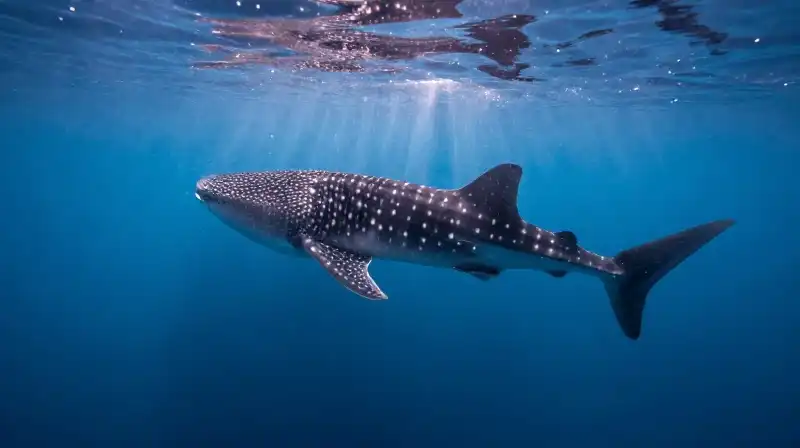
No. While their size is intimidating, whale sharks are filter feeders that focus on plankton and small organisms. They do not possess the predatory drive or the mechanism to hunt large animals, making them generally safe for divers and snorkelers to observe in the wild.
Why are whale sharks endangered?
Whale sharks are currently listed as an endangered species due to a variety of human-induced threats. These include pollution, ocean acidification, and rising sea temperatures. Additionally, they are often victims of accidental entanglement in fishing nets or being struck by ship propellers.
The Importance of Conservation
The survival of the whale shark is intricately linked to the health of our oceans. Because they are long-lived and take decades to reach reproductive age, they are particularly susceptible to population declines caused by human activity. Protecting these giants means addressing larger issues like climate change and industrial fishing practices that impact the entire marine food web. By studying their unique patterns and migratory routes, scientists hope to implement better protections for these remarkable, spotted wanderers of the deep.
Facts sourced from peer-reviewed marine biology research, NOAA, and the Smithsonian Ocean Portal. Our editorial team fact-checks all content against current scientific literature.
Related Articles