Mimic Octopus Interesting Facts: Natures Master of Disguise

Introduction
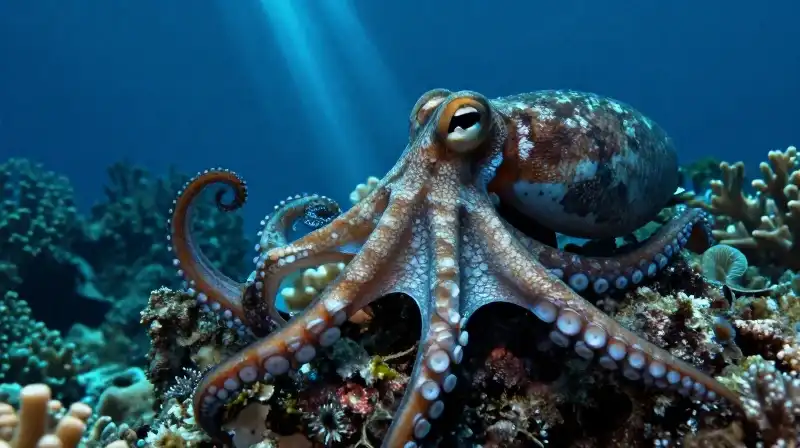
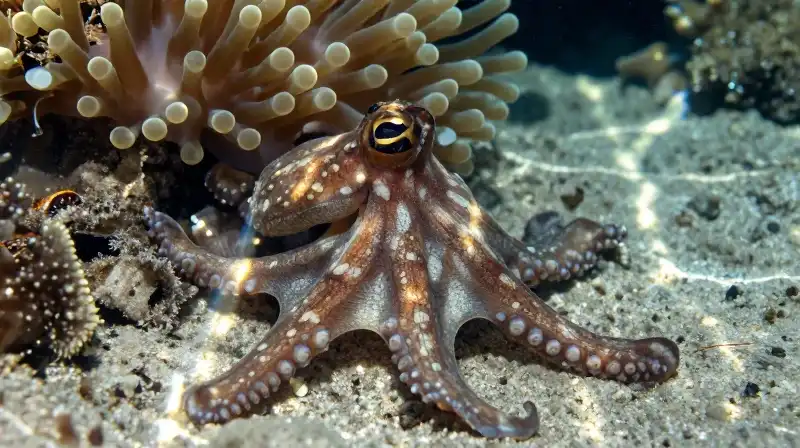
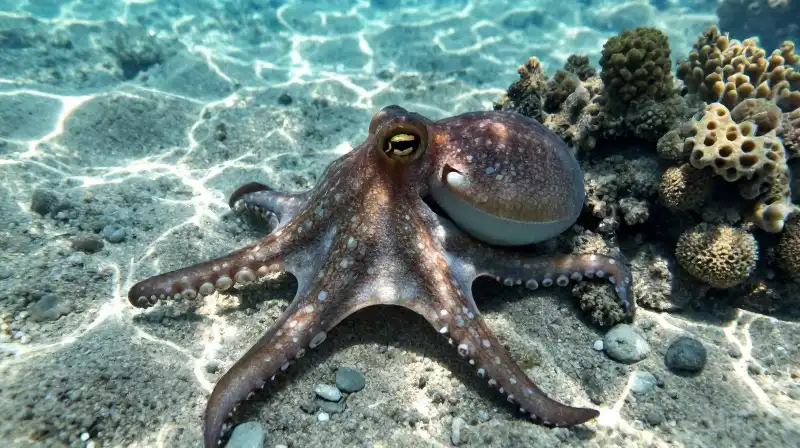
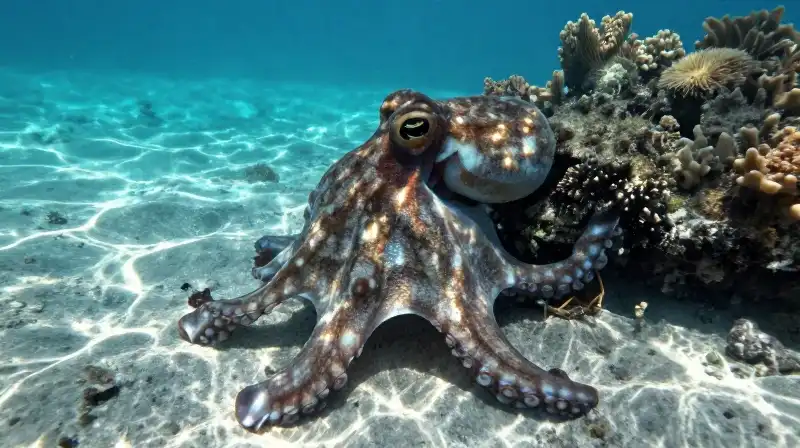
In the silty, muddy estuaries off the coast of Sulawesi, Indonesia, a small cephalopod is performing a disappearing act that defies biological norms. While most octopuses rely on blending into a static background to stay safe, the mimic octopus (*Thaumoctopus mimicus*) has mastered something far more sophisticated: dynamic mimicry. Discovered only in 1998, this relatively small creature does not just hide; it transforms into other animals entirely to manipulate the behavior of those around it.
The Biology of Transformation
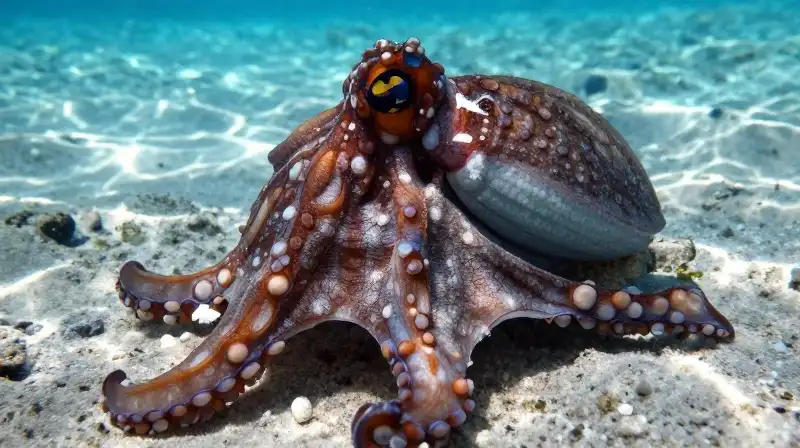
The ability to reshape its entire appearance is made possible by a combination of physiological traits. Because the mimic octopus lacks a rigid skeleton—possessing only a hard beak—it has extreme physical flexibility, allowing it to assume complex, non-octopus shapes. This structural freedom is paired with advanced biological tools that allow for rapid visual changes.
- Chromatophores: These are tiny, specialized pigment sacs located in the skin. By contracting or expanding these sacs, the octopus can instantly alter its color and texture to match its surroundings or a specific model.
- Dynamic Mimicry: This is the species’ most notable adaptation. Unlike simple camouflage, which is reactive to the environment, dynamic mimicry involves choosing a specific “impersonation” based on the type of threat encountered.
Mimic Octopus Interesting Facts: Master of Disguise
The mimic octopus is widely considered the ultimate master of disguise because it doesn’t just hide; it tells a lie. Depending on which predator approaches, the octopus selects a different “costume” to deter them. Here are the most documented ways this animal uses its intelligence to survive:
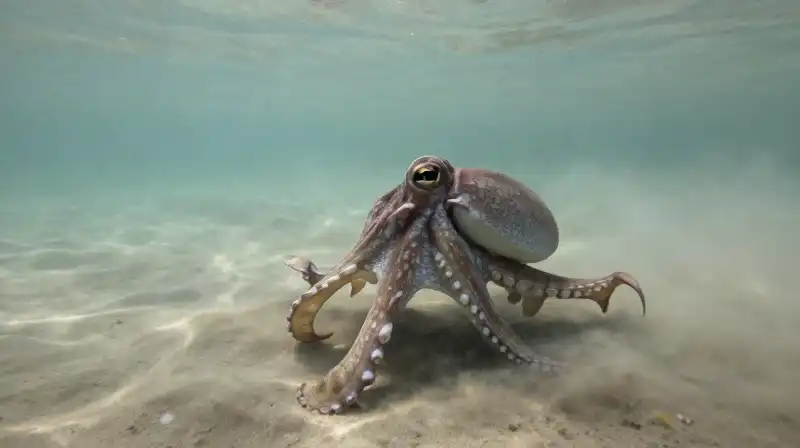
- The Toxic Sole Fish: To impersonate a sole, the octopus pulls its arms tightly against its body and uses jet propulsion to glide across the seafloor, mimicking the movement and profile of the fish.
- The Venomous Lionfish: When threatened by predators that fear stinging spines, the octopus spreads its arms wide to mimic the long, venomous spines of a lionfish, adjusting its skin to a brown and white striped pattern.
- The Banded Sea Snake: To scare off specific predators like damselfish, the octopus may tuck six of its arms into a burrow and undulate the remaining two arms in a striking black and white banded pattern, resembling a sea snake.
- Other Observed Mimicry: While the sole, lionfish, and sea snake are the most famous examples, researchers and SCUBA divers have also reported the octopus resembling jellyfish, stingrays, seahorses, anemones, and even mantis shrimp.
Beyond Defense: Mimicry for Hunting
While most of its transformations are defensive, there is evidence that mimicry can be used offensively. Scientists suggest the octopus may imitate a crab to lure potential mates into striking distance, turning its camouflage into a predatory tool.
Species Profile: Mimic Octopus at a Glance
Understanding the physical constraints and life cycle of this animal helps explain why such complex behaviors are necessary for its survival.
| Feature | Details |
|---|---|
| Total Length | Approximately 2 feet (60 cm). |
| Primary Habitat | Muddy river mouths, estuaries, and silty environments. |
| Activity Pattern | Can be active during the day by using camouflage to hide in plain sight. |
| Lifespan | Relatively short, lasting approximately nine months. |
Frequently Asked Questions
What are some fun facts about the mimic octopus?
One of the most fascinating facts is that the mimic octopus is the first known animal to exhibit “dynamic mimicry,” meaning it can switch between different animal impersonations depending on what predator it sees. Additionally, its behavior is so effective that other species, like the harlequin jawfish, have been observed mimicking the octopus’s coloration to stay hidden.
Why is the mimic octopus so good at disguising itself?
Its success comes from a combination of extreme physical flexibility (due to having no skeleton other than a beak) and highly advanced pigment sacs called chromatophores. This allows it to change not just its color, but its actual shape and movement patterns to match different species.
The Intelligence of Imitation
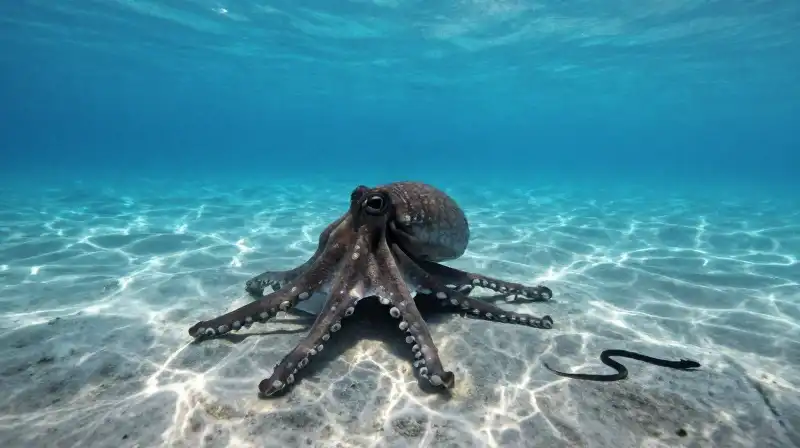
The mimic octopus is more than a biological curiosity; it is a testament to the power of marine intelligence. Its ability to assess a situation—identifying a damselfish and choosing a sea snake persona, or identifying a different threat and switching to a lionfish persona—demonstrates a level of cognitive processing that is rare in the invertebrate world. Through these complex adaptations, this small, short-lived creature has found a way to thrive in the vulnerable, mucky environments of the Indo-Pacific.
Facts sourced from peer-reviewed marine biology research, NOAA, and the Smithsonian Ocean Portal. Our editorial team fact-checks all content against current scientific literature.
Frequently Asked Questions
What are some fun facts about the mimic octopus?
The mimic octopus is the first known animal to exhibit dynamic mimicry, allowing it to switch between different animal impersonations based on the predator it encounters. Its behavior is so effective that other species, such as the harlequin jawfish, have been observed mimicking its coloration to stay hidden.
Why is mimic octopus so good?
The mimic octopus is successful due to its extreme physical flexibility from lacking a skeleton and its advanced chromatophores, which allow it to alter its color and texture. These traits enable it to change its shape and movement patterns to impersonate different species depending on the threat encountered.
Related Articles